Essex has a long-standing tradition of research in Artificial Intelligence. It was amongst the first three UK universities (alongside Cambridge and Edinburgh) to house a central research activity in Artificial Intelligence (AI) in the early 1970s, in the Department of Computer Science (CS).

Artificial intelligence is advancing rapidly across multiple interconnected domains, shaping a future in which systems are more autonomous, more collaborative, and more deeply integrated into human–centred contexts. Moving forward, the AI group aims at maintaining our Internationally leading position in foundational and applied research in the fields of Artificial Intelligence. The Group’s research directions include:

  • Responsible and Explainable AI, ensuring that increasingly complex systems remain transparent and trustworthy, and Agentic AI, which will enable autonomous agents to plan, reason, and act in dynamic environments.
  • Sustainable deep learning will be another key direction to reduce reliance on large‑scale server farms to help achieve Net-Zero target.
  • Multi-agent learning and the foundations of AI will redefine how systems learn, adapt, and collaborate.
  • Generative AI and its foundation models to enhance adaptability and domain specialisation.
  • Edge AI and Federated Learning for privacy‑preserving, in particular for healthcare wearables and autonomous drones, digital twins and immersive virtual worlds to simulate, optimise, and test intricate physical systems.
  • AI systems capable of interpreting individual emotional states through multimodal biosignals, such as voice, EEG, ECG, EDA, and others to could unlock novel powerful applications, from neuromarketing tools that anticipate brain responses to personalised mental‑health support and advanced human–AI collaboration that enhances expert decision‑making in fields like medicine, finance, and cybernetics.
  • Understanding the nuanced conscious and unconscious emotions of individuals, rather than general sentiment patterns.to interpret the complex blend of physiological and behavioural signals that reflect a person’s true emotional state, which current systems cannot do efficiently.

The group’s mission is building systems and doing theoretical research which model, support or nudge decision making of autonomous entities. The group’s research ranges from the theoretical modelling of decision making to the design and implementation of software systems deployed in the real world. The group encompass five associated special interest groups:

The Artificial Intelligence group thematic research is complemented by the Research Centres and Institutes in:

Interdisciplinary research from the Institute of Analytics and Data Science IADS, focuses on producing data-centric solutions, for foundational problems as well as applied. IADS runs a popular annual summer school, attracting about 150 attendees per year.

The AI group is at the core of the ESRC Business and Local Government Data Research Centre, and contributes via IADS to the ESRC Research Centre on Micro-Social Change (MiSoC).

Specialist interest groups

Analytics and Data Science

The Analytics and Data Science team works on all aspects of using computation to gain insights from real and simulated data.

The team covers a wide spectrum of practical and theoretical expertise and our members have core interests that broadly fall within the greater machine learning space and aligned fields, with these interests manifesting in both theoretical (e.g. algorithmic complexity) and practical work (e.g. how to best create a strong data science team).

Computational Finance and Economics

Our focus is on exploring the synergy between computation, economics and finance. Our members conduct wide-ranging research that includes;

  • Finance: Derivative Pricing
  • Computational Finance: Machine Learning in Finance
  • Computational Economics and Algorithmic Game Theory
  • Theoretical aspects of AI: Algorithms and Complexity

Centre for Computational Finance
and Economic Agents

Natural Language and Information Processing

The work of the Natural Language and Information Processing (NLIP) research group is focused around the intersection of language and vision. We research how artificial/collective intelligence and multimodal information processing can enable state-of-the-art applications in inter-disciplinary fields such as human rights monitoring, environmental science and healthcare.

Natural language processing has been a key area of research for more than 40 years at the University of Essex. The Language and Computation group is an interdisciplinary group established to work on language analysis and computational techniques. It fosters interaction between researchers across the University, including staff and students from the School of Computer Science and Electronic Engineering, the Department of Language and Linguistics, Department of Psychology, the UK Data Archive and others.

The Computer Vision group investigates and develops methods and algorithms to better understand and process visual information (2D and 3D images and video). The core expertise of the group includes deep learning for biomedical image classification, image retrieval and evaluation, statistical modelling for pattern recognition and image and video understanding.

The group also includes the Marine Technology Research Unit, set up as a complement to the Coral Reef Research Unit in the School of Life Sciences to research the crossover of engineering and computer science in marine science and conservation.

We organise regular events including the Annual Research Day, and weekly research seminars during term time.

Games and AI

Our research involves using games as a test-bed for and an application of advanced artificial intelligence (AI) methods. Games provide an ideal way to study all aspects of AI, but within our group we place particular emphasis on general AI: the challenge is to develop software agents that can rapidly learn to play any games to a high standard just by playing them.

The research has creative applications, and we study the use of AI to help automate the game design process. We measure the performance and experience of AI agents playing games to assess their quality and tune their design.

Future Health and Technology

The Future Health and Technology lab works on many aspects of using artificial intelligence for health applications. At the end of 2019, the lab started to work on mental and brain health applications. Recently new members, experts in other human health-related fields, joined the lab.

During the Covid-19 pandemic, several academics from CSEE started to work on applications to face the pandemic (e.g. modelling), in strict collaboration with academics from other departments and universities and with clinicians. A part of these academics joined the lab which continues to have strong links with other departments, universities, and clinicians from NHS.

The team covers a wide spectrum of practical and theoretical expertise and our members have core interests not only in artificial intelligence but also in neuroscience, cardiology, molecular biology, neurorehabilitation, cognitive psychology, brain-computer interfaces, IoT, wearable devices, telecommunications, networking, application design, and gaming.

Our members conduct wide-ranging research that includes AI applied to;

  • Neurology and BCI
  • Virtual Reality and Gaming for Neurorehabilitation and Psychotherapy
  • Cardiology
  • General Clinics and Public Health
  • Bio-nano-machine communications
  • IoT and Remote Monitoring
  • Pandemics Modelling
  • Computational Biomedicine and Medical Imaging.

Examples of recent research

Responsible Explainable Generative and Agentic AI

Essex is internationally recognised as one of the leading pioneers of Explainable Artificial Intelligence (XAI). Essex AI did play a seminal role in developing explainable fuzzy-logic and hybrid AI systems that allow complex machine-learning models to provide transparent, human-understandable reasoning. Their pioneering work has helped establish the foundations of modern XAI, particularly through the development of Type-2 Fuzzy Logic systems capable of delivering interpretable decisions in highly uncertain environments.

Group members contributions have been recognised through numerous international awards, including the IEEE Computational Intelligence Society Pioneer Award 2026 and election as a Fellow of the European Academy of Sciences for the theoretical and practical contributions to Explainable and Generative AI.

In recent years, Essex AI expanded their research leadership into Responsible and Explainable Generative and Agentic AI, focusing on developing trustworthy AI systems that combine advanced generative capabilities with transparency, accountability, fairness, and regulatory compliance. Through major Innovate UK-funded projects, including “Explainable Generative AI for Digital Communications Auto-Scoring” and “Hybrid Information Fusion and Generative AI for Legal Applications” they are developing next-generation AI systems that support decision-making in digital communications, legal services, and other high-stakes sectors (including finance) while providing clear explanations for generated outputs.

Building on their extensive research in explainable AI for finance—including work on regulatory compliance, fraud detection, banking risk assessment, fair customer outcomes, and market stability—Essex AI is helping shape the future of responsible AI deployment in regulated industries. Their research vision is centred on ensuring that generative AI systems remain transparent, auditable, and aligned with emerging governance and ethical requirements, enabling organisations to adopt AI with greater trust and confidence.

Highlights

AI-Powered Skin Cancer Detection: Transforming Early Diagnosis

Researchers from the University of Essex, in collaboration with Check4Cancer, have developed SKINTEL®, an innovative AI-powered decision support system for skin cancer detection. Through a Knowledge Transfer Partnership funded by Innovate UK, the team analysed more than 79,000 skin lesion images alongside rich patient clinical data to create one of the most advanced skin cancer AI models developed in the UK. The research introduced a novel approach that combines dermoscopic images with patient metadata and a clinically validated skin cancer risk score, significantly improving diagnostic performance.

The project has resulted in multiple high-impact publications, including two papers in Nature Scientific Reports, international conference presentations, patent applications, and the development of explainable AI techniques that help clinicians understand why lesions are flagged as suspicious. SKINTEL® has demonstrated accuracy exceeding 99% for several skin cancer categories and has the potential to reduce unnecessary referrals, improve triage efficiency, and support earlier cancer diagnosis.

The work has received national and international recognition, including the University of Essex Innovation Award, the MedTech World AI in Healthcare Award, and finalist status in both the National KTP Awards and National AI Awards. Regulatory submissions for deployment in the UK, EU and US are currently underway, bringing this research closer to real-world clinical adoption.


Discover Check4Cancer's KTP on Youtube

Highlights

Marine Technology Research Unit: Delivering Innovation for Marine Science

The Marine Technology Research Unit (MTRU) at the University of Essex has established itself as a leading centre for the application of artificial intelligence, three dimensional imaging, immersive technologies, and scientific diving to marine conservation and underwater heritage. Through a combination of research excellence, international collaboration, and practical fieldwork, MTRU is developing new ways to understand and protect marine environments.

One of MTRU's most significant achievements has been the development of advanced three dimensional imaging techniques for marine habitats. Using photogrammetry, Structure from Motion, and machine learning, the team creates highly detailed digital models of coral reefs, rocky reefs, and underwater archaeological sites. These methods allow researchers to measure habitat complexity, monitor environmental change, and provide evidence for conservation management. The group's work on reef monitoring has demonstrated how digital technologies can significantly increase the scale and accuracy of marine surveys while reducing the time required for analysis.

MTRU has also made important contributions to marine artificial intelligence. The group developed the widely recognised ImageCLEFcoral dataset, a large collection of annotated coral reef images used internationally for training and evaluating machine learning systems. This resource has supported advances in automated coral identification and habitat classification, helping researchers move towards faster and more scalable reef monitoring approaches.

A major area of success has been the application of digital technologies to underwater cultural heritage. Working with partners including the Manx Museum and Isle of Man BSAC, MTRU helped relocate and digitally document the historic HMS Racehorse wreck site. Using high resolution photogrammetry, the team produced detailed three dimensional models that preserve important archaeological information while making the site accessible to researchers and the public. This work demonstrates how digital heritage approaches can protect vulnerable underwater sites while expanding public engagement with maritime history.

The group has also pioneered the use of virtual reality for marine science and outreach. By transforming real underwater surveys into immersive experiences, MTRU allows users to explore coral reefs and archaeological sites without entering the water. These virtual environments have been used for education, public engagement, and training, helping to communicate the importance of marine conservation to wider audiences. Recent outreach activities have included virtual reality demonstrations for school students, inspiring the next generation of marine scientists and technologists.

Another innovative project involves the use of three dimensional printing to replicate complex coral reef structures. These printed models are used to investigate how habitat complexity influences biodiversity and to explore potential applications in reef restoration. By reproducing the fine scale structure of corals, the team has created valuable tools for both scientific research and public engagement.

MTRU's impact extends beyond individual research projects through strong international partnerships. In 2025, the University of Essex and Universitas Hasanuddin in Indonesia renewed a collaboration spanning more than twenty years. This partnership has contributed to marine biodiversity research, reef monitoring, and capacity building across Southeast Asia. MTRU continues to play a central role in developing new technologies that support large scale marine monitoring and conservation efforts in the region.

The unit also works closely with organisations such as Natural England, Eastern IFCA, Tritonia, Trinity House, and the Manx Museum. These collaborations have addressed challenges ranging from monitoring human impacts on protected marine habitats to improving automated analysis of underwater imagery and developing technologies for marine navigation.

Through these projects, MTRU has demonstrated how interdisciplinary research can deliver practical solutions to real world environmental challenges. By combining expertise in marine science, artificial intelligence, digital imaging, and immersive technologies, the unit continues to push the boundaries of marine research while supporting conservation, heritage preservation, and public understanding of the underwater world.

Computational Finance and Economics

Computational Finance and Economics is a well-established area of research within the department that brings together expertise in artificial intelligence, machine learning, optimisation, data analytics, theoretical computer science, economics, and computational modelling to address complex problems in financial markets, economic systems, and business decision-making.

Research in this area has led to advances in algorithmic trading, financial forecasting, market analysis, agent-based modelling, and intelligent decision-support systems, with outputs published in leading international journals and conferences. The group also has significant expertise in research at the intersection of economics and theoretical computer science (EconCS), including work in algorithmic game theory and computational complexity, studying the computational and strategic foundations of decision-making in multi-agent environments.

The area is also characterised by a strong and sustained doctoral research culture, attracting a significant number of high-quality PhD researchers working across computational finance, machine learning, and artificial intelligence. This doctoral community contributes to a vibrant and collaborative research environment, with graduates progressing to successful careers in both industry and academia, including roles in major financial institutions such as Lloyds Banking Group and Bank of America, as well as positions in higher education and research organisations.

Recent funding from  EPSRC addressed "Blockchain Incentives: Consensus and Fairness", exploring fundamental challenges in blockchain systems, with a focus on incentive design, fairness, and consensus mechanisms that support the development of robust and equitable digital infrastructures.

Asset monitoring in facility management using Internet of Things and artificial intelligence

In collaboration with Cloudfm Group Ltd the University of Essex developed a first-of-its-kind implementation of Artificial Intelligence and Internet of Things (IoT), moving away from reactive monitoring and into proactive asset care and insight, enabled by the UK's richest source of facilities management data.

The facility management (FM) industry has experienced a rapid growth in recent years enabled through the coalescing of key technological development in the Internet of Things (IoT), reliable artificial intelligence (AI) and a maturing IT infrastructure to enhanced building maintenance and monitoring services tailored to client needs. Reducing downtime and energy costs for clients can have a dramatic economic and environmental impact when considering clients such as restaurant chains, garages, showrooms, and warehouse operators have multiple sites across the country.

In the context of the FM industry an asset generally refers to an operational equipment or building i.e., an industrial cooker, dishwasher, building HVAC, specialised cooling or heating equipment, commercial warehousing equipment such as conveyer belts, climate control storage environments etc. An asset’s operational features describe the working condition of an asset, for example, the number of washing cycles of an industrial dishwasher or the heating/cooling modes of an air conditioning and how it is used. For example, by combining a dishwasher’s washing cycle with its electricity consumption, we can determine the energy consumption per cycle. Equally by observing how kitchen staff interact with industrial fridges while monitoring their internal temperatures and electricity usage we can determine the energy loss from their compressor cycles.

Working with Cloudfm Group Ltd, a leader in the FM sector, this research has investigated the need to better understand multi-dimensional operational features of FM assets with respect to their modes of operation, behaviour of users interacting with them, abnormalities due to faults and associated impact on Co2 emissions.

The concept of phase space reconstruction and phase portrait was used to study the behaviour of dynamic systems by providing higher dimensional and geometric representation of time-domain trajectories of such systems. From the data analysis prospective, it can be used for producing correlation plots of aggregated current and voltage signal features related to an asset’s operating behaviour. 

Soft-computing techniques such as fuzzy systems approach to modelling of timeseries data were developed to improve the representation and interpretability of these features by defining flexible boundaries for observed operational states on which their feature values could be mapped and later modelled.

A developed asset operation detection approach reduced the need to install and monitor a large volume of sensors for monitoring individual assets, reducing installation and maintenance costs. Its underlaying methodologies provided intuitive visualisation and modelling insights into asset operation, performance, efficiencies, or abnormalities which could be used to create explainable frameworks for asset monitoring and predictive maintenance. 

The visualisation, modelling approaches and insights formed an important part of the software frameworks for Cloudfm’s Mindsett platform that supports the PRISM® monitor which provides clients detailed asset level insight into their performance and energy consumption. Recent work has investigated a novel machine learning pipeline to extract and model voltage and current features for identifying FM asset types during site installations of PRISM® units at client sites, which was evaluated on real world FM data.

The work received several awards for excellence in impact as well as contributing to national recognition for the University in the 2022 Innovate UK KTP awards for academic leadership and support in KTP projects.

Highlights

Related papers

Natural Language and Information Processing

CSEE’s NLP research at Essex combines a long tradition in computational linguistics with modern AI to develop systems that can understand, generate, and reason with language across diverse contexts and modalities. The work emphasises multilingual, low-resource, Multimodal language intelligence, as well as socially responsible applications such as online safety and digital discourse. It bridges fundamental research and real-world impact through interdisciplinary collaboration and strong industry partnerships.

Our research addresses core questions in modern Artificial Intelligence: how machines can understand, reason with, generate, and appropriately use language across different contexts, languages, modalities, and communities. While grounded in the study of language as structured information, our work extends beyond traditional text processing to intelligent systems that interact through text, speech, vision, and context.

We aim to advance the next generation of language intelligence by designing algorithms, neural architectures, representation learning methods, and data-driven models that enable systems to process and generate human language in complex real-world environments. By connecting computational linguistics with modern AI, our research bridges fundamental computer science and practical language technologies, supporting systems that are both technically robust and socially meaningful.

A central theme of our work is moving beyond English-centric assumptions in NLP. Much of today’s infrastructure relies on high-resource languages and large datasets. We address this imbalance by developing methods that support multilingual speakers, underrepresented languages, regional dialects, code-mixed communication, and low-resource settings. This includes research on cross-lingual representation learning, multilingual NLP, low-resource speech and text processing, code-mixed and code-switched language understanding, text simplification, and multilingual spoken language models.

Human communication is inherently multimodal. We investigate how language interacts with speech, vision, and context, with research spanning multimodal NLP, language-and-vision interaction, visual grounding, conversational AI, speech-language modelling, and context-aware systems.

As language technologies increasingly shape communication and access to information, our research also addresses socially significant challenges. This includes work on social media analysis, detection of abusive and offensive language, online harms, moderation, content filtering, organisational communication, and digital discourse. These areas explore how language technologies can support safer and more inclusive online environments.

Our research further extends to applied language and signal processing, connecting NLP with broader forms of human expression such as speech, music, emotion, and personality. By developing computational methods to analyse these signals, we contribute to areas including affective computing, speech and audio analysis, computational creativity, digital culture, and human-centred AI.

Alongside fundamental research, we maintain a strong tradition of industry collaboration, translating research into real-world impact. One such example is our partnership with Signal Media, which received the Best of the Best KTP Award in 2015. Ongoing collaborations span applications such as AI-driven commodity trading, simplifying cybersecurity incident reports, and supporting law enforcement through NLP-based analysis of crime-related data.

Highlights

Our members

Dr Renato Amorim

Senior Lecturer

School of Computer Science and Electronic Engineering, University of Essex

Dr Javier Andreu-Perez

Senior Lecturer

School of Computer Science and Electronic Engineering, University of Essex

Dr Lina Barakat

Lecturer

School of Computer Science and Electronic Engineering, University of Essex

Dr Jon Chamberlain

Senior Lecturer

School of Computer Science and Electronic Engineering, University of Essex

Dr Faiyaz Doctor

Senior Lecturer

School of Computer Science and Electronic Engineering, University of Essex

Dr Michael Fairbank

Senior Lecturer

School of Computer Science and Electronic Engineering, University of Essex

Dr Maria Kyropoulou

Faculty Director of Partnerships and Senior Lecturer

School of Computer Science and Electronic Engineering, University of Essex

Dr Cunjin Luo

Lecturer

School of Computer Science and Electronic Engineering, University of Essex

Dr Themistoklis Melissourgos

Lecturer

School of Computer Science and Electronic Engineering, University of Essex

Dr Giorgia Minello

Lecturer

School of Computer Science and Electronic Engineering, University of Essex

Dr David Richerby

Lecturer

School of Computer Science and Electronic Engineering, University of Essex

Dr Spyros Samothrakis

Chief Scientific Officer and Senior Lecturer

School of Computer Science and Electronic Engineering, University of Essex

Dr Ravi Shekhar

Lecturer

School of Computer Science and Electronic Engineering, University of Essex

Dr Richard Sutcliffe

Lecturer

School of Computer Science and Electronic Engineering, University of Essex

Activity in our group

Research excellence

AI group members publish in the best research outlets in the field including Science and Nature journals which evidence the excellence of our interdisciplinary research. In addition to rich publications in mainstream journals this Group has a long history of collaborating with other research institutions and industries.

The group has made fundamental theoretical and practical contributions where:

  • In the field of Explainable Artificial Intelligence (XAI) and their applications. The work of Hagras on Explainable AI with British Telecom (BT) was awarded by the 2015 and 2017 Global Telecom Business Awards. Further, Hagras work was recognised by winning best student paper award in the 2014 IEEE International Conference on Fuzzy Systems as well as being shortlisted for the 2015 Outstanding Paper Award in IEEE Transactions on Fuzzy Systems. Hagras pioneering work on workforce allocation in complex dynamic environments with British Telecom was awarded the Best Paper Award in the 36th International Conference of the BCS SGAI International Conference on Artificial Intelligence, Cambridge, December 2016.
  • Fasli was appointed the first UNESCO Chair in Analytics and Data Science.
  • Natural language processing has been a key area of research at the University of Essex for more than 40 years. Theoretical work on information retrieval in large data spaces led to the development and success of London-based start-up Signal AI where we have won the 2015 National Best KTP partnership Award. The work won Best Demo Paper Award at 2015 European Conference for Information Retrieval (ECIR) and was the catalyst for a series of workshops focusing on AI in information retrieval.
  • Additionally, academics from the group developed an NLP-based platform for civilian-led monitoring human rights abuses which forms part of the evidence base of the United Nations and other organizations including the Minority Rights Group (MRG).
  • Chamberlain, Clark and Garcia have developed a state-of-the-art computer vision system for 3D marine surveying that increased surveying speed 10-fold, revolutionising the UK’s capacity for precision habitat monitoring through Natural England (the project won DEFRA’s Breaking the Mould Award in 2020).
  • Theoretical work investigating disagreement and ambiguity in human language was given a significant boost by the 5-year ERC funded DALI project (Poesio, Chamberlain and Bartle) that has developed novel algorithms for consolidating multiple interpretations of text and has published the largest collaboratively-created corpus of documents annotated for coreference.
  • IADS is part of the ESRC Business and Local Government Data Research Centre (ESRC BLG) and of the ESRC Research Centre on Micro-Social Change (MiSoC).
  • The School has also launched in 2018 a multi-disciplinary centre of excellence with The Welding Institute, Cambridge to expand our applied research to heavy industries and construction.
  • The group has won a large number of projects funded by EPSRC, ESRC, EU, Innovate UK and strategic partnerships with industry and international organisations such as UNESCO, BT, Essex County Council and Provide CIC. In addition, we are part of IGGI (Intelligent Games and Game Intelligence) centre for doctoral training, which is sponsored by EPSRC.
  • We are successfully running a conversion MSc degree in AI with the support of the Office for Students. This degree, "MSc Artificial Intelligence and its Applications", provides an opportunity to everyone to become an AI or data science specialist irrespective of their background. CSEE has successfully acquired funding from the OfS, which will be primarily spent on scholarships.

Research community

  • We run a series of research talks and seminars throughout the year. Previous speakers have included Dr Alexandros Voudouris from the University of Oxford on "Peeking Behind the Ordinal Curtain: Improving Distortion via Cardinal Queries", Dr Sefki Kolozali from the University of Essex who discussed "Can the symptoms of COPD patients be remotely detected?", and our Emeritus Professor Edward Tsang who presented his work on “Detecting Regime Change in Computational Finance".
  • In the Artificial Intelligence group, the School joined forces with the Human Rights Centre of the University of Essex in the Human Rights, Big Data and Technology Project. Funded by grants from the ESRC and the University of Essex, the project considers the challenges and opportunities presented by AI, big data and associated technology from a human rights perspective. In this project CSEE academics Fox, McDonald-Maier, Poesio and Kruschwitz collaborate with a multidisciplinary team of professionals in criminology, economy, law, philosophy, political science and sociology to tackle challenges like algorithmic accountability to protect human rights, understanding how AI can also threaten the right to equality and privacy, exploring the use of NLP to detect mis and disinformation and investigate how these affect human rights and use modern computer vision technology to empower human rights organisations and the United Nations.
  • The ESRC Business and Local Government Data Research Centre (ESRC BLG) (PI: Fasli, CoIs: Matran-Fernadez, Raza) collaborates with private sector, public sector and not-for-profit organisations who can wield the transformative power of data to benefit their communities. By supporting them in implementing best practice, we create real-world impact, influencing policy and informing practice. BLG’s aim to be the UK’s centre of choice for data research.
  • Samothrakis is a co-I in the ESRC Research Centre on Micro-Social Change (MiSoC), a multidisciplinary centre, promoting collaboration between economists, sociologists and other social scientists, and using quantitative social science to provide evidence with which to address key societal challenges. MiSoC has been based at Institute for Social and Economic Research (ISER) at the University of Essex since 1989, but it is a collaboration with specialists from universities around the world, and the current research programme is run jointly with researchers at the University of Bristol.

Research facilities

  • CSEE academics have access to the University’s High-Performance Computing cluster “CERES”. The cluster has 1008 processing cores provided by servers with a mix of Intel E5-2698 and Intel Gold 5115 processors, and between 512Gb and 1.5Tb RAM each. Storage is provided by a set of storage nodes providing 440Tb of storage. There are also 24 NVIDIA GTX and RTX Series GPU cards.
  • The Natural Language and Information Processing (NLIP) Laboratory has two high performance servers (£60k) specifically for text and image processing research projects where the HPC cluster cannot be used, a number of large-scale multi-lingual commercial datasets, image capture equipment, deep Trekker DTG3 remotely operated vehicle and a Delta WASP 3D printer used for surveying and conservation research by the Marine Technology Research Unit.
  • Staff also make use of other infrastructure available across the University such as the UK Data Archive, which houses the UK’s largest collection of datasets in social sciences and humanities. Such datasets are important for the School’s work in machine learning and data analysis as well as growing research in the area of big data and text analytics. IADS houses multiple research-focused desktops, with all members required having direct access to GPUs, alongside two ESRC BLG associated high-performance GPU focused machines.
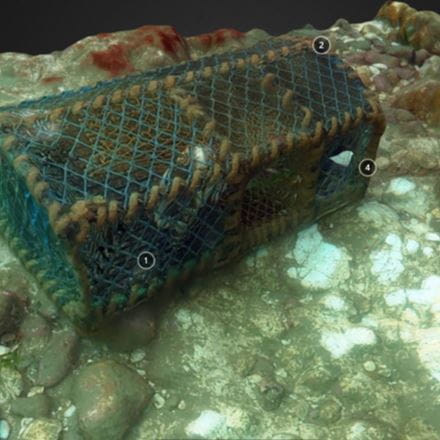
3d model of a pot
Insight: Investigating north Norfolk’s chalk reef using rapid 3D reconstructions

We worked with Natural England to analyse the condition of chalk reef off the coast of north Norfolk, giving a clear insight in to the impact of human activity on this essential ecosystem.

Read more about this project
Get in touch
Professor Hani Hagras Joint Head of Group
Dr Maria Kyropoulou Joint Head of Group
login