What Our Latest Carbon Emissions Report Tells Us - And Why It Matters


I am proud to share the key findings from the University of Essex’s latest Carbon Emissions Report. The report highlights meaningful progress, and the growing importance of our collective action as we continue our journey toward net zero by 2035.
A decade of progress on Scope 1 & 2 emissions
Our direct emissions (Scope 1) and electricity‑related emissions (Scope 2) continue to move in the right direction. Since our peak in 2012-13, we’ve reduced Scope 1 and 2 carbon emissions by 58%, and by 33% since 2019-20.
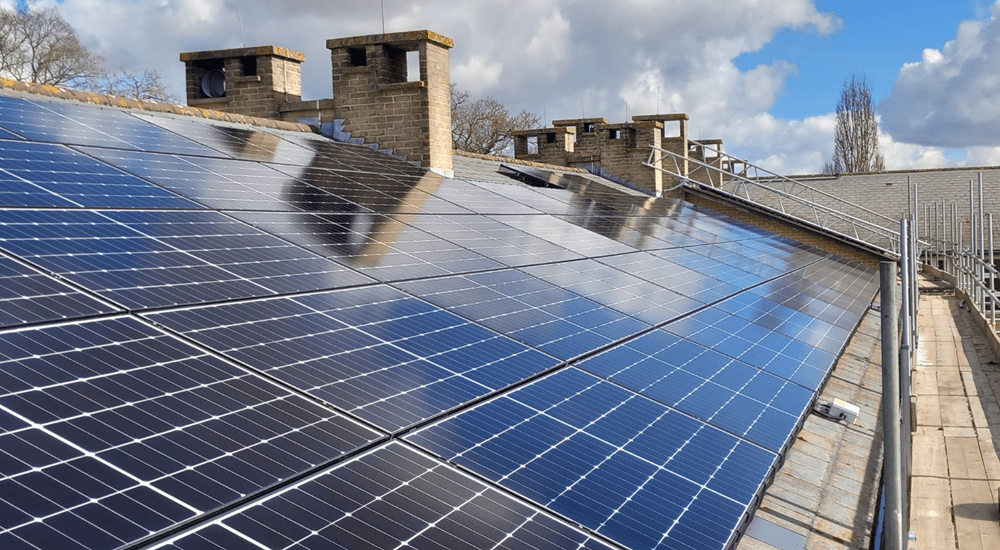
Gas use, which is our largest source of direct emissions, has fallen 39% since 2019–20, thanks to upgraded boilers, improved building management systems, and electrically‑heated buildings such as the Essex Business School. Electricity emissions also dropped 7% last year, supported by efficiency upgrades and the increasing decarbonisation of the UK grid. Our solar installations are now providing 8% of our total electricity; on one day in July 2025, our solar was generated 39% of our electricity!
Understanding the challenge of Scope 3
While Scope 1 and 2 emissions trend downward, Scope 3 emissions paint a more complex picture. These indirect emissions have grown; up 7% from last year and 34% since 2021–22, as we improve data quality and capture more of our indirect impact. Purchased goods and services represent the largest share (47%), followed closely by student travel (42%), reflecting our global community. While these emissions are less within our direct control, they highlight areas where behaviour change, policy shifts, and collaborative action can make a difference.
Why it all matters
Reducing emissions is about much more than meeting targets. It’s about modelling responsible leadership, responding to the climate crisis with integrity, and building a university that actively protects the future it prepares students for.
.jpg)