What is the BSc (Hons) Psychology (including Foundation Year)?
The BSc (Hons) Psychology (including Foundation Year) is a four-year degree.
You’ll gain a strong understanding of the theories and approaches in psychology today, preparing you to answer the world’s current challenges.
If you don’t yet meet the entry requirements for the three-year version, starting the course with a Foundation Year gives you a supported step up to university study.
Why this course
The BSc (Hons) Psychology (including Foundation Year) gives you one of the most immersive and exciting experiences of studying human thoughts and behaviours in the UK. Your learning – like our research – would focus on innovative solutions to real societal challenges, so you’ll develop the skills and knowledge to make a measurable difference in our world.
Open to UK and EU applicants, this four-year course includes a Foundation Year. From the start of your journey at Essex, you’ll be integrated as a student within the Department of Psychology for the entire duration of your degree, helping you to feel connected to your subject, lecturers and future classmates from day one. At least 25% of the teaching during your Foundation Year will be delivered directly by the School. You’ll also study academic skills modules designed to help you build confidence and prepare for university-level study.
You’ll graduate on the path to a psychologist or researcher career, with the foundations needed to specialise in areas such as clinical and educational psychology.
Who should apply
Future chartered psychologists, therapists and counsellors
Students wanting to work in neuroscience, health or data analysis
Those aiming to further research in psychology
Analytical thinkers with a scientific approach to psychology
What you’ll learn
Global challenges: Address the major challenges that face society today
Different approaches: Explore cognitive, developmental and social psychology
Specialise: Tailor your degree through your choice of applied modules
Your learning experience
Expert teaching: Learn from award-winning teachers and prize-winning researchers who are international experts in their areas
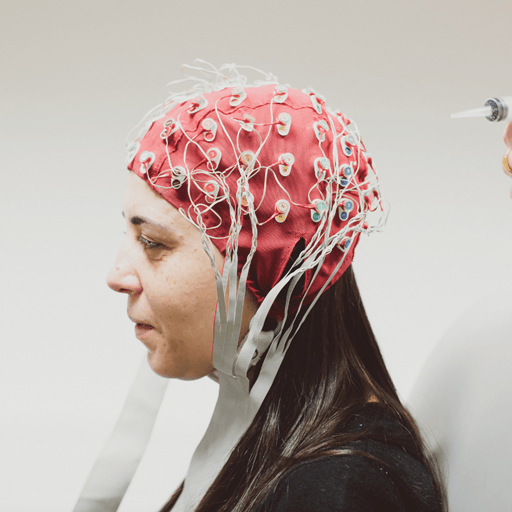
Specialist facilities: Access the world’s first videogame lab, the leading infant lab in the East of England and our multimillion-pound centre for brain science
Employability support: Take work-based learning modules with live employer projects or a placement
Careers and outcomes
A BSc (Hons) Psychology degree prepares you for diverse careers in:
Chartered psychology and counselling: Clinical psychology, high-intensity therapy, mental health and wellbeing practice
Top 25 in the UK for psychology (THE World University Rankings by Subject 2026)
20th in the UK for research outputs in psychology (REF 2021)
Access unique and exceptional facilities such as our Minecraft Lab and Centre for Brain Science
I had always been interested in psychology, but did not have A-levels and was told by other universities that I did not meet the entry requirements. The foundation year was essential for my success. It gave me the academic writing and research skills I needed and helped me regain confidence after years out of education. I had never referenced, read academic papers, or formatted assignments before, but Essex gave me that foundation. Most importantly, it gave me belief in myself. I still use the referencing guide we were given in that first year.
We offer a flexible course structure with a mixture of core/compulsory modules, and optional modules chosen from lists.
Our research-led teaching is continually evolving to address the latest challenges and breakthroughs in the field, therefore all modules listed as subject to change. To view the compulsory modules and full list of optional modules currently on offer, please view the programme specification via the link below.
We understand that deciding where and what to study is a very important decision for you. We'll make all reasonable efforts to provide you with the courses, services and facilities as described on our website and in line with your contract with us. However, if we need to make material changes, for example due to significant disruption, we'll let our applicants and students know as soon as possible.
Components and modules explained
Components
Components are the blocks of study that make up your course. A component may have a set module which you must study, or a number of modules from which you can choose.
Each component has a status and carries a certain number of credits towards your qualification.
Status
What this means
Core
You must take the set module for this component and you must pass. No failure can be permitted.
Core with Options
You can choose which module to study from the available options for this component but you must pass. No failure can be permitted.
Compulsory
You must take the set module for this component. There may be limited opportunities to continue on the course/be eligible for the qualification if you fail.
Compulsory with Options
You can choose which module to study from the available options for this component. There may be limited opportunities to continue on the course/be eligible for the qualification if you fail.
Optional
You can choose which module to study from the available options for this component. There may be limited opportunities to continue on the course/be eligible for the qualification if you fail.
The modules that are available for you to choose for each component will depend on several factors, including which modules you have chosen for other components, which modules you have completed in previous years of your course, and which term the module is taught in.
Modules
Modules are the individual units of study for your course. Each module has its own set of learning outcomes and assessment criteria and also carries a certain number of credits.
In most cases you will study one module per component, but in some cases you may need to study more than one module. For example, a 30-credit component may comprise of either one 30-credit module, or two 15-credit modules, depending on the options available.
Modules may be taught at different times of the year and by a different department or school to the one your course is primarily based in. You can find this information from the module code. For example, the module code HR100-4-FY means:
HR
100
4
FY
The department or school the module will be taught by.
In this example, the module would be taught by the Department of History.
Communicating Science: Reading, Writing and Research Skills
(30 CREDITS)
This module is designed to support students in their academic subject disciplines and to strengthen their confidence in key skills areas such as: academic writing, research, academic integrity, collaborative and reflective practices. The students are supported through the use of subject-specific materials tailored to their chosen degrees with alignment of assessments between academic subject modules and the skills module.
The module covers the mathematical skills needed to proceed to any degree course within the School of Life Sciences. The syllabus covers the mathematics of basic arithmetic and algebra, graphs and rates of change as well as statistical distributions and hypothesis testing. The associated work in classes and lab sessions develops the skills used to solve problems applicable to the study of biological sciences, with classwork and online assignments being set and full solutions provided as part of the feedback process.
Psychology is a broad subject, containing many disciplines. This module is designed to give an overview of these different core disciplines, encouraging you to explore how these different areas are informed by theory and research. The module will cover a range of classic and contemporary pieces of psychological research, exploring the methods adopted by psychologists to investigate the human mind and behaviour
Through this module, you will be encouraged to think critically about the theories and research studies that are covered and begin to consider how psychological findings apply to everyday life. This module will look at theory and research in areas such as cognitive psychology, developmental psychology, individual differences, biopsychology and social psychology. Along with psychological theories we also introduce basic research skills, creating transferable analytical skills and/or preparation for entry to a psychology (or related) degree.
This module will explore questions such as: Is intelligence fixed? Is our memory reliable? How do we learn? By introducing a range of approaches from across psychology, you will address such questions from different perspectives and provide the foundations needed to become a successful Essex student. This module will also begin your training on designing and carrying out psychology experiments, and dealing with the information that those experiments provide.
New-borns are totally dependent on others. They are unable to move or sit up; they cannot reach out and pick up an object; their vision is poor; they cannot even express simple emotions. By the end of the developmental process, some 20 years later, humans have become the most psychologically complex things we know. How does this happen? This module will introduce you to how humans grow and develop in the world. The principal approaches to the study of human development will be discussed, with a particular focus on how infants take their first "psychological steps" in the social world. You will also develop the research and analysis skills that are needed to answer different questions about how humans grow in the world.
In this module you will discover answers to fundamental questions in the science of emotion: What are emotions and why do we have them? Is it possible to elicit specific emotions in people and measure them? How good are we at sensing how someone else is feeling? Why are some people more emotional than others? You'll untangle the complexities involved in studying human emotion by: exploring a variety of research methods and measurements, applying critical thinking to psychological concepts, and mastering the data analysis techniques that allow psychologists to draw conclusions about our experience of emotion.
In this module, you'll study the internal mental processes that go on inside our brain that form the basis of our thoughts. We'll answer questions such as: what do visual illusions tell us about how we perceive the world? Are we really able to multi-task? How do we understand and produce speech, and is this different if you speak more than one language? You will learn the skills that psychologists use to conduct research to answer these questions, as well as core theories and knowledge about key topics in this area.
Do you behave differently when you are alone than with others? How do people interact with individuals? How do they behave in groups? How do people explain the social world and how do they explain the behaviour of others? What makes people attribute human characteristics to animals and inanimate objects? This module will examine how humans live in and interact with the social world. These questions will be explored, using social psychology theories, survey methods and research skills.
How does your brain decide between good and bad? What is the neural basis of moral reasoning? What is the biological basis of anger and aggression? Can we explain psychopathy in terms of differences in brain structure and function? What can neuroscience tell us about whether people should be held accountable for their actions? These are the kinds of the questions that we will investigate in this module, which aims to understand the neural basis of (anti) social behaviour. These questions will be addressed by building knowledge and understanding whilst also developing the skills that psychologists use to research these aspects of human behaviour.
Introduction to Personal Development and Employability
(0 CREDITS)
It’s important to plan your career. This is the one of three modules that will make sure you are career ready when you leave university. You will decide on your career aspirations and goals, plan how you will achieve them and identify the resources available to help you.
This module builds upon your statistics provision in the first year and will provide you with a thorough understanding of how and when to use different basic statistical tests. Theoretical and practical implications will be provided through statistics lectures while computer workshops will introduce you to using statistical software.
Explore classical and contemporary themes of child development such as prenatal and perceptual development, early language acquisition, and cognitive and social development, whilst examining the research methods and designs employed in Developmental Psychology.
Through exploring and addressing a range of theories and research on how people think and behave, you will gain a clear understanding of the topics social psychologists are interested in and their approaches to studying them.
The brain is an extremely complex organ, and there is much that we still have to learn about its processes and functions. This module will detail the psychological mechanisms that underlie human behaviour and highlight the possibility that even our deepest thoughts and feelings arise from electrical and chemical activity in our brains.
An in-depth look into cognitive, trait and biological theories and approaches to personality, individual differences and intelligence. This module will also give you the opportunity to cover and debate contemporary topics in individual intelligence (such as how individual differences explain behaviours, feelings and thinking).
This module combines the areas of medical and health psychology to explore the biological, psychological and social processes implicated in the development of ill health.
This module explores the basic cognitive processes involved in thinking about the world, interacting with the world, and experiencing the world. Often as users of these processes they just work and the complexity of the underlying operations are hidden; a kind of "user illusion". You will learn about the emerging scientific picture of how these basic processes operate, thereby gaining a better appreciation of the underlying complexity, and a renewed appreciation of the brilliance of these operations. The module will consider examples of human talents; such as bilingualism, as well as human limitations, such as our working memory capacities. The module will cover core areas of cognition as defined by the British Psychological Society such as perception, mental imagery, attention, memory, language, and consciousness. These will be discussed both with reference to laboratory-based experiments, and also how these processes may be disrupted and may breakdown in various conditions, such as dyslexia, amnesia, and other neuropsychological conditions. Finally, the lectures will address how basic cognitive processes apply to complex real-world behaviours.
It’s important to plan your career. This is the one of three modules that will make sure you are career ready when you leave university. You will decide on your career aspirations and goals, plan how you will achieve them and identify the resources available to help you.
This module gives you the chance to utilise the statistical and research methodology which you gained during your first two years and apply it to your own original research project. You’ll submit a written report and a supporting poster which will be assessed.
Advanced employability skills and career progression
(0 CREDITS)
It’s important to plan your career. This is the one of three modules that will make sure you are career ready when you leave university. You will decide on your career aspirations and goals, plan how you will achieve them and identify the resources available to help you.
On a placement year you gain relevant work experience within an external business or organisation, giving you a competitive edge in the graduate job market and providing you with key contacts within the industry. The rest of your course remains identical to the three-year degree.
Year abroad
On your year abroad, you have the opportunity to experience other cultures and languages, to broaden your degree socially and academically, and to demonstrate to employers that you are mature, adaptable, and organised. The rest of your course remains identical to the three-year degree.
Entry requirements
UK entry requirements
UK and EU applicants:
All applications for degree courses with a foundation year (Year Zero) will be considered individually, whether you
think you might not have the grades to enter the first year of a degree course;
have non-traditional qualifications or experience;
are returning to university after some time away from education; or
are looking for more support during the transition into university study.
Standard offer:
Our standard offer is 72 UCAS tariff points from at least two full A-levels, or equivalent.
For this course all applicants must also hold GCSE Maths at grade C/4 or above (or equivalent). We may be able to consider a pass in OFQUAL regulated Level 2 Functional Skills Maths where you cannot meet the requirements for Maths at GCSE level. However, you are advised to try to retake GCSE Mathematics if possible as this will better prepare you for university study and future employment.
Mature applicants and non-traditional academic backgrounds:
We welcome applications from mature students (over 21) and students with non-traditional academic backgrounds (might not have gone on from school to take level 3 qualifications). We will consider your educational and employment history, along with your personal statement and reference, to gain a rounded view of your suitability for the course.
You will still need to meet our GCSE requirements.
International applicants:
Essex Pathways Department is unable to accept applications from international students. Foundation pathways for international students are available at the University of Essex International College and are delivered and awarded by Kaplan, in partnership with the University of Essex. Successful completion will enable you to progress to the relevant degree course at the University of Essex.
International & EU entry requirements
We accept a wide range of qualifications from applicants studying in the EU and other countries. Get in touch with any questions you may have about the qualifications we accept. Remember to tell us about the qualifications you have already completed or are currently taking.
Sorry, the entry requirements for the country that you have selected are not available here. Please contact our Undergraduate Admissions team at ugquery@essex.ac.uk to request the entry requirements for this country.
English language requirements
English language requirements for applicants whose first language is not English
IELTS 5.5 overall with a minimum of 5.5 in each component, or specified score in an equivalent test that we accept.
If we accept the English component of an international qualification it will be included in the academic levels listed above for the relevant countries.
Pre-sessional English courses
If you do not meet our IELTS requirements then you may be able to complete a pre-sessional English pathway that enables you to start your course without retaking IELTS.
Additional Notes
If you’re an international student, but do not meet the requirements for direct admission to this degree or the first year of a degree at Essex, you could prepare and gain entry through a pathway course. Find out more about opportunities available to you at the University of Essex International College
Our events are a great way to find out more about studying at Essex. We run a number of Open Days throughout the year which enable you to discover what our campus has to offer.
You have the chance to:
tour our campus and accommodation
find out answers to your questions about our courses, student finance, graduate employability, student support and more
meet our students and staff
Check out our Visit Us pages to find out more information about booking onto one of our events. And if the dates aren’t suitable for you, feel free to book a campus tour here.
Our UK students, and some of our EU and international students, who are still at school or college, can apply through their school. Your school will be able to check and then submit your completed application to UCAS. Our other international applicants (EU or worldwide) or independent applicants in the UK can also apply online through UCAS Apply. Please note that this course is not open to international applicants.
The UCAS code for our University of Essex is ESSEX E70. The individual campus code for our Loughton Campus is 'L'.
You can find further information on how to apply, including information on transferring from another university, applying if you are not currently at a school or college, and applying for readmission on our How to apply and entry requirements page.
If you receive an undergraduate offer to study with us in October 2026 and live in the UK, you will receive an email invitation to book onto one of our Open Days. These events provide the opportunity to meet your department, join interesting taster sessions, tour our campus and accommodation, and chat to current students. You can visit our Open Days event page for more information, including terms and conditions.
Please note that this course is not open to international applicants.
Visit Colchester Campus
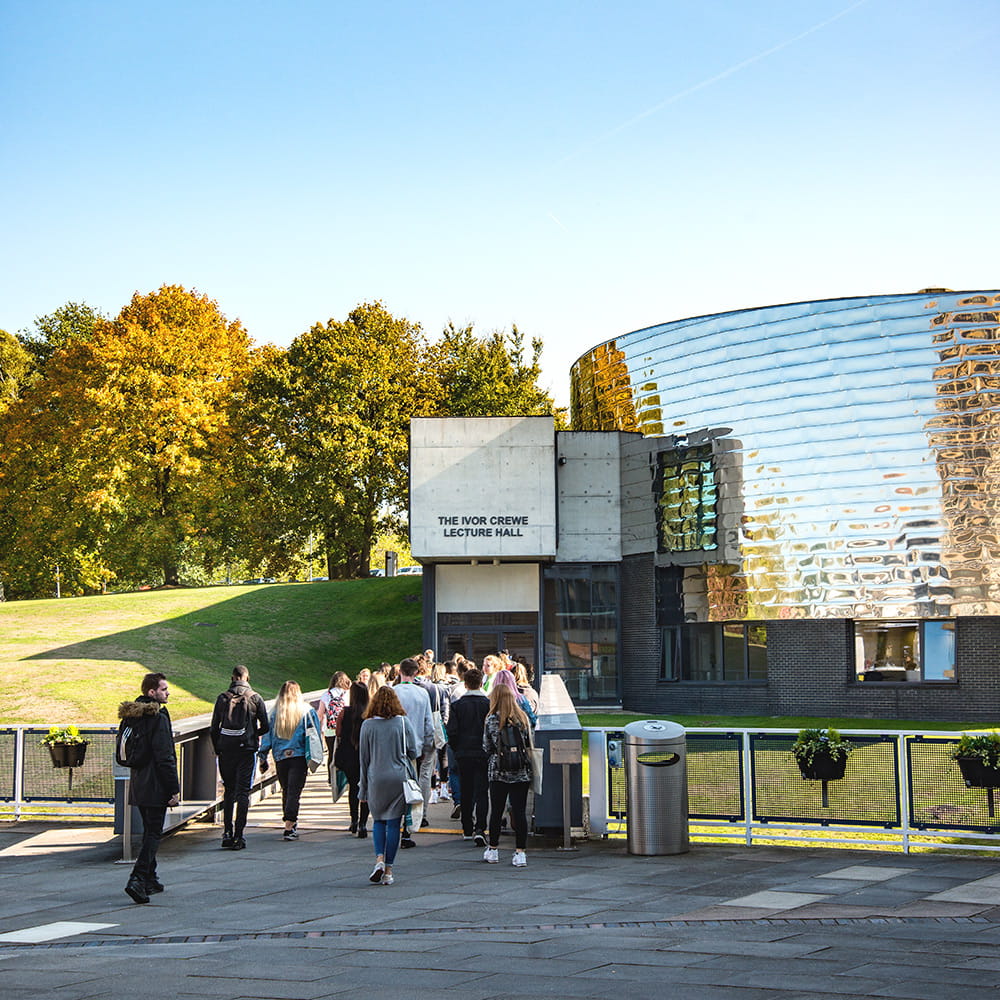
Set within 200 acres of award-winning parkland - Wivenhoe Park and located two miles from the historic city centre of Colchester – England's oldest recorded development. Our Colchester Campus is also easily reached from London and Stansted Airport in under one hour.
If you live too far away to come to Essex (or have a busy lifestyle), no problem. Our 360-degree virtual tour allows you to explore our University from the comfort of your home. Check out our Colchester virtual tour to see accommodation options, facilities and social spaces.
Chat to us
Got a question about this course? Chat with one of our academics in the Department of Psychology.
At Essex we pride ourselves on being a welcoming and inclusive student community. We offer a wide range of support to individuals and groups of student members who may have specific requirements, interests or responsibilities.
The University makes every effort to ensure that this information on its programme specification is accurate and up-to-date. Exceptionally it can be necessary to make changes, for example to courses, facilities or fees. Examples of such reasons might include, but are not limited to: strikes, other industrial action, staff illness, severe weather, fire, civil commotion, riot, invasion, terrorist attack or threat of terrorist attack (whether declared or not), natural disaster, restrictions imposed by government or public authorities, epidemic or pandemic disease, failure of public utilities or transport systems or the withdrawal/reduction of funding. Changes to courses may for example consist of variations to the content and method of delivery of programmes, courses and other services, to discontinue programmes, courses and other services and to merge or combine programmes or courses. The University will endeavour to keep such changes to a minimum, and will also keep students informed appropriately by updating our programme specifications. The University would inform and engage with you if your course was to be discontinued, and would provide you with options, where appropriate, in line with our Compensation and Refund Policy.
The full Procedures, Rules and Regulations of the University governing how it operates are set out in the Charter, Statutes and
Ordinances and in the University Regulations, Policy and Procedures.
3.png?mw=300)