The BSc (Hons) Global Sustainability is a three-year degree, extendable to four with an optional year in placement or abroad.
You’ll become a well-rounded scientist ready to address the biggest challenges facing Planet Earth and its living systems.
Why this course
The BSc (Hons) Global Sustainability gives you an interdisciplinary approach that lets you harness world-leading expertise from across the University and develop the tools to improve humanity’s future.
You’ll study the relationships between the environment, human cultures and values, and tackle the interacting climate, biodiversity and nature crises as well as pollution, inequality and social injustice.
You’ll expand your learning beyond life sciences to your choice of economics, philosophy, psychology, sociology and politics taught by internationally recognised experts in their fields.
You’ll also have the opportunity to join our ongoing work with governmental, non-governmental and commercial partners with impact at local (e.g. Colchester Oyster Fishery), national (e.g. CEFAS) and international (e.g. Mars Corporation) scales.
Add a placement year or study abroad to put your learning into practice, expand your perspective and build confidence in professional or international settings.
You’ll graduate on the path to an interdisciplinary career, ready to help resolve the increasing interconnected global issues across the world.
Who should apply
Future interdisciplinary and environmental scientists
Those eager to help resolve the most urgent global and complex challenges
Students wanting an innovative, interdisciplinary approach to further study
Practical learners wanting field experience
What you’ll learn
Global challenges: Investigate the most pressing environmental and sustainability issues
Employability: Gain professional, data and field skills for ecological and marine scientists
Specialise: Tailor your degree through your choice of applied modules
Your learning experience
Optional study abroad year: Spend a year at one of our partner universities and experience another culture with the Study Abroad programme
Optional placement year: Gain professional experience in a business or organisation with university support from Placements at Essex
Expert teaching: Learn in a lively, friendly and supportive community with research-led study and high-quality teaching from researchers across the spectrum of biology
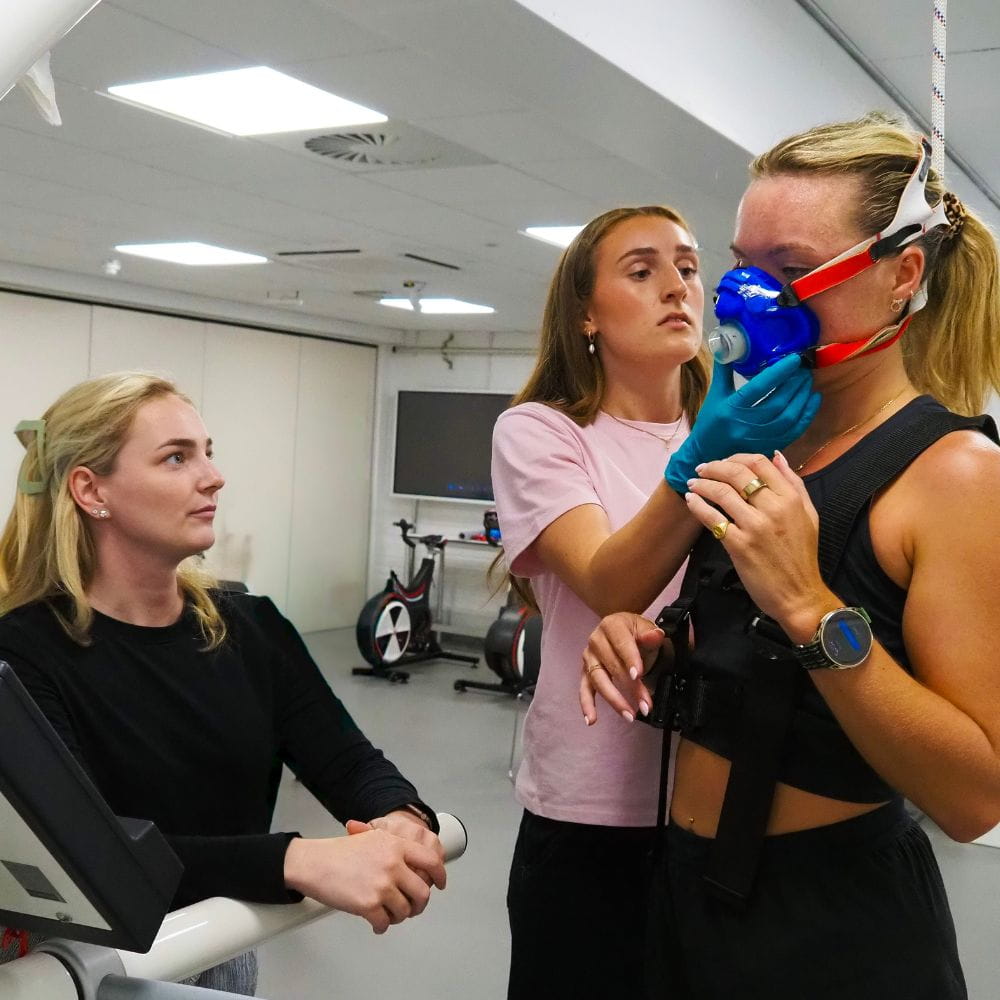
Specialist facilities: Access a range of equipment and facilities from teaching labs to bioimaging, in situ sampling, aquariums and mesocosms, and complete your final-year research alongside academics and research students in shared labs
Field trips: Visit local field sites such as the Colne/Blackwater estuary and take up international opportunities to Croatia and the Arctic
Employability support: Take work-based learning modules with live employer projects or a placement
Careers and outcomes
A BSc (Hons) Global Sustainability degree prepares you for diverse careers in:
Our research-led teaching is continually evolving to address the latest challenges and breakthroughs in the field. The following modules are based on the current course structure and may change in response to new curriculum developments and innovation.
We understand that deciding where and what to study is a very important decision for you. We'll make all reasonable efforts to provide you with the courses, services and facilities as described on our website and in line with your contract with us. However, if we need to make material changes, for example due to significant disruption, we'll let our applicants and students know as soon as possible.
Components and modules explained
Components
Components are the blocks of study that make up your course. A component may have a set module which you must study, or a number of modules from which you can choose.
Each component has a status and carries a certain number of credits towards your qualification.
Status
What this means
Core
You must take the set module for this component and you must pass. No failure can be permitted.
Core with Options
You can choose which module to study from the available options for this component but you must pass. No failure can be permitted.
Compulsory
You must take the set module for this component. There may be limited opportunities to continue on the course/be eligible for the qualification if you fail.
Compulsory with Options
You can choose which module to study from the available options for this component. There may be limited opportunities to continue on the course/be eligible for the qualification if you fail.
Optional
You can choose which module to study from the available options for this component. There may be limited opportunities to continue on the course/be eligible for the qualification if you fail.
The modules that are available for you to choose for each component will depend on several factors, including which modules you have chosen for other components, which modules you have completed in previous years of your course, and which term the module is taught in.
Modules
Modules are the individual units of study for your course. Each module has its own set of learning outcomes and assessment criteria and also carries a certain number of credits.
In most cases you will study one module per component, but in some cases you may need to study more than one module. For example, a 30-credit component may comprise of either one 30-credit module, or two 15-credit modules, depending on the options available.
Modules may be taught at different times of the year and by a different department or school to the one your course is primarily based in. You can find this information from the module code. For example, the module code HR100-4-FY means:
HR
100
4
FY
The department or school the module will be taught by.
In this example, the module would be taught by the Department of History.
This module will introduce you to the major themes of sustainability along with the most recent developments. Topics include environmental sustainability issues like water, food, and energy; social sustainability themes like environmental justice and transportation; and economic sustainability topics like green businesses and economic development as well as sustainability issues in universities. We will use case studies to explore examples and understand the issues and future of sustainability.
Why do we all look different? Are some illnesses hereditary? Are animals born ready-suited to their environment? From the early theories of Mendel to modern studies in molecular genetics, you explore how scientists have answered these questions over the last 150 years.
Examine how the structure and function of DNA allows genetic material to be expressed, replicated and inherited, and consider how genetic variation leads to adaptive evolution. From developing new technologies in gene cloning to the applications for modern medicine, you explore how geneticists are building on the earlier achievements in this fundamentally important field to enhance our understanding of life on earth.
Develop your skillset and boost your CV. This module prepares you for the coursework, laboratory practicals and research projects that you will encounter during undergraduate study. Get to know referencing systems and learn how to effectively communicate scientific information. Use scientific units and simple algebra and demonstrate understanding of logarithms, exponentials, geometry and elementary calculus. Learn how to design experiments, handle data and display, interpret and analyse basic statistics.
Teaching and learning will be through a mixture of lectures, classes, practicals and tutorials, with an emphasis on developing the key transferable skills needed for a career in biosciences.
You will develop your transferable skills in scientific writing (including referencing and avoiding plagiarism), teamwork and communication through oral presentations, study and research skills (including essay writing, lecture note taking, use of library and databases). Teaching and learning will be through a mixture of lectures, classes, and tutorials. The emphasis will be on small group, tutorial-style teaching and interaction with other students on this module, with assessments tailored to your degree subject area.
This module develops knowledge from the exploration of the major themes of sustainability. Case studies will be used to deepen knowledge and explore specific examples from each facet of global sustainability. We will critically examine the current action being taken at the local and global scale.
Professional skills for Ecological and Marine Scientists
(15 CREDITS)
In this career-focused module you develop skills specific to your discipline, such as information retrieval, data-analysis and interpretation techniques, as well as a broader range of transferable skills, such as communication, team-work, numeracy and attention to detail. Learn how to best approach job applications, including CV and cover letter writing, aptitude testing and the interview process.
This module aims to prepare you for carrying out an individual scientific investigation on a topic relating to your degree. Develop skills to identify a suitable question and then design an experimental approach to obtain data addressing this question. The assessment focuses on your analysis and presentation of these data in a suitable scientific paper format report, on the research, understanding and critical writing about the scientific literature relating to your project. Your oral project presentation skills and response to questions, the planning and management of your project work, your progress reflection and your employability skills will also be evaluated.
This module has been designed to enable students to integrate their subject knowledge with an understanding of sustainable development, acquiring the skills and competencies essential for addressing the urgent sustainability challenges of the 21st century.
Earth`s climate has fluctuated throughout history, but the speed of change in recent decades has been unprecedented. Warming, acidification, drought, flooding, and fire are increasingly prevalent features of our modern world.
In addition, humans are responsible for widespread environmental pollution, which is any input of material or energy into air, land, or water that causes harmful environment change.
The sources and ecological consequences of climate change and pollution will be explored and discussed, concentrating on biodiversity, species distributions and extinctions, and the provision of ecosystem services of benefit to humans.
Examples of climate change and pollution will be presented from both terrestrial and aquatic domains, and from polar to tropical biomes, together with a review of the avenues to be followed for remediation of biosphere processes and the conservation of biological diversity. The module will be delivered through lectures and a practical session incorporating data analysis and interpretation.
On a placement year you gain relevant work experience within an external business or organisation, giving you a competitive edge in the graduate job market and providing you with key contacts within the industry. The rest of your course remains identical to the three-year degree.
Year abroad
On your year abroad, you have the opportunity to experience other cultures and languages, to broaden your degree socially and academically, and to demonstrate to employers that you are mature, adaptable, and organised. The rest of your course remains identical to the three-year degree.
Teaching
Courses are taught by a combination of lectures, laboratory work, assignments, and individual and group projects.
Gain experience collating and interpreting data, and reporting findings clearly and concisely.
Participate in specialist field trips.
Undergraduate students in the School of Life Sciences typically attend two or three hours of lectures per week per module, plus two or three laboratory practices per module.
Assessment
Degrees are awarded on the results of your written examinations together with continual assessments of your practical work and coursework.
Contribute towards real-world research projects in your final year of study.
Entry requirements
UK entry requirements
GCSE: Mathematics C/4.
Plus one of the level 3 qualifications below:
112 UCAS tariff points from a minimum of 2 full A-levels, including C in Biology, Environmental Technology, Geography, Life and Health Sciences, Mathematics, or Statistics.
IB:29 points in the IB Diploma or 112 UCAS tariff points to include a minimum of 2 Higher Level subjects including 4 in Higher Level Biology. Our GCSE Maths requirement can be met with either: 2 in Standard level Maths; 2 in Higher level Maths; or 4 in IB Middle Years Maths.
T-levels: For our Life Sciences courses we can consider T-levels taken in Science on a case-by-case basis. We cannot accept the T-levels in Health or Healthcare Science.
We accept A-levels, AAQs, BTECs, Access to HE Diploma, T-levels and most other qualifications that hold UCAS tariff points. Acceptability of some non A-level qualifications (such as BTECs) may depend on the subject studied and units taken.
You can calculate your UCAS tariff points on the UCAS website.
Whilst International A-levels and BTECs aren't on the UCAS tariff calculator, we assign them the same tariff points as their UK counterparts.
Don't meet the entry requirements?
We know everyone's journey is different. If your achieved or predicted grades don’t match our entry requirements, you have a non-traditional educational background, or you're returning to study as a mature student, we'd still encourage you to apply. We review every application individually and may be able to offer you a place on this course, or an alternative route such as a foundation year.
Find out more about applying, personal statements, references, visas, deferred entry, extenuating circumstances, and support for mature students on our undergraduate application information page.
Contextual Offers:
We are committed to ensuring that all students with the merit and potential to benefit from an Essex education are supported to do so. We make Contextual Offers to applicants from underrepresented groups residing in the UK. Our Contextual Offers policy outlines the full eligibility criteria.
GCSE Mathematics C/4 plus
96 UCAS tariff points from a minimum of 2 full A-levels including C in Biology or equivalent.
International & EU entry requirements
We accept a wide range of qualifications from applicants studying in the EU and other countries. Get in touch with any questions you may have about the qualifications we accept. Remember to tell us about the qualifications you have already completed or are currently taking.
Sorry, the entry requirements for the country that you have selected are not available here. Please contact our Undergraduate Admissions team at ugquery@essex.ac.uk to request the entry requirements for this country.
English language requirements
English language requirements for applicants whose first language is not English
IELTS 6.0 overall with a minimum of 5.5 in each component, or specified score in an equivalent test that we accept.
Details of English language requirements and the tests we accept for applicants who require a Student visa (excluding Nationals of Majority English Speaking Countries) can be found here
If we accept the English component of an international qualification it will be included in the academic levels listed above for the relevant countries.
Pre-sessional English courses
If you do not meet our IELTS requirements then you may be able to complete a pre-sessional English pathway that enables you to start your course without retaking IELTS.
Additional Notes
If you’re an international student, but do not meet the academic requirements for direct admission to this degree, you could prepare and gain entry through a pathway course. Find out more about opportunities available to you at the University of Essex International College
Fees and funding
Home/UK fee
£10,050 per year
International fee
£25,600 per year
Fees will increase for each academic year of study.
If your course has the option to include a placement year or study abroad, and you choose to do so, you will pay the following:
Our events are a great way to find out more about studying at Essex. We run a number of Open Days throughout the year which enable you to discover what our campus has to offer.
You have the chance to:
tour our campus and accommodation
find out answers to your questions about our courses, student finance, graduate employability, student support and more
meet our students and staff
Check out our Visit Us pages to find out more information about booking onto one of our events. And if the dates aren’t suitable for you, feel free to book a campus tour here.
Our UK students, and some of our EU and international students, who are still at school or college, can apply through their school. Your school will be able to check and then submit your completed application to UCAS. Our other international applicants (EU or worldwide) or independent applicants in the UK can also apply online through UCAS Apply.
The UCAS code for our University of Essex is ESSEX E70. The individual campus code for our Loughton Campus is 'L'.
You can find further information on how to apply, including information on transferring from another university, applying if you are not currently at a school or college, and applying for readmission on our How to apply and entry requirements page.
If you receive an undergraduate offer to study with us in October 2026 and live in the UK, you will receive an email invitation to book onto one of our Open Days. These events provide the opportunity to meet your department, join interesting taster sessions, tour our campus and accommodation, and chat to current students. You can visit our Open Days event page for more information, including terms and conditions.
Visit Colchester Campus
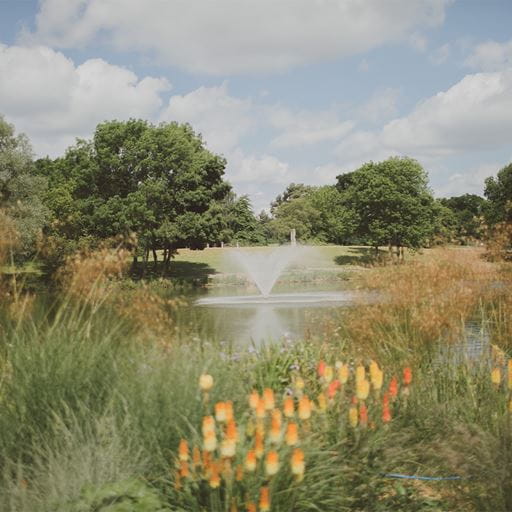
Set within 200 acres of award-winning parkland - Wivenhoe Park and located two miles from the historic city centre of Colchester – England's oldest recorded development. Our Colchester Campus is also easily reached from London and Stansted Airport in under one hour.
If you live too far away to come to Essex (or have a busy lifestyle), no problem. Our 360-degree virtual tour allows you to explore our University from the comfort of your home. Check out our Colchester virtual tour to see accommodation options, facilities and social spaces.
Chat to us
Got a question about this course? Chat with one of our academics in the School of Life Sciences.
At Essex we pride ourselves on being a welcoming and inclusive student community. We offer a wide range of support to individuals and groups of student members who may have specific requirements, interests or responsibilities.
The University makes every effort to ensure that this information on its programme specification is accurate and up-to-date. Exceptionally it can be necessary to make changes, for example to courses, facilities or fees. Examples of such reasons might include, but are not limited to: strikes, other industrial action, staff illness, severe weather, fire, civil commotion, riot, invasion, terrorist attack or threat of terrorist attack (whether declared or not), natural disaster, restrictions imposed by government or public authorities, epidemic or pandemic disease, failure of public utilities or transport systems or the withdrawal/reduction of funding. Changes to courses may for example consist of variations to the content and method of delivery of programmes, courses and other services, to discontinue programmes, courses and other services and to merge or combine programmes or courses. The University will endeavour to keep such changes to a minimum, and will also keep students informed appropriately by updating our programme specifications. The University would inform and engage with you if your course was to be discontinued, and would provide you with options, where appropriate, in line with our Compensation and Refund Policy.
The full Procedures, Rules and Regulations of the University governing how it operates are set out in the Charter, Statutes and
Ordinances and in the University Regulations, Policy and Procedures.
3.png?mw=300)