Postgraduate Course

MSc Strength and Conditioning

MSc Strength and Conditioning

Overview

The details
Strength and Conditioning
September 2026
Full-time
1 year
Colchester Campus

What is the MSc Strength and Conditioning?

MSc Strength and Conditioning is a one-year degree, available to study on a full-time and part-time basis from September 2026.

This research-informed, professionally focused Masters degree is designed to develop expert coaches who can physically prepare athletes at every level. Delivered through a blended learning model, the course combines online lectures with intensive on-campus practical sessions, giving you the flexibility to study from anywhere in the world while gaining hands-on coaching experience in elite-level facilities.

Why this course

Choosing MSc Strength and Conditioning means joining a programme shaped by elite sport practitioners, cutting-edge research and industry-recognised standards.

  • Research-led teaching from UKSCA-accredited coaches with experience working with international athletes
  • NSCA Education Recognition Program (ERP) approved – a mark of quality recognised globally
  • Flexible blended learning, ideal for working professionals or international students
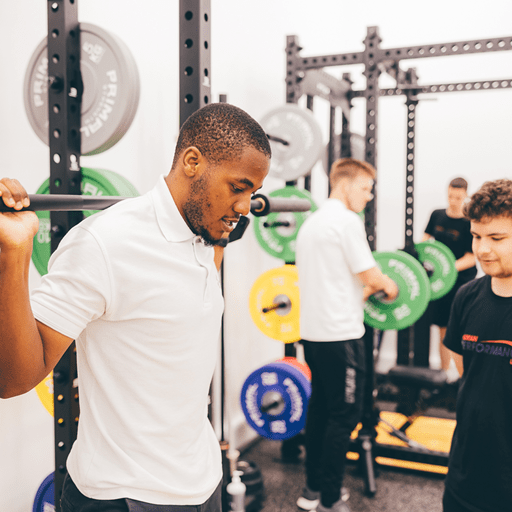
  • Hands-on practical training in specialist strength and conditioning facilities, including the Human Performance Laboratory and Human Performance Unit
  • Top-tier research environment - Essex is 23rd in the UK for research power in sport and exercise sciences (REF 2021)
  • This course is designed to help you become a confident, evidence-driven practitioner capable of improving athletic performance and supporting athletes across diverse sporting contexts.


Who should apply

    This Masters is ideal for:

    • Aspiring strength and conditioning coaches looking to enter professional or youth sport
    • Current practitioners in coaching, sport science, physiotherapy, or sports therapy seeking advanced applied skills
    • Graduates in sport and exercise disciplines who want to specialise in athlete development and performance enhancement
    • International students wanting to study strength and conditioning in the UK through a flexible, blended format
      • If you’re motivated to help athletes reach their potential and want to deepen your expertise in training science, movement analysis and coaching practice, this course is designed for you

Join a short taster

Get a real feel for this course at a taster webinar with programme lead, Dr Louis Howe. Book your place:

What you’ll learn

    You’ll develop the knowledge and practical skills required to design, deliver and evaluate high-performance training programmes. Key learning outcomes include:

    • Programme design and coaching: Design and deliver structured training programmes to improve strength, power and performance

    • Performance analysis and monitoring: Assess athlete performance, track progress and adapt training using data and testing methods

    • Physiology and adaptation: Understand how the body responds to training and apply this to optimise performance outcomes

    • Movement and biomechanics: Analyse movement and technique to enhance efficiency and reduce injury risk

    • Research and evidence-based practice: Interpret scientific research and apply it to coaching and athlete development

    Popular topics include periodisation, neuromechanics, skill acquisition, physiology of training, applied coaching techniques, and professional development in Strength and Conditioning

Your learning experience

This course is delivered through a blended learning structure, combining online flexibility with immersive practical training.

Learning and teaching methods

  • Pre-recorded online lectures you can access anytime
  • Live online seminars and problem-based learning tasks in small groups
  • Intensive on campus practical blocks (4 days at the start, 7 days later in the year)
  • Hands-on coaching practice using specialist equipment and elite-level testing tools

Facilities and practical experience

You’ll train and learn in world-class environments, with the chance to conduct your final-year research alongside academics and PhD students in dedicated research facilities, including:

  • Strength and conditioning facility
  • Human Performance Laboratory
  • Sport and physiology laboratories
  • 12 camera 3D motion analysis system
  • Isokinetic dynamometer
  • Gas and blood analysis systems
  • Human Performance Unit (with opportunities to work with elite athletes)

Study hours

  • Weekly online lectures and seminars during term time
  • On site practical weeks for intensive skill development
  • Independent study and research project supervision throughout the year

Whether full-time or part-time, you’ll gain a rich blend of theoretical knowledge and applied coaching experience.

Careers and outcomes

Graduates of MSc Strength and Conditioning are well prepared for careers across the sport performance sector. Typical roles include:

  • Strength and Conditioning Coach
  • Performance Coach
  • Youth Athlete Development Coach
  • Sport Scientist
  • Health and Fitness Specialist
  • Teaching or academic research roles

For high-performing athletes, Essex also offers Performance Sports Scholarships within their programme, with benefits such as fee discounts, dedicated coaching, access to its elite facilities and other support services.

Employers of graduates from this course

Graduates from this course are making an impact worldwide, progressing into roles across elite sport, healthcare, performance science, and global research institutions. Our alumni have secured positions with leading organisations such as:

  • Coventry City F.C. / West Ham United F.C. / Wolverhampton Wanderers F.C
  • NHS / Nuffield Health
  • Stanford University
  • Edinburgh Orthopaedic Spine and Surgery Centre
  • SCL Education Group
  • ERM

As part of our vibrant sports science community, you will also learn from and work alongside internationally recognised researchers and practitioners with industry links to organisations including:

We also connect you with work experience, internships and industry partners to boost your employability, professional credibility and readiness for roles in high-performance sport, athlete development, and applied sport science

Do I need a student visa?

You will not be able to acquire sponsorship for a student visa to study in the UK for this course, in accordance with Home Office regulations. You should be able to enter the UK for the short periods required using entry clearance as a Standard Visitor, due to the mostly-distance-learning nature of the course. Further guidance to seeking entry clearance to the UK as a Standard Visitor is available on our international webpages.

Professional accreditation

Approved and recognised program through the NSCA Education Recognition Program (ERP). Program approval through the NSCA ERP does not constitute nor imply accreditation through the CASCE.

Why we're great.
  • Gain the practical skill set and theoretical knowledge to excel as a Strength and Conditioning Coach in elite sport.
  • Study online on a blended learning course – tailor your studies to your own timetable anywhere in the world.
  • We are 23rd in the UK for research power in sport and exercise sciences (Times Higher Education research power measure, Research Excellence Framework 2021).

“I've really enjoyed the MSc Strength and Conditioning course, particularly the opportunity to work with athletes. The balance between theory and practical learning has been really valuable. Building real experience working with athletes, not just learning the theory, has been key to me securing an internship with Colchester United.”

Cameron Button, MSc Strength and Conditioning student

Course content

Course structure

Our research-led teaching is continually evolving to address the latest challenges and breakthroughs in the field. The following modules are based on the current course structure and may change in response to new curriculum developments and innovation.

We understand that deciding where and what to study is a very important decision for you. We'll make all reasonable efforts to provide you with the courses, services and facilities as described on our website and in line with your contract with us. However, if we need to make material changes, for example due to significant disruption, we'll let our applicants and students know as soon as possible.

Components and modules explained

Components

Components are the blocks of study that make up your course. A component may have a set module which you must study, or a number of modules from which you can choose.

Each component has a status and carries a certain number of credits towards your qualification.

Status What this means
Core
You must take the set module for this component and you must pass. No failure can be permitted.
Core with Options
You can choose which module to study from the available options for this component but you must pass. No failure can be permitted.
Compulsory
You must take the set module for this component. There may be limited opportunities to continue on the course/be eligible for the qualification if you fail.
Compulsory with Options
You can choose which module to study from the available options for this component. There may be limited opportunities to continue on the course/be eligible for the qualification if you fail.
Optional
You can choose which module to study from the available options for this component. There may be limited opportunities to continue on the course/be eligible for the qualification if you fail.

The modules that are available for you to choose for each component will depend on several factors, including which modules you have chosen for other components, which modules you have completed in previous years of your course, and which term the module is taught in.

Modules

Modules are the individual units of study for your course. Each module has its own set of learning outcomes and assessment criteria and also carries a certain number of credits.

In most cases you will study one module per component, but in some cases you may need to study more than one module. For example, a 30-credit component may comprise of either one 30-credit module, or two 15-credit modules, depending on the options available.

Modules may be taught at different times of the year and by a different department or school to the one your course is primarily based in. You can find this information from the module code. For example, the module code HR100-4-FY means:

HR 100  4  FY

The department or school the module will be taught by.

In this example, the module would be taught by the Department of History.

The module number. 

The UK academic level of the module.

A standard undergraduate course will comprise of level 4, 5 and 6 modules - increasing as you progress through the course.

A standard postgraduate taught course will comprise of level 7 modules.

A postgraduate research degree is a level 8 qualification.

The term the module will be taught in.

  • AU: Autumn term
  • SP: Spring term
  • SU: Summer term
  • FY: Full year 
  • AP: Autumn and Spring terms
  • PS: Spring and Summer terms
  • AS: Autumn and Summer terms

COMPONENT 01: CORE

Research Project
(60 CREDITS)

The research project module is an opportunity for you to carry out an individual scientific investigation on a topic relating to your degree specialisation. It will help develop your skills in reviewing synthesising and critically appraising academic literature. You will also be expected to design, analyse and interpret data and present findings in a scientific paper format.

View Research Project on our Module Directory

COMPONENT 02: COMPULSORY

Planning and Implementation of the Training Process
(30 CREDITS)

This module will present to students, through a wide range of theoretical, empirical and practical evidence, methods that can be used to design, monitor and implement techniques to optimally structure athletes' training activities. The module will outline a variety of programming approaches related to such issues as athletes' needs analyses, training periodisation and the application of a multitude of different training types. Students will develop their ability to critically analyse the wide range of techniques that they can apply to athletes operating in a variety of different contexts.

View Planning and Implementation of the Training Process on our Module Directory

COMPONENT 03: COMPULSORY

Neuromechanical basis of strength and conditioning
(15 CREDITS)

Strength and conditioning coaches deal primarily with movement problems – problems that ultimately impede the expression of force. The primary task of a strength and conditioning coach is to optimise an athlete's movement performance whilst minimising the risk of injury/pain. The art of coaching, which you will learn in other modules, must be informed by the scientific basis underpinning movement and its control. The aim of this module is to equip you with the theoretical and practical movement-based skills that will optimise your ability to assess, plan, and implement strength training programs to improve athletic performance.

View Neuromechanical basis of strength and conditioning on our Module Directory

COMPONENT 04: COMPULSORY

Skill Acquisition: Theory and Application
(15 CREDITS)

Skill acquisition is commonly described as the voluntary control over movements in an attempt to solve motor skill problems and achieve a task goal. These may vary from catching a ball or riding a bike, to slalom skiing or rhythmic gymnastics. Regardless of the domain, the interaction between the practitioner (e.g., coach) and athlete when learning these skills is absolutely fundamental to successful performance. Specifically, how can the practitioner create optimal practice conditions to facilitate skill acquisition? The module will firstly enhance your understanding of contemporary theory and research in skill learning and motor expertise. From this, the module takes on a more applied focus, where evidence-based approaches are synthesised to critically evaluate their effect on coaching practice.

View Skill Acquisition: Theory and Application on our Module Directory

COMPONENT 05: COMPULSORY

Physiology of Training
(15 CREDITS)

The Physiology of Training module aims to give students an understanding of the physiological mechanism that underpin human performance. The module will develop the student's critical knowledge around the physiological demands of short explosive, long sustained and intermittent activities from the perspective of different energy systems. Students will also gain and understanding of performing laboratory and field-based tests to physiologically profile athletes.

View Physiology of Training on our Module Directory

COMPONENT 06: COMPULSORY

Critical Enquiry and Evidence-Based Practice
(15 CREDITS)

This module will give students the opportunity to gain a comprehensive understanding of the complexities in critically evaluating study design, analysis and interpretation of research studies. The module will cover the practical usage and critical analysis of different research methodologies in traditional research setting and within an applied environment.

View Critical Enquiry and Evidence-Based Practice on our Module Directory

COMPONENT 07: COMPULSORY

Techniques in Strength and Conditioning
(15 CREDITS)

This module will introduce students to the underpinning practical skills required for the delivery of Strength and Conditioning services to athletes. The module will focus on developing students' awareness and understanding of a variety of exercise technical models that will support their ability to improve an athlete's performance. This will include developing students reasoning skills around why elements of performance for each exercise are vital. Students will also gain experience with a wide range of exercise equipment to further their practice as a Strength and Conditioning professional.

View Techniques in Strength and Conditioning on our Module Directory

COMPONENT 08: COMPULSORY

Professional Development in Strength and Conditioning
(15 CREDITS)

This module provides the opportunity to gain hands-on experience working as a coach or practitioner to develop students underpinning knowledge of key applied practice in strength and conditioning. This module centres on professional development through mentorship, where students will be supported by professionals working in strength and conditioning to develop specialised skills. The module will shine a light on various aspects of strength and conditioning to better equip students with insider knowledge of various aspects and contexts within sport. Students are encouraged to adopt a reflective approach to develop their expertise and practice.

View Professional Development in Strength and Conditioning on our Module Directory

Teaching

Through a combination of face-to-face teaching and distance learning, this course offers you the opportunity to graduate with a Masters degree.

Across this course, you will learn through:
  • pre-recorded online lectures, which you will be able to access in your own time, allowing you the flexibility to organise your learning experience;
  • live online seminars and problem-based learning tasks to facilitate your development in a small-group environment;
  • practical classes as part of our intensive on-site study periods, where you will build the skills and ‘real-world' experience to excel as a Strength and Conditioning Coach.

Full-time

The course starts with a four-day on-site period, where you will be introduced to the course and taught the practical elements from relevant modules. For the first and second terms, weekly pre-recorded online lectures will be complemented with live online seminars.

At the end of the second term, a second on-site visit of approximately seven days will take place, where you will be taught practical content and assessed on relevant modules through a range of evaluation techniques from presentations to practical coaching demonstrations. You will have the opportunity to meet your dissertation supervisor face-to-face, before submitting your thesis at the end of the third and final term.

Part-time

The course starts with a four-day on-site period, where you will be introduced to the course and taught the practical elements from relevant modules. For the first and second terms for both Year One and Two, weekly pre-recorded online lectures will be complemented with live online seminars.

At the end of the second term in Year One, a second on-site visit of approximately seven days will take place, where you will be taught practical content and assessed on relevant modules through a range of evaluation techniques from presentations to practical coaching demonstrations.

Year Two consists of two terms of online distance learning, during which time you will be responsible for developing your professional development portfolio and your dissertation for submission at the end of the Summer term.

Assessment

  • Practical assessments
  • Oral presentations
  • Written assessments such as literature reviews
  • Personal development portfolios
  • Athlete reports and case studies
  • Final research project

Entry requirements

UK entry requirements

A 2:2 degree in one of the following subjects:

  • Human Biology
  • Physical Education
  • Physiotherapy
  • Sport and Exercise Physiology
  • Sport and Exercise Science
  • Sports Coaching
  • Sports Therapy

We will consider applicants with a 2:2 degree in a similar relevant discipline.

Do I need a Student Visa?

Please note that students will not be able to acquire sponsorship for a Student visa to study in the UK for this course, in accordance with Home Office regulations. They should be able to enter the UK for the short periods required using entry clearance as a Standard Visitor. This is due to the mostly distance learning nature of the course. Further guidance in relation to seeking entry clearance to the UK as a Standard Visitor is available on our international webpages.

International & EU entry requirements

We accept a wide range of qualifications from applicants studying in the EU and other countries. Get in touch with any questions you may have about the qualifications we accept. Remember to tell us about the qualifications you have already completed or are currently taking.

Sorry, the entry requirements for the country that you have selected are not available here. Please contact our Graduate Admissions team at pgquery@essex.ac.uk to request the entry requirements for this country.

English language requirements


If English is not your first language, we require IELTS 6.5 overall with a minimum component score of 5.5 in all components.

If you do not meet our IELTS requirements then you may be able to complete a pre-sessional English pathway that enables you to start your course without retaking IELTS.

Additional Notes

The University uses academic selection criteria to determine an applicant’s ability to successfully complete a course at the University of Essex. Where appropriate, we may ask for specific information relating to previous modules studied or work experience.

Fees and funding

Home/UK fee

£11,025

International fee

£23,875

Scholarships and financial support

There may be scholarships, bursaries or discounts available to help with the cost of this course.

Fees and funding guide

Masters fees and funding information

Research (e.g. PhD) fees and funding information

What's next

Group of three female students walking along Southend Pier talking and looking at a booklet

Open Days

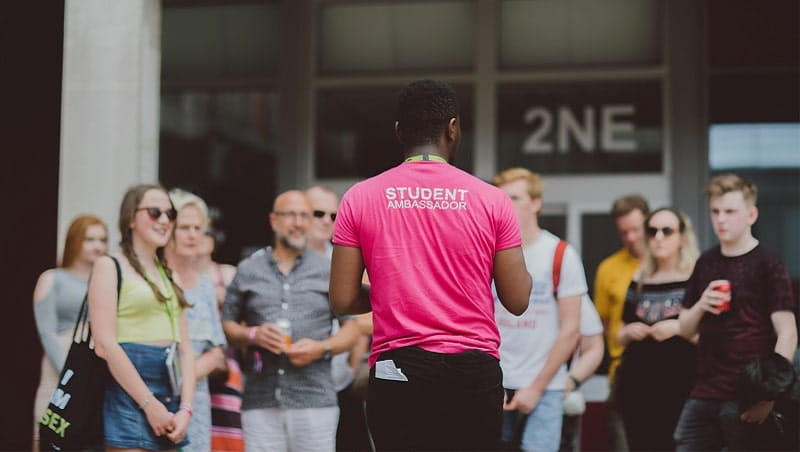
We hold Open Days for all our applicants throughout the year. Our Colchester Campus events are a great way to find out more about studying at Essex, and give you the chance to:

  • tour our campus and accommodation
  • find out answers to your questions about our courses, student finance, graduate employability, student support and more
  • meet our students and staff

If the dates of our organised events aren’t suitable for you, feel free to get in touch by emailing tours@essex.ac.uk and we’ll arrange an individual campus tour for you.

2026 Open Days (Colchester Campus)

  • Saturday 20 June 2026 - June Open Day
Male applicant sitting at a desk in their bedroom writing on a notepad

Applying

You can apply for this postgraduate course online. Before you apply, please check our information about necessary documents that we'll ask you to provide as part of your application.

We aim to respond to applications within two weeks. If we are able to offer you a place, you will be contacted via email.

For information on our deadline to apply for this course, please see our ‘how to apply' information.

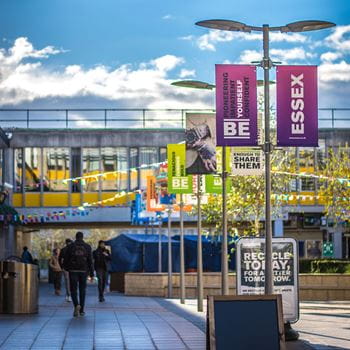
A sunny day with banners flying on Colchester Campus Square 4.

Visit Colchester Campus

Set within 200 acres of award-winning parkland - Wivenhoe Park and located two miles from the historic city centre of Colchester – England's oldest recorded development. Our Colchester Campus is also easily reached from London and Stansted Airport in under one hour.


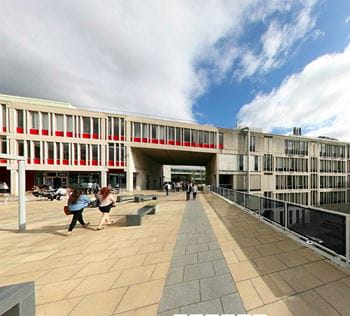
View from Square 2 outside the Rab Butler Building looking towards Square 3

Virtual tours

If you live too far away to come to Essex (or have a busy lifestyle), no problem. Our 360-degree virtual tour allows you to explore our University from the comfort of your home. Check out our Colchester virtual tour to see accommodation options, facilities and social spaces.

Aleksandra Birn-Jeffery
Chat to us

Got a question about this course? Chat with Aleksandra Birn-Jeffery from the School of Sport, Rehabilitation and Exercise Sciences.

Students talking in the sports hall in the School of Sport, Rehabilitation and Exercise Sciences
Visit the home of strength and conditioning at Essex

Meet the lecturers, discover our alumni’s achievements, and learn about Masters study in the School of Sport, Rehabilitation and Exercise Sciences.

Explore Masters study in the School of Sport, Rehabilitation and Exercise Sciences

At Essex we pride ourselves on being a welcoming and inclusive student community. We offer a wide range of support to individuals and groups of student members who may have specific requirements, interests or responsibilities.

The University makes every effort to ensure that this information on its programme specification is accurate and up-to-date. Exceptionally it can be necessary to make changes, for example to courses, facilities or fees. Examples of such reasons might include, but are not limited to: strikes, other industrial action, staff illness, severe weather, fire, civil commotion, riot, invasion, terrorist attack or threat of terrorist attack (whether declared or not), natural disaster, restrictions imposed by government or public authorities, epidemic or pandemic disease, failure of public utilities or transport systems or the withdrawal/reduction of funding. Changes to courses may for example consist of variations to the content and method of delivery of programmes, courses and other services, to discontinue programmes, courses and other services and to merge or combine programmes or courses. The University will endeavour to keep such changes to a minimum, and will also keep students informed appropriately by updating our programme specifications. The University would inform and engage with you if your course was to be discontinued, and would provide you with options, where appropriate, in line with our Compensation and Refund Policy.

The full Procedures, Rules and Regulations of the University governing how it operates are set out in the Charter, Statutes and Ordinances and in the University Regulations, Policy and Procedures.