The BSc Economics and Politics is a three-year degree, or four years with an optional placement or study abroad year.
You’ll explore how governments and markets shape societies - from the role of central banks and globalisation to how economic forces influence political decisions. Through a blend of theory, data analysis, and applied learning, you’ll develop the skills to understand the world’s most pressing policy challenges.
The BSc Economics and Politics gives you the insight and tools to understand and interpret how governments and markets shape our world. You’ll study political systems and economic principles side by side, exploring how decisions about money, power, and people drive everything from elections to global trade.
Learn from leading academics in a department where research informs government policy, economic reform, and international development. You’ll gain first-hand insight into how theory and data translate into real-world impact - and develop the analytical and quantitative skills that employers in government, finance, and consultancy value.
You can add a placement or study abroad year to apply your learning in professional or international settings, broadening your global perspective and confidence before graduation.
This course will help you develop a strong foundation in economic analysis and political understanding in preparation of a wide range of analytical roles, or further postgraduate study.
A BSc Economics and Politics degree can prepare you for diverse careers in:
Graduates from this course have progressed to roles in national and international organisations, including:
"Studying this course at Essex completely changed how I think. The insight I gained into British politics was something I’d never have experienced anywhere else - it opened up a whole new way of understanding how power really works."
We are committed to ensuring that all students with the merit and potential to benefit from an Essex education are supported to do so. We make Contextual Offers, of up to two A-level grades (or equivalent) below our standard conditional offer, to applicants from underrepresented groups residing in the UK. Our Contextual Offers policy outlines the full eligibility criteria.
For further information about what a Contextual Offer may look like for your specific qualification profile, email ugquery@essex.ac.uk.
If you haven't got the grades you hoped for, have a non-traditional academic background, are a mature student, or have any questions about eligibility for your course, more information can be found on our undergraduate application information page or get in touch with our Undergraduate Admissions Team at ugquery@essex.ac.uk.
We accept a wide range of qualifications from applicants studying in the EU and other countries. Get in touch with any questions you may have about the qualifications we accept. Remember to tell us about the qualifications you have already completed or are currently taking.
Sorry, the entry requirements for the country that you have selected are not available here. Please contact our Undergraduate Admissions team at ugquery@essex.ac.uk to request the entry requirements for this country.
English language requirements for applicants whose first language is not English
IELTS 6.0 overall with a minimum of 5.5 in each component, or specified score in an equivalent test that we accept.
Details of English language requirements and the tests we accept for applicants who require a Student visa (excluding Nationals of Majority English Speaking Countries) can be found here
If we accept the English component of an international qualification it will be included in the academic levels listed above for the relevant countries.
Pre-sessional English courses
If you do not meet our IELTS requirements then you may be able to complete a pre-sessional English pathway that enables you to start your course without retaking IELTS.
If you’re an international student, but do not meet the academic requirements for direct admission to this degree, you could prepare and gain entry through a pathway course. Find out more about opportunities available to you at the University of Essex International College

Our research-led teaching is continually evolving to address the latest challenges and breakthroughs in the field. The following modules are based on the current course structure and may change in response to new curriculum developments and innovation.
We understand that deciding where and what to study is a very important decision for you. We'll make all reasonable efforts to provide you with the courses, services and facilities as described on our website and in line with your contract with us. However, if we need to make material changes, for example due to significant disruption, we'll let our applicants and students know as soon as possible.
Components are the blocks of study that make up your course. A component may have a set module which you must study, or a number of modules from which you can choose.
Each component has a status and carries a certain number of credits towards your qualification.
| Status | What this means |
| Core |
You must take the set module for this component and you must pass. No failure can be permitted. |
| Core with Options |
You can choose which module to study from the available options for this component but you must pass. No failure can be permitted. |
| Compulsory |
You must take the set module for this component. There may be limited opportunities to continue on the course/be eligible for the qualification if you fail. |
| Compulsory with Options |
You can choose which module to study from the available options for this component. There may be limited opportunities to continue on the course/be eligible for the qualification if you fail. |
| Optional |
You can choose which module to study from the available options for this component. There may be limited opportunities to continue on the course/be eligible for the qualification if you fail. |
The modules that are available for you to choose for each component will depend on several factors, including which modules you have chosen for other components, which modules you have completed in previous years of your course, and which term the module is taught in.
Modules are the individual units of study for your course. Each module has its own set of learning outcomes and assessment criteria and also carries a certain number of credits.
In most cases you will study one module per component, but in some cases you may need to study more than one module. For example, a 30-credit component may comprise of either one 30-credit module, or two 15-credit modules, depending on the options available.
Modules may be taught at different times of the year and by a different department or school to the one your course is primarily based in. You can find this information from the module code. For example, the module code HR100-4-FY means:
| HR | 100 | 4 | FY |
|---|---|---|---|
|
The department or school the module will be taught by. In this example, the module would be taught by the Department of History. |
The module number. |
The UK academic level of the module. A standard undergraduate course will comprise of level 4, 5 and 6 modules - increasing as you progress through the course. A standard postgraduate taught course will comprise of level 7 modules. A postgraduate research degree is a level 8 qualification. |
The term the module will be taught in.
|
COMPONENT 01: CORE
How do consumers make decisions? Or firms conduct different market strategies? What impact does government policy have on inflation? Or unemployment? Develop your knowledge of economics in relation to a range of contemporary issues. Learn how to apply both micro and macroeconomic principles to the analysis of such problems.
COMPONENT 02: CORE
What is “Politics”? How have people conceived of political analysis, the state, laws, wars and political parties, across cultures and over time? Gain an understanding of essential concepts in the study of politics and explore the economic, social and intellectual trends that have made democracy possible.
COMPONENT 03: COMPULSORY
What are the main sources of economic data? And how is data used in economics? Study the methods of quantitative economics, looking at how economic data is described and analysed. Learn to read, understand and manipulate data from both a theoretical and empirical perspective.
View Introduction to Quantitative Economics on our Module Directory
COMPONENT 05: COMPULSORY
Develop the employability, citizenship, and life skills to successfully compete in the graduate job market after graduation. You complete a portfolio of employability skills and develop a critical understanding of the world of work.
COMPONENT 01: COMPULSORY
How do consumers behave in a competitive market? And what about producers? How do various imperfections affect the outcome of decentralised markets? Study the fundamental concepts and methods in microeconomics. Understand the tools and methods of analysis for economic reasoning, and develop your critical approach to economic issues and policies.
COMPONENT 02: COMPULSORY
How can we answer political questions using statistical data? Learn how to find relevant research designs and questions in order to use quantitative methods in political research, assisting you in your other modules and improving your job prospects.
View Quantitative Political Analysis on our Module Directory
COMPONENT 03: OPTIONAL
EC201-5-FY or 2nd year Economics option or 2nd year Politics option(s)COMPONENT 05: COMPULSORY
Which econometric methods can analyse economic data? How do you critically assess applied economic literature? Learn how to carry out statistical and econometric calculations, plus gain experience of using the Stata software package. Demonstrate your subsequent understanding of the linear regression model with your own investigation on an empirical issue.
View Introduction to Econometric Methods on our Module Directory
COMPONENT 06: COMPULSORY
Develop the employability, citizenship, and life skills to successfully compete in the graduate job market after graduation. You complete a portfolio of employability skills and develop a critical understanding of the world of work.
COMPONENT 01: COMPULSORY
Understand how different statistical and experimental methods can be used to answer questions about political phenomena. You evaluate the assumptions of standard statistical tests and the linear regression model, consider alternatives to those, and learn about causal inference.
View Advanced Quantitative Political Analysis on our Module Directory
COMPONENT 02: COMPULSORY
This module is about modern political economy, meaning analytical approaches to study how economic and political incentives interact to create constraints and opportunities that shape larger political and economic behaviour and outcomes. The module introduces students to the use of logic and evidence in order to understand classical political economy issues as well as to address contemporary policy issues in domestic settings. Some of the substantive topics that will be covered include: the origins of the state and state capacity, the political determinants of economic development and inequality, and democracy and redistribution.
COMPONENT 03: COMPULSORY
“Globalisation” encompasses a wide range of phenomena, including increasing global trade, deeper integration of financial markets, increasing foreign direct investment, the spread of multinational corporations, reduced travel, transportation and communication costs, and the emergence of global cultural trends. Globalisation impacts people in many different ways, both positively and negatively. It can enrich our lives, but it may also spur disruption and backlash.
View International Political Economy on our Module Directory
COMPONENT 06: COMPULSORY
Develop the employability, citizenship, and life skills to successfully compete in the graduate job market after graduation. You complete a portfolio of employability skills and develop a critical understanding of the world of work.
On a placement year you gain relevant work experience within an external business or organisation, giving you a competitive edge in the graduate job market and providing you with key contacts within the industry. The rest of your course remains identical to the three-year degree.
On your year abroad, you have the opportunity to experience other cultures and languages, to broaden your degree socially and academically, and to demonstrate to employers that you are mature, adaptable, and organised. The rest of your course remains identical to the three-year degree.
Undergraduate students in the Department of Government generally have a one-hour lecture and a one-hour seminar for each module every week or a two-hour seminar (in the case of smaller modules), but there are variations in place depending on the module.
£9,790 per year
£22,600 per year
Fees will increase for each academic year of study.
If your course has the option to include a placement year or study abroad, and you choose to do so, you will pay the following:
20% of your standard tuition fee for that year
15% of your standard tuition fee for that year
Standard tuition fee
There may be scholarships, bursaries or discounts available to help with the cost of this course.
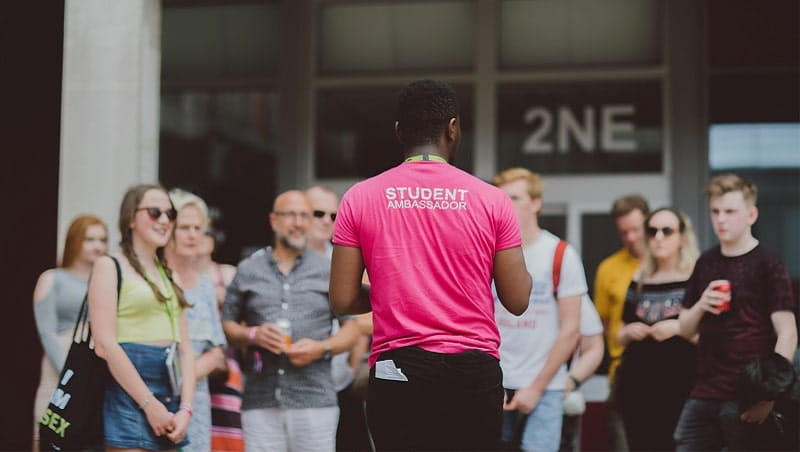
Our events are a great way to find out more about studying at Essex. We run a number of Open Days throughout the year which enable you to discover what our campus has to offer. You have the chance to:
Check out our Visit Us pages to find out more information about booking onto one of our events. And if the dates aren’t suitable for you, feel free to book a campus tour here.
Applications for our full-time undergraduate courses should be made through the Universities and Colleges Admissions Service (UCAS). Full details on how to apply can be found on the filling in your UCAS undergraduate application web page.
Our UK students, and some of our EU and international students, who are still at school or college, can apply through their school. Your school will be able to check and then submit your completed application to UCAS. Our other international applicants (EU or worldwide) or independent applicants in the UK can also apply online through UCAS Apply.
The UCAS code for our University of Essex is ESSEX E70. The individual campus codes for our Loughton and Southend Campuses are 'L' and 'S' respectively.
You can find further information on how to apply, including information on transferring from another university, applying if you are not currently at a school or college, and applying for readmission on our How to apply and entry requirements page.
If you receive an undergraduate offer to study with us in October 2026 and live in the UK, you will receive an email invitation to book onto one of our Open Days. These events provide the opportunity to meet your department, join interesting taster sessions, tour our campus and accommodation, and chat to current students. You can visit our Open Days event page for more information, including terms and conditions.
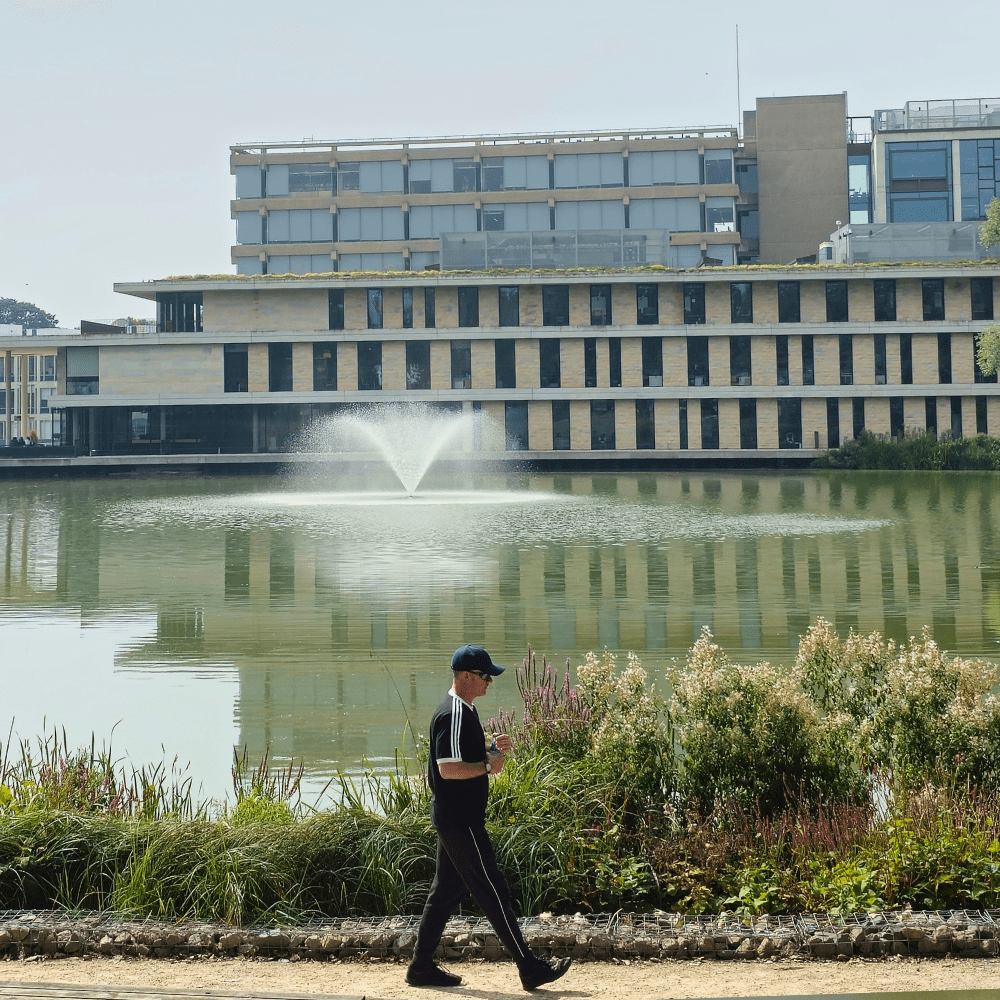
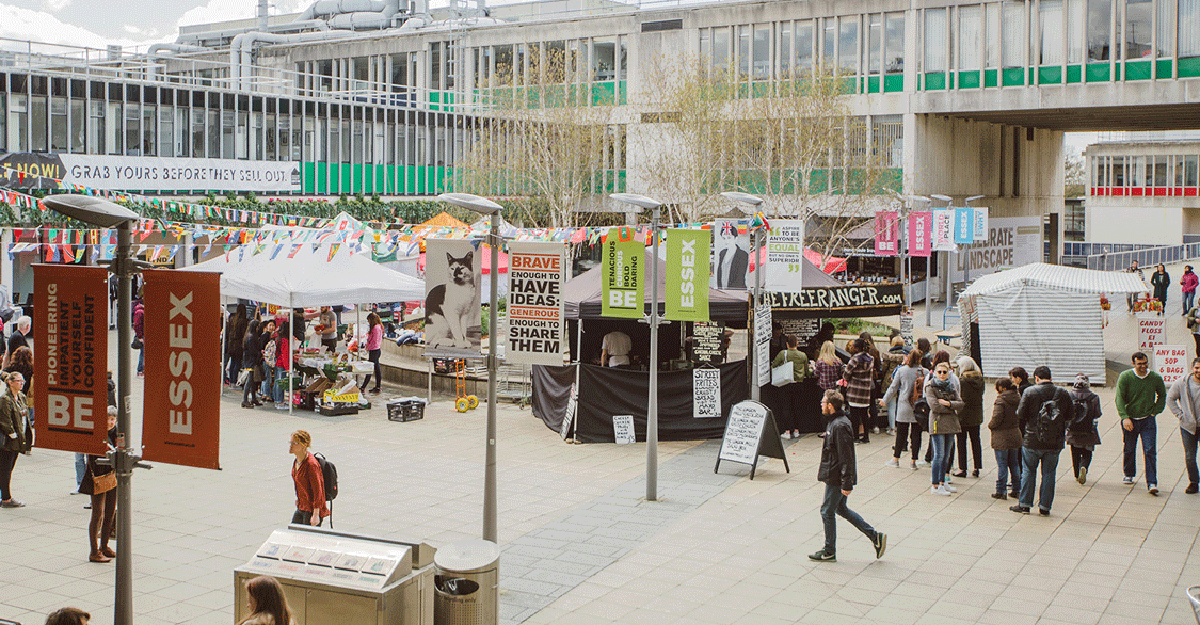
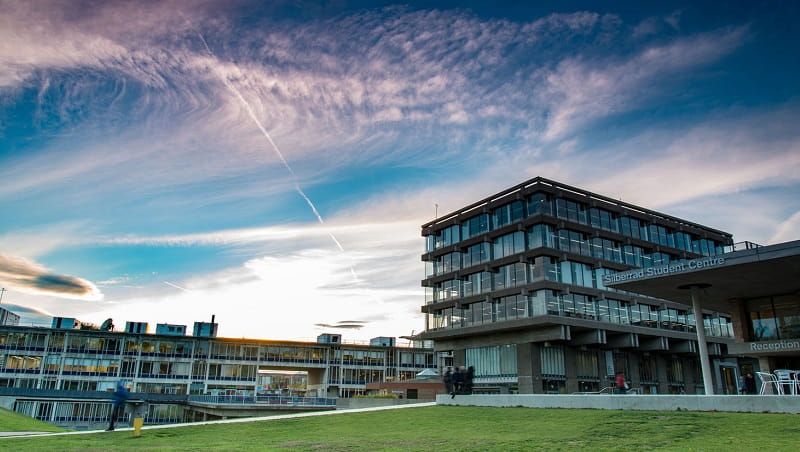
Set within 200 acres of award-winning parkland - Wivenhoe Park and located two miles from the historic city centre of Colchester – England's oldest recorded development. Our Colchester Campus is also easily reached from London and Stansted Airport in under one hour.
If you live too far away to come to Essex (or have a busy lifestyle), no problem. Our 360-degree virtual tour allows you to explore our University from the comfort of your home. Check out our Colchester virtual tour to see accommodation options, facilities and social spaces.
Got a question about this course? Chat with Professor Natasha Lindstaedt from the Department of Government.
At Essex we pride ourselves on being a welcoming and inclusive student community. We offer a wide range of support to individuals and groups of student members who may have specific requirements, interests or responsibilities.
The University makes every effort to ensure that this information on its programme specification is accurate and up-to-date. Exceptionally it can be necessary to make changes, for example to courses, facilities or fees. Examples of such reasons might include, but are not limited to: strikes, other industrial action, staff illness, severe weather, fire, civil commotion, riot, invasion, terrorist attack or threat of terrorist attack (whether declared or not), natural disaster, restrictions imposed by government or public authorities, epidemic or pandemic disease, failure of public utilities or transport systems or the withdrawal/reduction of funding. Changes to courses may for example consist of variations to the content and method of delivery of programmes, courses and other services, to discontinue programmes, courses and other services and to merge or combine programmes or courses. The University will endeavour to keep such changes to a minimum, and will also keep students informed appropriately by updating our programme specifications. The University would inform and engage with you if your course was to be discontinued, and would provide you with options, where appropriate, in line with our Compensation and Refund Policy.
The full Procedures, Rules and Regulations of the University governing how it operates are set out in the Charter, Statutes and Ordinances and in the University Regulations, Policy and Procedures.