East 15 Acting School's BA Acting and Community Engagement course is a professional route into the world of community-focused theatre practice in which artists create theatre for, with, and about the communities in which they live.
In an intensely practical, professionally oriented environment, a broad range of acting, performance and community facilitation skills are developed through local projects and in partnership with leading industry organisations.
You will work extensively with communities and professionals throughout your training, making for a seamless transition to a professional career in this field.
If you believe that theatre is for all and you want to use the power of drama to influence the world, our BA Acting and Community Engagement is for you!
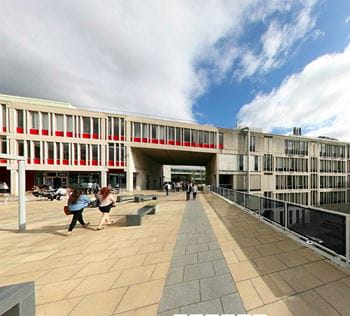
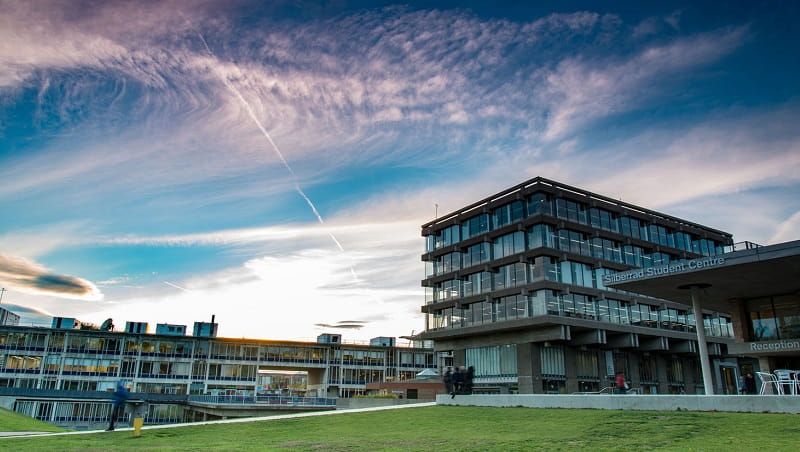
From 2026-27, this course will be taught at our Colchester Campus. This campus is situated in 200 acres of parkland surrounded by beautiful countryside, with Colchester city centre just down the road. We're currently undertaking work to create bespoke East 15 studio spaces and other specialist facilities at this campus.
View more undergraduate courses from East 15 Acting School, including further Actor training programs as well as behind the scenes courses in Creative Producing and Stage & Production Management.
Our training is by professionals and for professionals, allowing our graduates to work successfully across the globe.
Our international, outstanding teaching faculty is made up of professionals from all areas of live and recorded performance.
Learn more about our staff here.
From autumn 2026, all East 15 Acting School courses currently delivered at the Southend Campus will move to the Colchester Campus.
The campus is set within 200 acres of parkland and located just two miles from the historic city centre of Colchester, England's oldest recorded development. The campus is easily reached from London and Stansted Airport in under one hour.
The Colchester Campus is home to some great facilities, including the 200-seat Lakeside Theatre and the landmark Albert Sloman Library. Other facilities include the Silberrad Student Centre, a selection of cafes, restaurants and street food outlets, the SU bar, social spaces, the sports centre and gym, and a food market on Thursdays.
There is also a range of accommodation options which are within a walking distance of campus facilities.
We're undertaking work to create bespoke East 15 studio spaces and other specialist facilities at Colchester. In the meantime, you can take a virtual tour of the campus and accommodation facilities.
Graduates of the BA Acting and Community Engagement course work as actors, project leaders, directors, comedians and producers worldwide. Several companies formed by graduates are now well established, respected and funded in an increasingly competitive industry, with some employing recent graduates upon completion of their training.
“This course doesn’t only teach you to be an actor/actress but also equips you with a very handy bag of tricks ranging from circus skills to clowning to Commedia. I have worked with a huge range of people from different theatre companies and with people in the community. I’ve also learned how you can put your own company together.”
Dale Curran, BA Acting and Community Engagement
Applicants will need to submit a video audition and, if successful, complete a recall audition/workshop. Applicants should also have, or expect to have:
Additional requirements
You must also have a satisfactory enhanced Disclosure and Barring Service (DBS) Check (including child and adult barred list check) - this is organised by the University. Please contact our DBS team if you have any questions relating to this.
A satisfactory Overseas Criminal Record Check/Local Police Certificate is also required, in addition to a DBS Check, where you have lived outside of the UK in the last 5 years for 6 months or more.
We accept a wide range of qualifications from applicants studying in the EU and other countries. Get in touch with any questions you may have about the qualifications we accept. Remember to tell us about the qualifications you have already completed or are currently taking.
Sorry, the entry requirements for the country that you have selected are not available here. Please contact our Undergraduate Admissions team at ugquery@essex.ac.uk to request the entry requirements for this country.
If you do not require a student visa to study in the UK then we will assess your English language proficiency/ability at your interview or audition.
English language requirements for applicants whose first language is not English: IELTS 6.0 overall with a minimum of 5.5 in each component, or specified score in another equivalent test that we accept.
Details of English language requirements, including component scores, and the tests we accept for applicants who require a Student visa (excluding Nationals of Majority English Speaking Countries) can be found here
If we accept the English component of an international qualification it will be included in the academic levels listed above for the relevant countries.
English language shelf-life
Most English language qualifications have a validity period of 5 years. The validity period of Pearson Test of English, TOEFL and CBSE or CISCE English is 2 years.If you require a Student visa to study in the UK please see our immigration webpages for the latest Home Office guidance on English language qualifications.
Pre-sessional English courses
If you do not meet our IELTS requirements then you may be able to complete a pre-sessional English pathway that enables you to start your course without retaking IELTS.
Pending English language qualifications
You don’t need to achieve the required level before making your application, but it will be one of the conditions of your offer.
If you cannot find the qualification that you have achieved or are pending, then please email ugquery@essex.ac.uk.
If you’re an international student, but do not meet the English language or academic requirements for direct admission to this degree, you could prepare and gain entry through a pathway course. Find out more about opportunities available to you at the University of Essex International College
We offer dynamic and unique courses for actors, directors, producers, technical theatre specialists and students of theatre practice. Training at East 15 draws upon 50 years of tradition combined with a keen sense of the world of stage and screen today.
Our carefully selected modules will give you the chance to explore and develop your specialist training.
We understand that deciding where and what to study is a very important decision for you. We'll make all reasonable efforts to provide you with the courses, services and facilities as described on our website and in line with your contract with us. However, if we need to make material changes, for example due to significant disruption, we'll let our applicants and students know as soon as possible.
Components are the blocks of study that make up your course. A component may have a set module which you must study, or a number of modules from which you can choose.
Each component has a status and carries a certain number of credits towards your qualification.
| Status | What this means |
| Core |
You must take the set module for this component and you must pass. No failure can be permitted. |
| Core with Options |
You can choose which module to study from the available options for this component but you must pass. No failure can be permitted. |
| Compulsory |
You must take the set module for this component. There may be limited opportunities to continue on the course/be eligible for the qualification if you fail. |
| Compulsory with Options |
You can choose which module to study from the available options for this component. There may be limited opportunities to continue on the course/be eligible for the qualification if you fail. |
| Optional |
You can choose which module to study from the available options for this component. There may be limited opportunities to continue on the course/be eligible for the qualification if you fail. |
The modules that are available for you to choose for each component will depend on several factors, including which modules you have chosen for other components, which modules you have completed in previous years of your course, and which term the module is taught in.
Modules are the individual units of study for your course. Each module has its own set of learning outcomes and assessment criteria and also carries a certain number of credits.
In most cases you will study one module per component, but in some cases you may need to study more than one module. For example, a 30-credit component may comprise of either one 30-credit module, or two 15-credit modules, depending on the options available.
Modules may be taught at different times of the year and by a different department or school to the one your course is primarily based in. You can find this information from the module code. For example, the module code HR100-4-FY means:
| HR | 100 | 4 | FY |
|---|---|---|---|
|
The department or school the module will be taught by. In this example, the module would be taught by the Department of History. |
The module number. |
The UK academic level of the module. A standard undergraduate course will comprise of level 4, 5 and 6 modules - increasing as you progress through the course. A standard postgraduate taught course will comprise of level 7 modules. A postgraduate research degree is a level 8 qualification. |
The term the module will be taught in.
|
COMPONENT 01: CORE
This core first year acting module provides an initial training in acting theory, method and practice based on the uniqueness of the individual and the ability to change, adapt, extend, perceive, accept and reject. Students move through self-study to look outside themselves, approaching firstly improvised situations and then scripted text in imaginative and collaborative ways. By the end of the course you will know how to start work on a play and will have begun collaborative text work. You are able to begin to create a character from a text and to start the process of creating the world of the play.
COMPONENT 02: CORE
For this core first year acting module students work in small groups to study scenes from a contemporary play, learning how to divide a scene into units of action, how to discover objectives for a character and use the text to discover information – about the play, its themes and characters. You workshop scenes in your groups, practising your learning from the early part of the course. By the end of this block of work you will be able to find a character’s through line and recreate work achieved during the rehearsal process.
View Verbatim Theatre and Contemporary Scene Study on our Module Directory
COMPONENT 03: CORE
This first year acting module provides opportunities for students to apply the introductory learning of EA131 and EA132 to more demanding textual and acting challenges. You will continue to advance your actor training through a focused approach to the theatre of a particular period. The work of this module will progress into second year when it will inform and support the devising of text.
COMPONENT 04: CORE
This core first year acting module provides you with opportunities to play out the life of a character under simulated rather than ‘staged’ conditions in order to understand more fully the true meaning of the character’s experience and emotional depths.
COMPONENT 05: CORE
This core full year module is one of the programme’s four skills modules. The work begins in Term One with an introduction to the anatomy of voice production. You will begin the work of acquiring good vocal habits through the use of basic vocal exercises. Techniques for direct communication with voice will be introduced. In Term Two you will develop the structures used by voice. You will work on improving articulation and explore accents and the voices of others. The work of the final term is on the vocal demands of acting, on developing clarity and power. By the end of the module you will have the ability to assess critically your own vocal capabilities and will have in place vocal exercises and a regime for future use.
COMPONENT 06: CORE
This core full year module is one of the programme’s four skills modules. The work begins in Term One with an introduction to basic anatomy. You begin the work of developing suppleness and stamina. Techniques for the release of emotion in movement will be introduced. In Term Two you develop balance, co-ordinations and rhythm, linking movement and dance with acting. You learn a range of styles and carriage. The work of the final term covers preparation for physical demands and the extension of physical and dance vocabulary.
COMPONENT 07: CORE
This core full year module is one of the programme’s four skills modules.
COMPONENT 08: CORE
Actors spend their entire careers speaking other people’s words and trying to imagine how other people think. Contextual Studies is intended to help students to observe, to make rational sense of their observations and to put their own ideas into their own words as part of seminar discussion and in writing. The arts administration component introduces students to the principles of community theatre and the way companies work in the community. This module has been designed to enable students to integrate their subject knowledge with an understanding of sustainable development, acquiring the skills and competencies essential for addressing the urgent sustainability challenges of the 21st century.
View Contextual and Community Studies on our Module Directory
COMPONENT 01: CORE
In this second year module for Acting and Community Theatre the students will begin to develop relationships with local organisations and to explore the different influences and contexts that form the cultural landscape of communities. The module involves applying acting skills developed in the first year to performance projects devised from participants’ experiences. Students will consult with participants in their local communities. They will gain experience of working with and for a range of people from 4 years to 90 years, to develop and present community theatre performances and/or workshops. Projects will draw on observation and narrative, exploring and referring to local stories, issues and identities. Performances may take place in a range of environments such as on campus, in studios, at youth centres, schools, libraries, outdoors or online. The module may be delivered on a cyclic basis so that student groups may undertake units at different times.
View Applied Theatre Skills I: Consulting the Community on our Module Directory
COMPONENT 02: CORE
This core second year module has a focus on community development, and you have opportunities to investigate equality of opportunity and community cultural development as you engage with communities in Southend, Loughton and the wider south east England region. You extend your experience of creating theatre in a range of forms, styles and performance environments. You explore a variety of approaches to physical theatre, object manipulation and outdoor performance, extending your technical and acting skills to apply to the demanding environments of street theatre. The work of this module culminates in the creation of Pandemonium – a street theatre festival for the people of Southend.
View Applied Theatre Skills II: Developing the Community on our Module Directory
COMPONENT 03: CORE
In this core second year module you examine a range of community theatre contexts of arts management. You explore the structure and management of small-scale community and voluntary sector arts organisations, and community and education departments within large organisations. The module includes preparation for work placements assessed in the final year. By the end of the module you are prepared to learn and begin to apply arts administration skills in a professional company context. Aspects of event management and production management are explored. This may include such aspects as marketing, databases, budgets, liaison with agencies, licensing, risk assessment, audience management and other aspects of health and safety, along with scheduling and logistics. The structure and purpose of organisations involved in community theatre: community, voluntary, public and relevant departments under the umbrella of larger organisations.
View Community Theatre Arts Management on our Module Directory
COMPONENT 04: CORE
The emphasis in this module is on developing design concepts and technical expertise for mounting small-scale community theatre, and developing technical skill in video documentary. You explore case studies of design for performance in the community. You are encouraged to make use of found materials and low-budget solutions suitable for small-scale touring and work in community settings. You gain an understanding of the technical, legal and health and safety issues of performance in a range of scales and settings. You learn to carry out established risk assessment procedures and to propose appropriate solutions to health and safety issues.
COMPONENT 05: CORE
The work of this second year Acting and Community Theatre module provides a training in voice, music movement and appropriate circus skills required for performance in community settings. Students will explore techniques of physical theatre and extended vocal work. The work of this module provides students with an overview of the music appropriate to contemporary and historical contexts of their acting projects. Students will be able to apply standard body and vocal warm-ups and take active responsibility for identifying and remedying areas of personal weakness in performance. Contemporary theatre practices to extend students’ understanding of physicality, voice, movement and characterisation in relation to community theatre. Students will learn how to perform percussion improvisations and to create outdoor processional performance. They will explore a range of carnival traditions and learn to make appropriate choices for their use in practical projects.
COMPONENT 06: CORE
This is a full-year module for students on the BA Hons Acting and Community Theatre course. The module explores the role of the arts in the public realm and will introduce the wider history and context of community theatre in the UK and Europe. It will draw on the development of ideas of 'popular theatre', including theories of carnival, spectacle and community empowerment, with examples from a range of cultural contexts and practices. Students will also explore theories of representation including semiotics, drawing on visual, aural and popular culture. You will critically analyse performances, lectures and classes you have attended, drawing on appropriatetechnical and theoretical vocabulary. You will learn to locate performance practice within a social and cultural framework.
COMPONENT 01: CORE
The work of this BA Hons Acting and Community Theatre Year 3 module begins with a series of workshops to introduce students to the ethical and practical issues of working with vulnerable groups involved with the health, social services or criminal justice system. Students are encouraged to develop a working knowledge of the processes of exclusion and inclusion, and of contemporary practice of theatre arts projects with these participants. The module further explores the role of theatre and workshop facilitation with participants who may have a disability or poor mental health, or are socially excluded, are at risk of offending or are in the criminal justice system.
View Applied Theatre Skills III: Wellbeing, Social Care and Criminal Justice on our Module Directory
COMPONENT 02: CORE
This module explores the research, development and performance of site-specific, issue-based and socio-political theatre. It explores citizenship, the interrelationship of performance environment, form and content, the notion of community- based media, satire and theatre for development. Students will develop a performance in an identified community setting with local historical or social significance. The performance will draw on advanced technical resources in performance and production, and involve extended development and application of acting, voice, music and movement skills. Students will explore theatre as propaganda, consultation and persuasion. Provocative texts designed to stimulate debate and interactive techniques designed to promote participation and enquiry may be used to illustrate this theatrical form. The role of theatre in development, regeneration and conflict resolution will be examined. Students will apply these approaches to research and development of a theatre performance. Advanced techniques in recording and editing of video and audio documentary and performance will be applied to develop a project of contemporary community media. Technical skill in web design will be developed
COMPONENT 03: CORE
In this module you undertake a placement for a minimum of one day per week over fifteen weeks with a local or regional arts organisation of other user/provider of applied theatre. The work may be ‘blocked’ into a total of three weeks’ work or a combination of days and weeks by negotiation with the tutor and placement provider. Potential work placement providers include arts organisations, schools hospitals and social care or youth work settings. You are supported in their placements by the module tutor and a designated work placement supervisor within the organisation. You undertake 15 days work placement during the summer vacation between second and final years or other non-teaching periods as negotiated with the course leader. You critically examine the working practices of the organisations and companies with which you have a work placement. You further explore issues in current arts management, funding and arts development. You extend your arts administration knowledge in funding sources, developing a pitch and completing an application. Production management is advanced to consider planning, prioritising of areas and time lines. The work of this professional preparation module includes lectures with key industry bodies and personal management sessions.
View Arts Administration and Professional Development on our Module Directory
COMPONENT 04: CORE
This module runs over 10 weeks, and can wither run the length of the Autumn or Summer Term, or be separated into smaller blocks of work. The student will be responsible for securing their own placement, with approval needed from the Head of Course. The type of placement will vary according to student interest but it may fall under the following headings: Theatre Management, Company Management, Film Production, Media, Stage Management, Dramaturgy or Research Assistant, Assistant Director (film or theatre) and Arts Administration.
COMPONENT 05: CORE
This is the summative project for the BA Hons Acting and Community Theatre final year. In small companies students will identify a community setting in which to develop a theatrical intervention. For example this could take the form of a community play, a participatory project, or promenade performance. The students will work with at least one group of participants to develop the project. Each company of students will work as production crew and FOH for another company. Students will align the artistic and practical needs of the project and the community they work with. They will ensure that the performance conforms to licensing and other regulatory requirements. They will consider issues of accessibility and interpretation for audiences. Posters, programmes, and publicity for the project will be produced. Through regular company meetings they will assign roles to manage publicity, production processes and documentation of performances. During the work of this module students will critically examine the role of the artist, management and arts administration in community theatre. They will reflect on their own artistic development and readiness for high level participation in the development of community arts provision.
Your first year focuses on introductory acting, voice, articulation, singing and movement. You explore individual creativity, self and responsiveness to other actors, as well as developing observational skills and improvisation, applied research and learning how to engage and collaborate with a range of different community groups. In addition you will:
Your first year culminates in a unique ‘Living History Project', in which you study, understand and live the lives of others through a period of historical conflict.
Your second year provides key practical and public experience. This includes working in partnership with practicing professionals to create documentary theatre based on real lives, devise and tour participatory performances, perform object theatre and understand and perform Forum theatre. You will also:
You will also gain a thorough understanding of developing a theatre project from conception to delivery through devising, managing and performing in the annual ‘Southend Street Theatre Festival'
Your third year involves extensive work with communities and professionals to help you make a seamless transition into professional life. Projects include:
You will also apply production, marketing and evaluation skills to create your own, devised community play.
The year culminates with an Industry Showcase for an invited audience of influential agents, casting directors, theatre companies, and film, TV and theatre directors. East 15 continually liaises with industry professionals to ensure the format for the event accords with the changing landscape of the industry.
£9,790 per year
Additional costs for materials and field trips of up to approximately £650 per academic year. Equipment lists are reviewed annually.£22,600 per year
Additional costs for materials and field trips of up to approximately £650 per academic year. Equipment lists are reviewed annually.Fees will increase for each academic year of study.
If your course has the option to include a placement year or study abroad, and you choose to do so, you will pay the following:
20% of your standard tuition fee for that year
15% of your standard tuition fee for that year
Standard tuition fee
There may be scholarships, bursaries or discounts available to help with the cost of this course.
Our events are a great way to find out more about studying at Essex. We run a number of Open Days throughout the year which enable you to discover what our campus has to offer. You have the chance to:
Check out our Visit Us pages to find out more information about booking onto one of our events. And if the dates aren’t suitable for you, feel free to book a campus tour here.
You can apply to our full-time undergraduate courses through either the Universities and Colleges Admissions Service (UCAS) or the University of Essex Direct Application Form.
If you choose to apply through UCAS, you can find step-by-step guidance on how to fill your UCAS undergraduate application. UK students (as well as some EU and international students) who are still in school or college may apply through their institution. Your school will help you complete and submit your UCAS application. The option to apply through UCAS is also available to independent UK and international applicants.
The UCAS code for the University of Essex is ESSEX E70. The individual campus codes for our Loughton and Southend Campuses are ‘L' and ‘S' respectively.
In addition your UCAS or University of Essex application, you must also submit an East 15 Application Form.
For full details on how to apply, please visit the Applying for an Undergraduate Course page on the East 15 website.
Applicants to this course must submit a Round 1 video audition as part of your East 15 Application Form. If successful at this stage, you'll be invited to a Round 2 audition, which may take place on our campus, online, or at a regional or international audition.
We no longer charge an audition fee for Round 1 auditions. There is a £10 administration fee for Round 2 auditions. Administration fee waivers are available for eligible applicants. You can check your eligibility for a waiver on the Applying for an Undergraduate Course page.
Our staff regularly travel to conduct auditions worldwide. So if you're not based in the UK, it's likely that we may hold auditions near you. These will be one-on-one auditions. You can find the locations and dates of these auditions on our International Auditions page.
Offers for this course are made only after successful auditions.
For details of what to prepare for our auditions, please visit our Preparing for Auditions page.
All students on the BA Acting and Community Engagement course are required to undertake an enhanced Disclosure and Barring Service (DBS) check because you will come into contact with children and/or vulnerable adults through a work placement undertaken as part of your course. DBS checks must be completed before the start of the relevant work placement or activity.
You are required to declare a criminal record at the time of applying for the course and before completing a DBS check application. A student with a DBS disclosure certificate containing details of a criminal record will be referred to the University's DBS Review Panel who will determine whether or not the student can be admitted to the course or permitted to continue on the course.
Set within 200 acres of award-winning parkland - Wivenhoe Park and located two miles from the historic city centre of Colchester – England's oldest recorded development. Our Colchester Campus is also easily reached from London and Stansted Airport in under one hour.
If you live too far away to come to Essex (or have a busy lifestyle), no problem. Our 360-degree virtual tour allows you to explore our University from the comfort of your home. Check out our Colchester virtual tour to see accommodation options, facilities and social spaces.
At Essex we pride ourselves on being a welcoming and inclusive student community. We offer a wide range of support to individuals and groups of student members who may have specific requirements, interests or responsibilities.
The University makes every effort to ensure that this information on its programme specification is accurate and up-to-date. Exceptionally it can be necessary to make changes, for example to courses, facilities or fees. Examples of such reasons might include, but are not limited to: strikes, other industrial action, staff illness, severe weather, fire, civil commotion, riot, invasion, terrorist attack or threat of terrorist attack (whether declared or not), natural disaster, restrictions imposed by government or public authorities, epidemic or pandemic disease, failure of public utilities or transport systems or the withdrawal/reduction of funding. Changes to courses may for example consist of variations to the content and method of delivery of programmes, courses and other services, to discontinue programmes, courses and other services and to merge or combine programmes or courses. The University will endeavour to keep such changes to a minimum, and will also keep students informed appropriately by updating our programme specifications. The University would inform and engage with you if your course was to be discontinued, and would provide you with options, where appropriate, in line with our Compensation and Refund Policy.
The full Procedures, Rules and Regulations of the University governing how it operates are set out in the Charter, Statutes and Ordinances and in the University Regulations, Policy and Procedures.
Want to quiz us about your course? Got a question that just needs answering? Get in touch with us on live chat!