BA International Tourism Management is a three-year undergraduate degree, with an optional placement year or study abroad opportunity to extend your studies.
This degree prepares you for a global career in the international tourism industry. You’ll explore tourism products, systems and services, learn how destinations are marketed and managed in a digital era, and build the practical, strategic and management skills needed to work across sectors such as travel, hospitality, transport, visitor attractions and event-based tourism.
The global tourism industry is one of the world’s largest employers and economies, supporting hundreds of millions of jobs worldwide with ongoing growth expected in coming years.
This course provides a blend of academic insight and real-world experience that reflects the dynamic nature of international tourism. You will study topics such as tourism evolution and behaviour, destination marketing, cultural and heritage tourism, sustainability challenges, digital engagement and service excellence.
A key strength of the programme is its integration of vocational learning with industry engagement, including project work, guest speakers and opportunities to collaborate with tourism organisations.
Options for a year abroad or a professional placement allow you to gain international experience and strengthen your employability in the global tourism sector.
A degree in International Tourism Management prepares you for a range of global career paths, including:
Graduates can work with a wide range of organisations in the international tourism and travel ecosystem, such as:
Components are the blocks of study that make up your course. A component may have a set module which you must study, or a number of modules from which you can choose.
Each component has a status and carries a certain number of credits towards your qualification.
| Status | What this means |
| Core |
You must take the set module for this component and you must pass. No failure can be permitted. |
| Core with Options |
You can choose which module to study from the available options for this component but you must pass. No failure can be permitted. |
| Compulsory |
You must take the set module for this component. There may be limited opportunities to continue on the course/be eligible for the qualification if you fail. |
| Compulsory with Options |
You can choose which module to study from the available options for this component. There may be limited opportunities to continue on the course/be eligible for the qualification if you fail. |
| Optional |
You can choose which module to study from the available options for this component. There may be limited opportunities to continue on the course/be eligible for the qualification if you fail. |
The modules that are available for you to choose for each component will depend on several factors, including which modules you have chosen for other components, which modules you have completed in previous years of your course, and which term the module is taught in.
Modules are the individual units of study for your course. Each module has its own set of learning outcomes and assessment criteria and also carries a certain number of credits.
In most cases you will study one module per component, but in some cases you may need to study more than one module. For example, a 30-credit component may comprise of either one 30-credit module, or two 15-credit modules, depending on the options available.
Modules may be taught at different times of the year and by a different department or school to the one your course is primarily based in. You can find this information from the module code. For example, the module code HR100-4-FY means:
| HR | 100 | 4 | FY |
|---|---|---|---|
|
The department or school the module will be taught by. In this example, the module would be taught by the Department of History. |
The module number. |
The UK academic level of the module. A standard undergraduate course will comprise of level 4, 5 and 6 modules - increasing as you progress through the course. A standard postgraduate taught course will comprise of level 7 modules. A postgraduate research degree is a level 8 qualification. |
The term the module will be taught in.
|
COMPONENT 01: COMPULSORY
This is an introductory module that will provide a holistic overview of tourism management. The module content is a fundamental course that explores the context of tourism development, its current position, and influences on the demand for tourism. The structure of the module will provide an understanding of the nature and meaning the industry and its management challenges to fully explore the context of tourism. This module utilises theoretical and practical aspects of tourism management as deployed by tourism organisations, business, and destinations.
COMPONENT 02: COMPULSORY
This module will introduce you to the concept and importance of the centrality of the customer experience as fundamental to all activity within a hotel business. The module will provide you with the opportunity to reflect on and take part in delivering customer excellence within the various functions of the hotel operation.
COMPONENT 03: COMPULSORY
This module introduces you to the regulatory frameworks for corporate bodies in the UK and sets the key financial documents into context (such as profit and loss, cash flow and balance sheets). Financial ratios and comparative measures are described and analysed in the context of micro-economics both internally and industry wide.
COMPONENT 04: COMPULSORY
This module will enable you to analyse the macro, micro and internal business environments in which international hospitality and events businesses operate. A comprehensive understanding of the environments that an organisation operates in will enable you to interpret situations and allow you to make decisions that add value for stakeholders. The focus of the module is on the external and internal influences on organisations and the effect these have on business practices and internal aspects of organisational life. Contemporary business issues will be studied as they arise.
View The Tourism Business Environment on our Module Directory
COMPONENT 05: COMPULSORY
This module will introduce you to Conference and Events, which is a major supporting revenue stream for venue space hire, food and beverage sales, and accommodation demand within a hotel. The module will provide you with an understanding of the planning, organisation, delivery and evaluation of events, including taking a client brief, conducting a venue show-round, administration procedures, budgeting and risk management.
COMPONENT 06: COMPULSORY
This module will enable you to acquire the understanding and knowledge of the operational characteristics of a tourism business enabling the business to achieve its objectives. You will understand the process of the tourism business and recognise the opportunities and challenges of operating tourism business across the various sectors.
View The Business of Travel and Tourism on our Module Directory
COMPONENT 01: COMPULSORY
Niche Tourism will explore the personalisation of the individual travel experience and identify how these forms of tourism contribute to local economies and communities. The module focuses on contemporary and unique tourism topics and their associated travel activities to identify and demonstrate the valuable niche market for both multi-product and single-product destinations.
COMPONENT 02: COMPULSORY
This module will equip you with a range of management and leadership skills to support your career development in the hospitality and event industries. You will identify how reflective practice enhances the effectiveness of managers, and assess your own skills set, identifying areas for development. You will show appreciation of the types of management skills that are transferable from academia to the work of hospitality and event managers, building on from the skills outlined within the Continual Professional Development module studied at level 5, for example team working, delegation and self-management.
COMPONENT 03: COMPULSORY
This module offers a broad overview of sustainability concepts as they apply to the tourism, hospitality, and events sectors, with consideration of social, economic and environmental perspectives. The module requires you to experientially engage with debates by devising, presenting and carrying out a meaningful project, which relates to sustainable practices in the tourism, hospitality and events sectors. It promotes key sustainability competences by encouraging you to critically reflect on your project and its impact on stakeholders. These projects may take a wide range of forms and pursue diverse goals, encouraging you to address real-world sustainability needs within these sectors. The module will cover an array of topics and activities across the sessions. Each session includes essential and recommended readings to support your preparation and extend your learning. Please note that the schedule may be updated during the module to ensure it continues to meet the learning objectives. This module is built around a group project that focuses on identifying and addressing a specific social, economic, and/or environmental issue. Working collaboratively, you are required to design, implement, and complete a small-scale sustainable project.
View Sustainability in Events and Hospitality on our Module Directory
COMPONENT 04: COMPULSORY
This module will develop your understanding of the underlying themes and forces acting on an organisation relating to its digital business, and in particular e-marketing. This is an evolving and growing aspect of modern marketing and you will research different strategies used throughout all industries to gain customers and improve brand recognition. You will learn about revenue management and the use of data to inform decision makers when maximising revenue in hospitality and events.
View Digital Marketing and Revenue Management on our Module Directory
COMPONENT 05: COMPULSORY
The purpose of this module is for you to consolidate your professional and personal learning and to focus on the development of techniques and strategies for self-management of your continuous professional development. You will develop critical self-reflection skills as well as provide an understanding of the role and relevance of research for managers in decision making. The module will also provide opportunity to develop a range of skills to prepare you for career advancement and employment opportunities.
View Continual Professional Development on our Module Directory
COMPONENT 06: COMPULSORY
This module continues your development from the level 4 Tourism Operations by providing you with the opportunity to develop the knowledge of operational management within visitor attractions. This module will further develop your knowledge and application required for the successful planning and organising of the delivery of products and services to customers in all aspects of visitor management operations. You will understand the value of data to inform managers on trends, performance and analysis and review the use of technology applied to the running of a visitor attraction business.
COMPONENT 07: COMPULSORY
This module will enable you to analyse current contemporary issues that impact on management, staff, operations and customers within the international hospitality industry. Contemporary management practice will be studied within changing organisational, consumer and environmental contexts to enhance your understanding of factors that impact on competitive positioning within the industry.
COMPONENT 01: COMPULSORY
For your 8,000 word dissertation, you will manage a piece of individual research in the context of the commercial hospitality industry. You will be expected to demonstrate expertise with a range of business data, research resources and methodologies, as well as personal communication skills.
COMPONENT 02: COMPULSORY
The Consultancy Project consists of an individual report, a group presentation and a group report focusing on a project in the hospitality industry. Working with fellow students you will work with an external hospitality client to resolve an issue that they are facing using research, data and analysis.
COMPONENT 03: COMPULSORY
The aim of this module is to develop your awareness of entrepreneurship and innovation so that you have an awareness of the knowledge and skills needed to start a business in the hospitality and event industry. You will be expected to create an innovative business plan considering all relevant constraints and describe actions to comply with these. The plan will be expected to show how the business will be sustained and contingencies if targets are not met and options for expansion. This must be justified using valid and reliable research.
View Innovation and Entrepreneurship on our Module Directory
COMPONENT 04: COMPULSORY
This module will provide you with an understanding of the need for effective human resources practices within hospitality. You will develop a critical awareness of the role of performance and reward management strategies on staff motivation, retention and business performance as well as becoming competent in carrying out job interviews and selecting the right candidates within hospitality recruitment.
COMPONENT 05: COMPULSORY
You will analyse the strategic implications of managing within dynamic industry environments and evaluate the necessary theories, tools and skills needed to develop realistic, coherent and effective strategy for hospitality and events organisations. You will engage in critical analysis of different strategic options developing a critical understanding of vision and mission statements, and the nature of strategic change. You will provide a critical analysis of change management strategies, and overcoming barriers and resistance to strategic change.
View Business Strategy for the Hospitality and Events Industries on our Module Directory
COMPONENT 06: COMPULSORY
In this module, you will investigate how tourism and hospitality businesses operate globally in terms of the markets they work within as well as domestic legislation and the impact of culture on employees. You will also study the intricacies of global customer culture and its impact on expectations and behaviour and how hospitality firms try to adapt and personalise their offer.
View Management in International Tourism and Hospitality on our Module Directory
We currently have places available in Clearing across a range of our courses with most offers expected to be made at CCD - CDD (88 - 80 UCAS tariff points) or equivalent. A complete breakdown of expected Clearing entry requirements, by course, is available on our Clearing entry requirements page.
We consider each application individually and requirements may be lower for some of our courses, so please still get in touch if your grades are below those outlined.
English language requirements for applicants whose first language is not English
IELTS 6.0 overall with a minimum of 5.5 in each component, or specified score in an equivalent test that we accept.
Details of English language requirements and the tests we accept for applicants who require a Student visa (excluding Nationals of Majority English Speaking Countries) can be found here
If we accept the English component of an international qualification it will be included in the academic levels listed above for the relevant countries.
Pre-sessional English courses
If you do not meet our IELTS requirements then you may be able to complete a pre-sessional English pathway that enables you to start your course without retaking IELTS.
If you’re an international student, but do not meet the academic requirements for direct admission to this degree, you could prepare and gain entry through a pathway course. Find out more about opportunities available to you at the University of Essex International College
£9,790 per year
£21,500 per year
Fees will increase for each academic year of study.
If your course has the option to include a placement year or study abroad, and you choose to do so, you will pay the following:
20% of your standard tuition fee for that year
15% of your standard tuition fee for that year
Standard tuition fee
There may be scholarships, bursaries or discounts available to help with the cost of this course.
Our events are a great way to find out more about studying at Essex. We run a number of Open Days throughout the year which enable you to discover what our campus has to offer. You have the chance to:
Check out our Visit Us pages to find out more information about booking onto one of our events. And if the dates aren’t suitable for you, feel free to book a campus tour here.
Once you’ve checked that we have the right course for you, applying couldn’t be simpler. Fill in our quick and easy Clearing application form with as much detail as you can. We’ll then take a look and get back to you with a decision.
Please don't reapply through Clearing. We'll review your existing application using our Clearing entry requirements. If you're worried about meeting your offer or would like to change course, please contact our Admissions Team on ugquery@essex.ac.uk.
We don’t require an interview for most of our courses that are available through Clearing, however there are some courses such as those in our School of Health and Social Care and East 15 Acting School where an interview (or audition) may be required. If this is something that’s required for the course you have applied for, we’ll email you with all of the details.
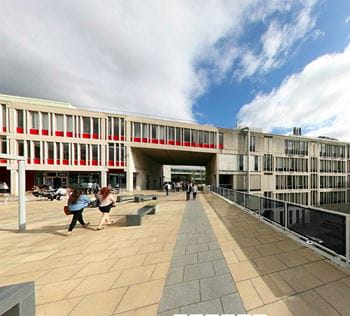
Set within 200 acres of award-winning parkland - Wivenhoe Park and located two miles from the historic city centre of Colchester – England's oldest recorded development. Our Colchester Campus is also easily reached from London and Stansted Airport in under one hour.
If you live too far away to come to Essex (or have a busy lifestyle), no problem. Our 360-degree virtual tour allows you to explore our University from the comfort of your home. Check out our Colchester virtual tour to see accommodation options, facilities and social spaces.
At Essex we pride ourselves on being a welcoming and inclusive student community. We offer a wide range of support to individuals and groups of student members who may have specific requirements, interests or responsibilities.
The University makes every effort to ensure that this information on its programme specification is accurate and up-to-date. Exceptionally it can be necessary to make changes, for example to courses, facilities or fees. Examples of such reasons might include, but are not limited to: strikes, other industrial action, staff illness, severe weather, fire, civil commotion, riot, invasion, terrorist attack or threat of terrorist attack (whether declared or not), natural disaster, restrictions imposed by government or public authorities, epidemic or pandemic disease, failure of public utilities or transport systems or the withdrawal/reduction of funding. Changes to courses may for example consist of variations to the content and method of delivery of programmes, courses and other services, to discontinue programmes, courses and other services and to merge or combine programmes or courses. The University will endeavour to keep such changes to a minimum, and will also keep students informed appropriately by updating our programme specifications. The University would inform and engage with you if your course was to be discontinued, and would provide you with options, where appropriate, in line with our Compensation and Refund Policy.
The full Procedures, Rules and Regulations of the University governing how it operates are set out in the Charter, Statutes and Ordinances and in the University Regulations, Policy and Procedures.
Want to quiz us about your course? Got a question that just needs answering? Get in touch with us on live chat!