Postgraduate Course

MSc Sport and Exercise Psychology

MSc Sport and Exercise Psychology

Overview

The details
Sport and Exercise Psychology
October 2026
Full-time
1 year
Colchester Campus

What is the MSc Sport and Exercise Psychology?

Our MSc Sport and Exercise Psychology is a one-year postgraduate taught degree studied on a full-time or part-time basis at our Colchester Campus.

You’ll develop the research, analytical and applied skills in sport and exercise psychology to understand athletes' mindsets, influence behaviour and design interventions that enhance performance, motivation and wellbeing.

This Masters sits at the intersection of psychology and sport science, giving you a deep understanding of human behaviour in performance and exercise environments. It is one of the fastest-growing areas of psychology and provides a strong foundation for applied practice, research or progression toward Chartered Sport and Exercise Psychologist status.

Why this course

It’s designed for students who want to advance beyond undergraduate study and develop specialist expertise grounded in research and real-world application.

  • Learn from expert researchers whose work explores performance psychology, motivation, physical activity behaviour, athlete wellbeing and the psychology of pressure
  • Personalise your degree: through your research project, focusing on areas such as performance enhancement, behaviour change, health psychology or physical activity promotion
  • Apply psychology in real contexts such as athlete development, coaching, performance support, exercise adherence and wellbeing programmes
  • Build advanced research expertise, strengthening your critical thinking, data analysis and research design skills, essential for applied practice, professional training or progression to doctoral study
  • Graduate career-ready by the end of the course for roles in sport psychology, performance support, exercise promotion, research or further professional accreditation pathways

Who should apply

This MSc is suited to:

  • Sport and exercise psychology graduates seeking BPS accredited postgraduate training
  • Sport science, coaching or health graduates wanting to specialise in psychological performance and behaviour
  • Practitioners working in sport, fitness, health or wellbeing who want to integrate psychological methods into their practice
  • International students looking for a recognised UK qualification in applied sport and exercise psychology
  • Aspiring researchers aiming to progress to PhD study or BPS Stage 2 training

What you’ll learn

You’ll develop advanced knowledge of the psychological, social and behavioural factors that influence performance, participation and wellbeing.

  • Skill acquisition and expertise: how athletes learn, refine and automate skills
  • Psychological skills and strategies: techniques for motivation, confidence, focus and coping under pressure
  • Developmental sport and exercise psychology: lifespan perspectives on participation, performance and wellbeing
  • Social psychology and individual differences: how personality, group dynamics and social factors shape behaviour
  • Participation and wellbeing: psychological determinants of exercise adherence and physical activity behaviour
  • Professional practice: ethical, applied and reflective skills for sport and exercise psychology contexts

Read how postgraduate student Ruben Hedman applies these learnings directly to his own athletic performance goals.

Your learning experience

Your learning combines applied psychological training, research-driven teaching and hands-on experience using specialist sport science and psychology facilities.

How you'll learn

  • Interactive seminars exploring theory, applied practice and ethical considerations
  • Practical sessions using equipment for psychological testing and performance assessment
  • Field-based testing opportunities emphasising real-world application
  • Independent research project supervised by expert researchers in sport and exercise psychology
  • Collaborative learning: within a dedicated sport and exercise science community

Facilities

You'll be based in the Essex Sports Arena, with access to:

  • Dedicated sport science labs, and psychology’s centre for brain science and suites for VR, videogames and perception
  • Performance analysis and testing spaces
  • Specialist equipment for applied and research contexts

These facilities support both your academic development and your applied skillset.

Careers and outcomes

An MSc in Sport and Exercise Psychology prepares you for specialist roles such as:

  • Sport and exercise psychologist (via BPS Stage 2 training)
  • Performance psychologist for athletes and teams
  • Exercise psychologist supporting public health and behaviour change
  • Performance consultant in sport, fitness or corporate settings
  • Research assistant or PhD researcher
  • Roles in sport development, wellbeing programmes and athlete support

Employers of our graduates

From NBA franchises and international academies to NHS trusts and football associations, our alumni are shaping athlete wellbeing, performance and psychological resilience worldwide.

  • Rafael Nadal Academy
  • Miami Heat
  • South London and Maudsley NHS Foundation Trust
  • Football Association of Wales
  • Johan Cruff Institute
Why we're great.
  • Study a programme accredited by the British Psychological Society (BPS) and a recognised qualification within the BPS pathway to gaining Chartered Sport/Exercise Psychologist status (CPsychol).
  • Be part of a community specifically focused on sport and exercise, bringing together our internationally recognised research, sharing knowledge and enhancing opportunities.
  • Develop your ability to critically appraise published research and conduct your own.
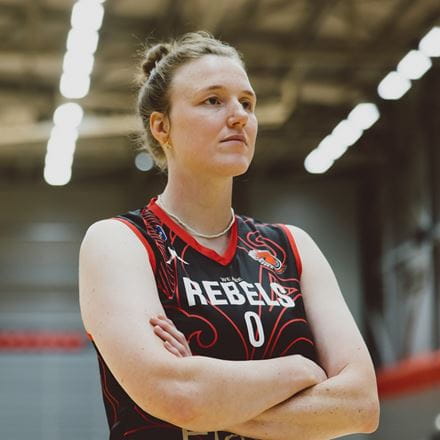
Essex Rebels player, Claire Paxton
Sports scholarships and bursaries

The University of Essex is committed to supporting and developing high performance athletes. Find out whether you could be eligible for a sports scholarship or bursary, plus a range of additional benefits too when you join the University of Essex.

Explore the full offer

"After learning about the evidence and theory behind it, I appreciate this field and the professions linked to it even more. My eyes have been opened to a variety of exercise psychology careers this degree could lead to, which I was previously unaware of. The University of Essex's strong reputation in Sport & Exercise Psychology has really expanded my perspective."

Maria Blazejewski, MSc Sport and Exercise Psychology student and sports scholar

Course content

Course structure

Our research-led teaching is continually evolving to address the latest challenges and breakthroughs in the field. The following modules are based on the current course structure and may change in response to new curriculum developments and innovation.

We understand that deciding where and what to study is a very important decision for you. We'll make all reasonable efforts to provide you with the courses, services and facilities as described on our website and in line with your contract with us. However, if we need to make material changes, for example due to significant disruption, we'll let our applicants and students know as soon as possible.

Components and modules explained

Components

Components are the blocks of study that make up your course. A component may have a set module which you must study, or a number of modules from which you can choose.

Each component has a status and carries a certain number of credits towards your qualification.

Status What this means
Core
You must take the set module for this component and you must pass. No failure can be permitted.
Core with Options
You can choose which module to study from the available options for this component but you must pass. No failure can be permitted.
Compulsory
You must take the set module for this component. There may be limited opportunities to continue on the course/be eligible for the qualification if you fail.
Compulsory with Options
You can choose which module to study from the available options for this component. There may be limited opportunities to continue on the course/be eligible for the qualification if you fail.
Optional
You can choose which module to study from the available options for this component. There may be limited opportunities to continue on the course/be eligible for the qualification if you fail.

The modules that are available for you to choose for each component will depend on several factors, including which modules you have chosen for other components, which modules you have completed in previous years of your course, and which term the module is taught in.

Modules

Modules are the individual units of study for your course. Each module has its own set of learning outcomes and assessment criteria and also carries a certain number of credits.

In most cases you will study one module per component, but in some cases you may need to study more than one module. For example, a 30-credit component may comprise of either one 30-credit module, or two 15-credit modules, depending on the options available.

Modules may be taught at different times of the year and by a different department or school to the one your course is primarily based in. You can find this information from the module code. For example, the module code HR100-4-FY means:

HR 100  4  FY

The department or school the module will be taught by.

In this example, the module would be taught by the Department of History.

The module number. 

The UK academic level of the module.

A standard undergraduate course will comprise of level 4, 5 and 6 modules - increasing as you progress through the course.

A standard postgraduate taught course will comprise of level 7 modules.

A postgraduate research degree is a level 8 qualification.

The term the module will be taught in.

  • AU: Autumn term
  • SP: Spring term
  • SU: Summer term
  • FY: Full year 
  • AP: Autumn and Spring terms
  • PS: Spring and Summer terms
  • AS: Autumn and Summer terms

COMPONENT 01: CORE

Research Project
(60 CREDITS)

The research project module is an opportunity for you to carry out an individual scientific investigation on a topic relating to your degree specialisation. It will help develop your skills in reviewing synthesising and critically appraising academic literature. You will also be expected to design, analyse and interpret data and present findings in a scientific paper format.

View Research Project on our Module Directory

COMPONENT 02: CORE

Further Research Methods in Sport, Exercise and Health
(30 CREDITS)

This module will focus on the fundamental assumptions underlying quantitative research, including; research design methods, sampling, and the validity and reliability of measurements in exercise science. Students will master the techniques needed to critically appraise published research and carry out a piece of original research.

View Further Research Methods in Sport, Exercise and Health on our Module Directory

COMPONENT 03: CORE

Professional practice in sport and exercise psychology
(15 CREDITS)

This module explores key topics for practising sport and exercise psychologists, and develops skills to undertake consultancy at individual, group, community or population levels. It covers different frameworks adopted in applied work, communication and consultancy skills, working with different clients, and how to develop, monitor and evaluate interventions.

View Professional practice in sport and exercise psychology on our Module Directory

COMPONENT 04: CORE

Psychological Skills and Strategies
(15 CREDITS)

Provide a comprehensive understanding of the appropriate application of psychological knowledge to the measurement and assessment of human performance and develop applied skills necessary to service the needs of the athlete or coach and professionals in exercise settings.

View Psychological Skills and Strategies on our Module Directory

COMPONENT 05: CORE

Participation and Wellbeing
(15 CREDITS)

This module explores contemporary topics in exercise and health psychology, focusing on translational research evidence. Physical activity and exercise are increasingly used to improve the health and wellbeing of the general population. You will gain an understanding of up-to-date research evidence on topics including motivation, self-concept, mental health, social support and the environment. You will explore how research is translated into applied interventions and how these interventions are evaluated.

View Participation and Wellbeing on our Module Directory

COMPONENT 06: CORE

Developmental Sport and Exercise Psychology
(15 CREDITS)

In this module, students will compare physiological responses to exercise of children and adolescents, with those of adults, examining the effects of age, sex and maturation. Students will examine the role that physical activity and fitness can play in improving markers of health and wellbeing in young people; an increasingly important area of study due to recent evidence (from work at the University of Essex showing declines in children's fitness). This module will explain the immediate and possible future benefits of physical activity and exercise for the health and wellbeing of healthy children and young athletes.

View Developmental Sport and Exercise Psychology on our Module Directory

COMPONENT 07: CORE

Social psychology in sport and exercise
(15 CREDITS)

The module examines approaches to support learning both in and through sport. As part of the module, students develop their understanding of the learning needs of a range of participants and the pedagogical understanding coaches require in order to effectively meet their participant’s needs. Further, students will work in small groups to examine the influence of context, internal and external assets in sport and how each can be utilised in order to develop and transfer broader psychosocial skills beyond sport. The module also discusses approaches to the design, delivery and evaluation of such programmes, which is an essential skill for coaches and teachers more broadly. Students will also demonstrate self-directed and informal learning by delivering coaching workshops, discussing good practice, and creating coaching resources with peers beyond their immediate year group.

View Social psychology in sport and exercise on our Module Directory

COMPONENT 08: CORE

Skill Acquisition and Expertise in Sport
(15 CREDITS)

Skill acquisition is commonly described as the voluntary control over movements in an attempt to solve motor skill problems and achieve a task goal. These may vary from catching a ball or riding a bike, to slalom skiing or rhythmic gymnastics. Regardless of the domain, the interaction between the practitioner (eg coach or PE teacher) and athlete when learning these skills is absolutely fundamental to successful performance. Specifically, how can the practitioner create optimal practice conditions to facilitate skill acquisition? This module will firstly enhance your understanding of contemporary theory and research in skill learning and motor expertise. From this, the module takes on a more applied focus, where evidence-based approaches are implemented to critically evaluate their effect on coaching practice.

View Skill Acquisition and Expertise in Sport on our Module Directory

Teaching

Alongside traditional lectures, this course utilises a range of teaching approaches.

  • Student-led seminars focused on critical discussions of key and topical research paper;
  • Flipped classroom approaches;
  • Laboratory sessions;
  • Practical sessions to equip you with the skills to undertake research and applied consultancy at individual, group, community or population levels.

Assessment

  • On taught modules, you will complete a range of assessments including conducting needs assessment sessions, recording a vodcast, task-based data analysis, oral presentations, critical reviews, and written exams.
  • You will complete a research project requiring a psychology-focused research question, supervised by a staff member with relevant expertise.

Entry requirements

UK entry requirements

A 2:2 degree in subjects relevant to the following areas:

  • Sports
  • Exercise
  • Psychology

Your degree must include one of the following modules:

  • Psychology
  • Sports Psychology

We will also consider applicants with a 2:2 degree in any discipline with substantive work experience in sport, exercise, or health.

International & EU entry requirements

We accept a wide range of qualifications from applicants studying in the EU and other countries. Get in touch with any questions you may have about the qualifications we accept. Remember to tell us about the qualifications you have already completed or are currently taking.

Sorry, the entry requirements for the country that you have selected are not available here. Please contact our Graduate Admissions team at pgquery@essex.ac.uk to request the entry requirements for this country.

English language requirements


If English is not your first language, we require IELTS 6.5 overall with a minimum component score of 5.5 in all components.

If you do not meet our IELTS requirements then you may be able to complete a pre-sessional English pathway that enables you to start your course without retaking IELTS.

Additional Notes

The University uses academic selection criteria to determine an applicant’s ability to successfully complete a course at the University of Essex. Where appropriate, we may ask for specific information relating to previous modules studied or work experience.

Fees and funding

Home/UK fee

£11,025

International fee

£23,875

Scholarships and financial support

There may be scholarships, bursaries or discounts available to help with the cost of this course.

Fees and funding guide

Masters fees and funding information

Research (e.g. PhD) fees and funding information

What's next

Group of three female students walking along Southend Pier talking and looking at a booklet

Open Days

We hold Open Days for all our applicants throughout the year. Our Colchester Campus events are a great way to find out more about studying at Essex, and give you the chance to:

  • tour our campus and accommodation
  • find out answers to your questions about our courses, student finance, graduate employability, student support and more
  • meet our students and staff

If the dates of our organised events aren’t suitable for you, feel free to get in touch by emailing tours@essex.ac.uk and we’ll arrange an individual campus tour for you.

2026 Open Days (Colchester Campus)

  • Saturday 20 June 2026 - June Open Day
  • Saturday 15 August 2026 - Clearing Open Day
  • Saturday 17 October 2026 - October Open Day
Male applicant sitting at a desk in their bedroom writing on a notepad

Applying

You can apply for this postgraduate course online. Before you apply, please check our information about necessary documents that we'll ask you to provide as part of your application.

We aim to respond to applications within two weeks. If we are able to offer you a place, you will be contacted via email.

For information on our deadline to apply for this course, please see our ‘how to apply' information.

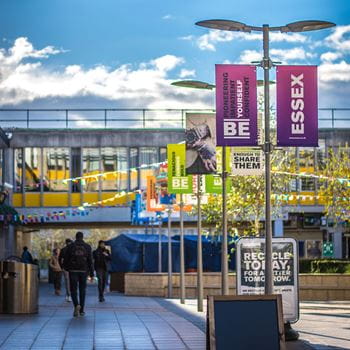
A sunny day with banners flying on Colchester Campus Square 4.

Visit Colchester Campus

Set within 200 acres of award-winning parkland - Wivenhoe Park and located two miles from the historic city centre of Colchester – England's oldest recorded development. Our Colchester Campus is also easily reached from London and Stansted Airport in under one hour.


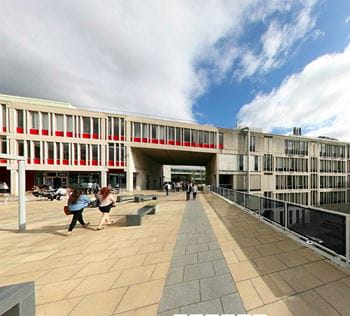
View from Square 2 outside the Rab Butler Building looking towards Square 3

Virtual tours

If you live too far away to come to Essex (or have a busy lifestyle), no problem. Our 360-degree virtual tour allows you to explore our University from the comfort of your home. Check out our Colchester virtual tour to see accommodation options, facilities and social spaces.

Aleksandra Birn-Jeffery
Chat to us

Got a question about this course? Chat with Aleksandra Birn-Jeffery from the School of Sport, Rehabilitation and Exercise Sciences.

Students talking in the sports hall in the School of Sport, Rehabilitation and Exercise Sciences
Visit the home of sport and exercise at Essex

Meet the lecturers, discover our alumni’s achievements, and learn about Masters study in the School of Sport, Rehabilitation and Exercise Sciences.

Explore Masters study in the School of Sport, Rehabilitation and Exercise Sciences

At Essex we pride ourselves on being a welcoming and inclusive student community. We offer a wide range of support to individuals and groups of student members who may have specific requirements, interests or responsibilities.

The University makes every effort to ensure that this information on its programme specification is accurate and up-to-date. Exceptionally it can be necessary to make changes, for example to courses, facilities or fees. Examples of such reasons might include, but are not limited to: strikes, other industrial action, staff illness, severe weather, fire, civil commotion, riot, invasion, terrorist attack or threat of terrorist attack (whether declared or not), natural disaster, restrictions imposed by government or public authorities, epidemic or pandemic disease, failure of public utilities or transport systems or the withdrawal/reduction of funding. Changes to courses may for example consist of variations to the content and method of delivery of programmes, courses and other services, to discontinue programmes, courses and other services and to merge or combine programmes or courses. The University will endeavour to keep such changes to a minimum, and will also keep students informed appropriately by updating our programme specifications. The University would inform and engage with you if your course was to be discontinued, and would provide you with options, where appropriate, in line with our Compensation and Refund Policy.

The full Procedures, Rules and Regulations of the University governing how it operates are set out in the Charter, Statutes and Ordinances and in the University Regulations, Policy and Procedures.