This course remains subject to approval by the General Dental Council (GDC).
This course is now closed for applications for October 2026 entry. Applications are open for October 2027 entry in September.
The BSc Dental Hygiene and Therapy is a three year, full time professional degree that trains you to become both a Dental Hygienist and a Dental Therapist. The course combines academic study with extensive clinical experience.
You’ll learn how to deliver preventative and restorative treatments, provide oral health education, and care for patients of all ages. The programme reflects the latest NHS workforce needs and GDC learning outcomes, ensuring you graduate with the clinical skills, professional behaviours and confidence required for modern dental practice.
Studying at our Colchester Campus, you’ll train in specialist dental skills labs, work closely with experienced clinicians, and complete placements in general dental practices where most of the UK dental workforce is employed. By the time you graduate, you’ll be ready to enter the profession as a safe, effective and work ready Dental Therapist and Dental Hygienist.
This course offers a direct route into a rewarding clinical career, training you to become both a Dental Hygienist and a Dental Therapist. You’ll learn in modern, purpose-built facilities on our Colchester Campus and gain early experience with real patients in general dental practice. Teaching is delivered by experienced clinicians and supported by dedicated placement educators, ensuring your learning reflects real-world professional practice. Fully aligned with GDC outcomes and NHS workforce priorities, the course prepares you to graduate confident, competent and ready for employment. You may also be eligible for at least £5,000 a year from the NHS Learning Support Fund.
This course is ideal for you if you want a hands on clinical career and are motivated to become both a Dental Hygienist and a Dental Therapist. It’s suitable for applicants who are compassionate, practical, and committed to delivering high quality, patient centred care. You should enjoy working with people, be confident in a clinical environment, and have the motivation to balance academic study with regular placement hours. The course is open to UK home students who can meet Occupational Health and enhanced DBS requirements and who want a recognised route to GDC registration and a future career across dental and community settings.
You will gain the clinical, professional, and interpersonal skills required to practise safely and effectively as a Dental Hygienist and Dental Therapist. Your learning includes:
Your studies combine classroom learning, simulation based skills training and clinical experience in real dental practices. You’ll train in specialist dental laboratories at our Colchester Campus, using advanced simulation technology to build confidence before working with patients. From your first year, you’ll undertake placements in general dental practice supported by trained Clinical Educators and dedicated link lecturers. Teaching is delivered by experienced dental clinicians who bring current evidence based practice into the classroom, supported by personalised feedback, small group teaching and engagement with our Service User Reference Group (SURG).
Graduates typically progress into roles within:
Students on this course may be eligible for the NHS Learning Support Fund, which offers a £5,000 training grant each year that does not need to be repaid. Depending on your circumstances, you may also be able to access an additional £3,000 of financial support. Full details about eligibility and how to apply are available on our HSC Scholarships and Funding page.
A unique feature of our School is that you will be taught by a team of specialist clinicians with over 250 years of experience in dentistry. This enhances our grasp of the contemporary links between academic research, the major issues of the day and real-life practice.
Our course is delivered by an experienced and supportive team of registered dental professionals, including dentists, dental therapists, and hygienists. The team brings a wealth of clinical and educational experience, ensuring students gain the knowledge, skills, and confidence needed to succeed in professional practice.
The emphasis throughout the course is on the teaching of evidence-based dentistry, and all staff are regular attenders at CPD events to ensure that this is provided. Clinical experience throughout the course is gained in a general dental practice under the supervision of suitably trained clinical educators. This provides “real-life” training in an everyday dental surgery setting. The programme has dedicated link lecturers, who, as well as their work in the dental hygiene team, have many years of experience in dental practice. They visit each of the placements several times during the year to liaise with clinical educators and monitor student progress.
Full details of our staff can be found on the HSC Staff Profiles.
As a School, we specialise in applied, multidisciplinary research that addresses issues of national and international concern to health and social care policy and practice and related fields. We also host the NIHR Research Design Service for the East of England.
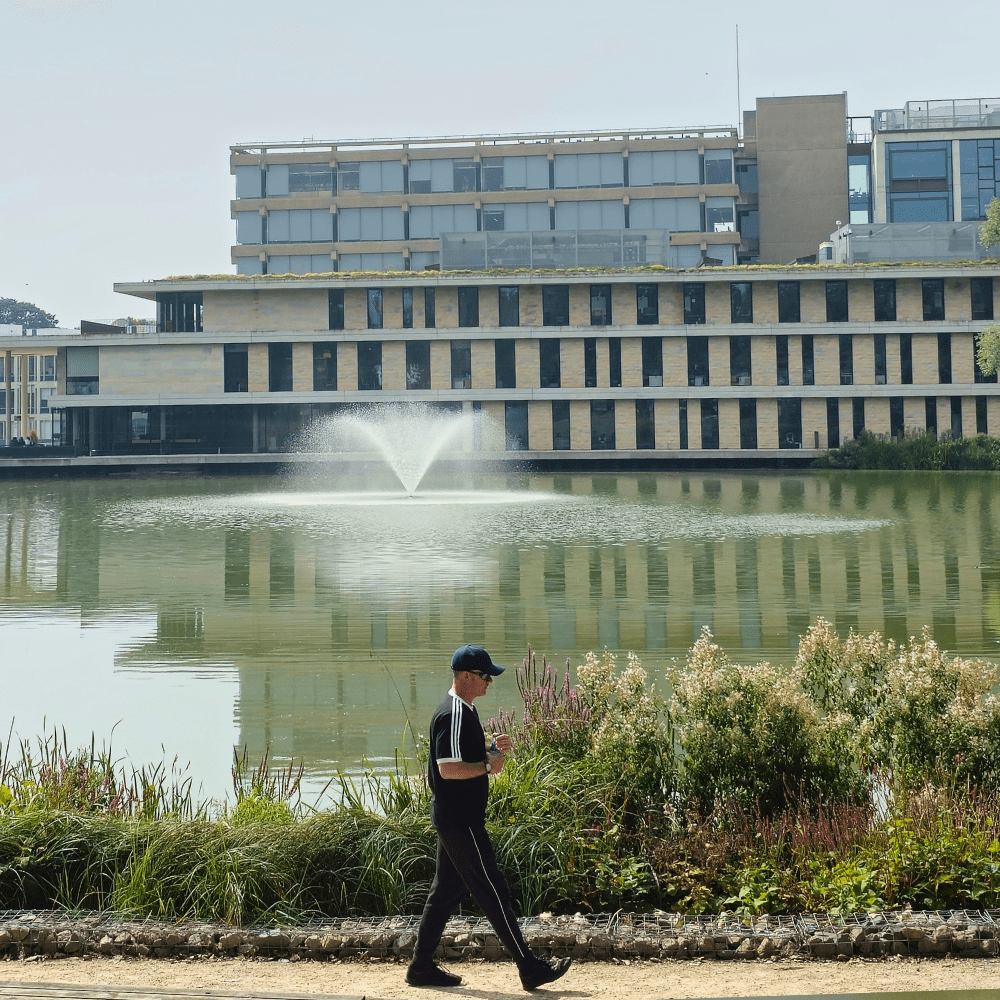
The School of Health and Social Care is located in the Kimmy Eldridge building at our Colchester Campus.
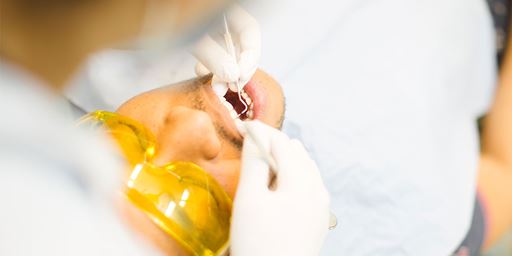
Our Dental Hygiene facilities are now fully based on site at Colchester, offering modern clinical laboratories equipped with the latest simulation technology. Our state-of-the-art dental skills lab features advanced ‘phantom heads’ that allow you to practise and refine your clinical techniques in a realistic and supportive environment. View our image gallery and find out more about our Dental Hygiene facilities.
As a Dental Therapist, you will be a working as a Dental Care Professional in all sectors of dentistry. A Dental Therapist provides a range of restorative dental treatments to adults and children and the delivery of oral health care and advice. You will need a flexible team approach, high levels of manual dexterity, professionalism and a caring attitude. Good communication, problem-solving and decision-making skills will also be vitally important for you in this role.
On successful completion of this course you will be eligible to register with the General Dental Council (GDC), which is the statutory body for regulating dental professionals within the UK. The GDC monitors education, and our BSc's curriculum has been designed to comply with the GDC documents Preparing for practice and Standards for Education.
For further details on the role of a Dental Therapist, please review the Preparing for practice PDF from the GDC website – which is under the header “Dental team learning outcomes for registration”.
All applicants must have, or be working towards, acceptable level 2 Mathematics, and English qualifications such as GCSE grade C/4 or equivalent.
For those invited to interview, decisions are communicated and offers are made after all interviews have been held. This will be no later than mid-May each year.
This course has additional requirements including pass of an interview, a satisfactory reference and Occupational Health Check and Disclosure and Barring (DBS) check. For more information see:the school of Health and Social Care Undergraduate page
We accept a wide range of qualifications from applicants studying in the EU and other countries. Get in touch with any questions you may have about the qualifications we accept. Remember to tell us about the qualifications you have already completed or are currently taking.
Sorry, the entry requirements for the country that you have selected are not available here. Please contact our Undergraduate Admissions team at ugquery@essex.ac.uk to request the entry requirements for this country.
By the end of our BSc (Hons) Dental Hygiene and Therapy course you will be able to:
Term dates do not coincide with our normal University term dates due to this requirement. Any time missed by non-attendance, through sickness or other personal reason, will need to be made up in order to successfully complete the programme.
To ensure that you have a good basis from which to develop, the first four weeks of the course are full-time.After this initial period there are a number of mandatory study days which will be held on 2 days a week when you will be expected to attend University.
The dates for holiday breaks are timetabled throughout the programme and these cannot be changed for individual students. The planned holiday periods include time at Easter, summer, Christmas and New Year.
These carefully selected modules will give you the chance to explore, question, and create powerful ideas. Picked to give you an extensive and in-depth education, they'll equip you with the specialist knowledge, vital transferable skills, and the confidence to make a genuine difference to the world around you.
We're reactive, we're pioneering, we never stand still, so modules might change from year to year in response to new developments and innovation. Those listed below show how a typical course might look, but more detail on course structure, including details of all optional modules, is available on our Programme Specification.
We understand that deciding where and what to study is a very important decision for you. We'll make all reasonable efforts to provide you with the courses, services and facilities as described on our website and in line with your contract with us. However, if we need to make material changes, for example due to significant disruption, we'll let our applicants and students know as soon as possible.

Components are the blocks of study that make up your course. A component may have a set module which you must study, or a number of modules from which you can choose.
Each component has a status and carries a certain number of credits towards your qualification.
| Status | What this means |
| Core |
You must take the set module for this component and you must pass. No failure can be permitted. |
| Core with Options |
You can choose which module to study from the available options for this component but you must pass. No failure can be permitted. |
| Compulsory |
You must take the set module for this component. There may be limited opportunities to continue on the course/be eligible for the qualification if you fail. |
| Compulsory with Options |
You can choose which module to study from the available options for this component. There may be limited opportunities to continue on the course/be eligible for the qualification if you fail. |
| Optional |
You can choose which module to study from the available options for this component. There may be limited opportunities to continue on the course/be eligible for the qualification if you fail. |
The modules that are available for you to choose for each component will depend on several factors, including which modules you have chosen for other components, which modules you have completed in previous years of your course, and which term the module is taught in.
Modules are the individual units of study for your course. Each module has its own set of learning outcomes and assessment criteria and also carries a certain number of credits.
In most cases you will study one module per component, but in some cases you may need to study more than one module. For example, a 30-credit component may comprise of either one 30-credit module, or two 15-credit modules, depending on the options available.
Modules may be taught at different times of the year and by a different department or school to the one your course is primarily based in. You can find this information from the module code. For example, the module code HR100-4-FY means:
| HR | 100 | 4 | FY |
|---|---|---|---|
|
The department or school the module will be taught by. In this example, the module would be taught by the Department of History. |
The module number. |
The UK academic level of the module. A standard undergraduate course will comprise of level 4, 5 and 6 modules - increasing as you progress through the course. A standard postgraduate taught course will comprise of level 7 modules. A postgraduate research degree is a level 8 qualification. |
The term the module will be taught in.
|
COMPONENT 01: CORE
COMPONENT 02: CORE
COMPONENT 03: CORE
This module introduces students to biological and psycho-social science knowledge base that underpins the practice of DCPs, in particular anatomy, physiology, biochemistry, psychology, histology, cytology and microbiology of the oral cavity and associated structures, an understanding of common oral diseases.
COMPONENT 04: CORE
COMPONENT 01: CORE
COMPONENT 02: CORE
Dental care professionals (DCPs) are essential members of dental care teams providing care to all age groups. The ability to self-evaluate practice and to use evidence as a basis for professional judgement is critical to effective delivery of care in an ever changing environment. The practice of evidence based dental care requires DCPs to possess critical appraisal skills. This module focuses on the research process and methods as a basis for developing critical appraisal skills and research understanding.
View Critical Appraisal and Research Skills for Dental Practice on our Module Directory
COMPONENT 03: CORE
COMPONENT 04: CORE
COMPONENT 01: CORE
COMPONENT 02: CORE
COMPONENT 03: CORE
COMPONENT 04: CORE
£9,790 per year
£31,750 per year
Fees will increase for each academic year of study.
If your course has the option to include a placement year or study abroad, and you choose to do so, you will pay the following:
20% of your standard tuition fee for that year
15% of your standard tuition fee for that year
Standard tuition fee
There may be scholarships, bursaries or discounts available to help with the cost of this course.
Our events are a great way to find out more about studying at Essex. We run a number of Open Days throughout the year which enable you to discover what our campus has to offer. You have the chance to:
Check out our Visit Us pages to find out more information about booking onto one of our events. And if the dates aren’t suitable for you, feel free to book a campus tour here.
Applications for our full-time undergraduate courses should be made through the Universities and Colleges Admissions Service (UCAS). Full details on how to apply can be found on the filling in your UCAS undergraduate application web page.
Our UK students, and some of our EU and international students, who are still at school or college, can apply through their school. Your school will be able to check and then submit your completed application to UCAS. Our other international applicants (EU or worldwide) or independent applicants in the UK can also apply online through UCAS Apply.
The UCAS code for our University of Essex is ESSEX E70.
Undergraduate students who apply for our health-related courses are required to pass a compulsory interview before an offer can be made. If you are shortlisted for interview based on your application, you will be invited to interview with us via Microsoft Teams. We use the interview as an opportunity to get to know you, to find out about your ambitions, and assess how prepared you are for the course. It's important for us to be sure that you know what you're signing up for, so we'd expect you've done some research about the course and the associated careers it may lead to. We have some more information about how to demonstrate you have what it takes at the bottom of our undergraduate page
Set within 200 acres of award-winning parkland - Wivenhoe Park and located two miles from the historic city centre of Colchester – England's oldest recorded development. Our Colchester Campus is also easily reached from London and Stansted Airport in under one hour.
If you live too far away to come to Essex (or have a busy lifestyle), no problem. Our 360-degree virtual tour allows you to explore our University from the comfort of your home. Check out our Colchester virtual tour to see accommodation options, facilities and social spaces.
At Essex we pride ourselves on being a welcoming and inclusive student community. We offer a wide range of support to individuals and groups of student members who may have specific requirements, interests or responsibilities.
The University makes every effort to ensure that this information on its programme specification is accurate and up-to-date. Exceptionally it can be necessary to make changes, for example to courses, facilities or fees. Examples of such reasons might include, but are not limited to: strikes, other industrial action, staff illness, severe weather, fire, civil commotion, riot, invasion, terrorist attack or threat of terrorist attack (whether declared or not), natural disaster, restrictions imposed by government or public authorities, epidemic or pandemic disease, failure of public utilities or transport systems or the withdrawal/reduction of funding. Changes to courses may for example consist of variations to the content and method of delivery of programmes, courses and other services, to discontinue programmes, courses and other services and to merge or combine programmes or courses. The University will endeavour to keep such changes to a minimum, and will also keep students informed appropriately by updating our programme specifications. The University would inform and engage with you if your course was to be discontinued, and would provide you with options, where appropriate, in line with our Compensation and Refund Policy.
The full Procedures, Rules and Regulations of the University governing how it operates are set out in the Charter, Statutes and Ordinances and in the University Regulations, Policy and Procedures.
Want to quiz us about your course? Got a question that just needs answering? Get in touch with us on live chat!