Undergraduate Course

Certificate of HE Technical Theatre and Production Arts

Certificate of HE Technical Theatre and Production Arts

Overview

The details
Technical Theatre and Production Arts
October 2026
Full-time
1 year
Colchester Campus

This course is subject to final approval.

East 15’s Cert HE Technical Theatre & Production Arts is a one-year, industry-focused course designed to provide foundational professional training in stage management and technical theatre.

Based at our Colchester Campus, the course mirrors the first year of training on the BA (Hons) Stage Management degree offered at our Loughton Campus. You’ll pursue high-quality, vocational training that prepares you for entry-level backstage roles in theatre and the wider creative industries, or progression to further undergraduate study.

Why this course?

This course offers an intensive, practical introduction to the technical and production skills that underpin live performance. With strong emphasis on learning through doing, you’ll be embedded in production teams from early in the course, gaining hands-on experience in a range of backstage disciplines.

You’ll study at our Colchester Campus, home to the fully equipped 200-seat Lakeside Theatre, where you’ll work on public productions and practical projects. Supported by professionally experienced staff, you’ll develop a broad technical skillset while gaining insight into how professional theatre is made.

The course also provides clear progression routes, with opportunities to move directly into the second year of training on East 15’s BA (Hons) Stage Management or BA (Hons) Creative Producing (Theatre and Short Film).

Who should apply?

  • Students seeking a practical, vocational introduction to technical theatre and production arts
  • Aspiring stage managers and backstage technicians at the beginning of their training
  • Those interested in construction, lighting, sound, costume, props, or scenic arts
  • Learners who want a one-year higher education qualification with progression opportunities
  • Individuals considering further undergraduate study in stage management or creative producing

What you’ll learn

Throughout the year, you’ll develop essential skills across the technical theatre landscape through lectures and working on public productions.

Areas of training include:

  • Stage management
  • Construction and design
  • Lighting and sound
  • Costume, prop making and scenic painting

Your learning experience

  • Practical learning: learn through hands-on involvement in productions from early in the course
  • Professional facilities: Work at the Lakeside Theatre, workshops, IT suite, seminar rooms, and specialist teaching spaces
  • Experienced staff: Training delivered by industry professionals with extensive experience
  • Public productions: Gain real-world experience by supporting performances presented to live audiences
  • Creative environment: Study at the University of Essex’s 200-acre Colchester Campus, close to regional theatres and arts centres

Why we're great.
  • Industry-focused, practical training designed to prepare you for further undergraduate study or entry-level roles in stage management, technical theatre, and creative producing.
  • Hands-on experience working on public productions in a fully equipped theatre from early in the course.
  • Possible progression routes into Year 2 of East 15’s BA (Hons) Stage Management or BA (Hons) Creative Producing (Theatre & Short Film).

Specialist facilities

What is the Colchester campus like?

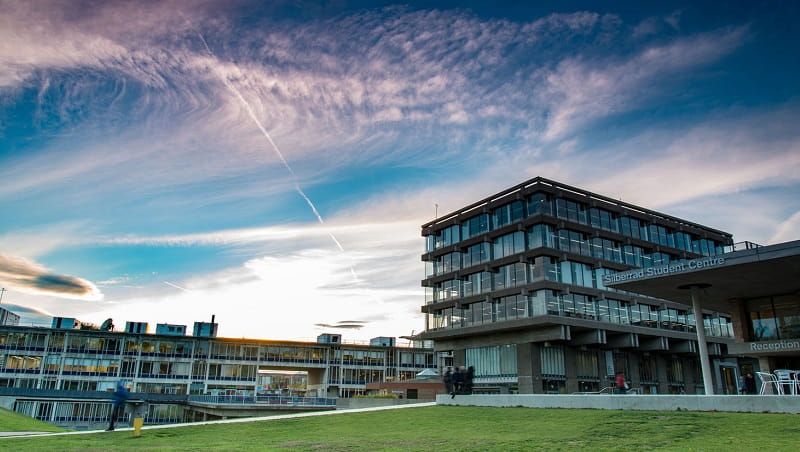
  • Green campus setting: Located within 200 acres of parkland, offering an inspiring environment for creative practice, just two miles from Colchester city centre. The campus is easily reached from London and Stansted Airport.
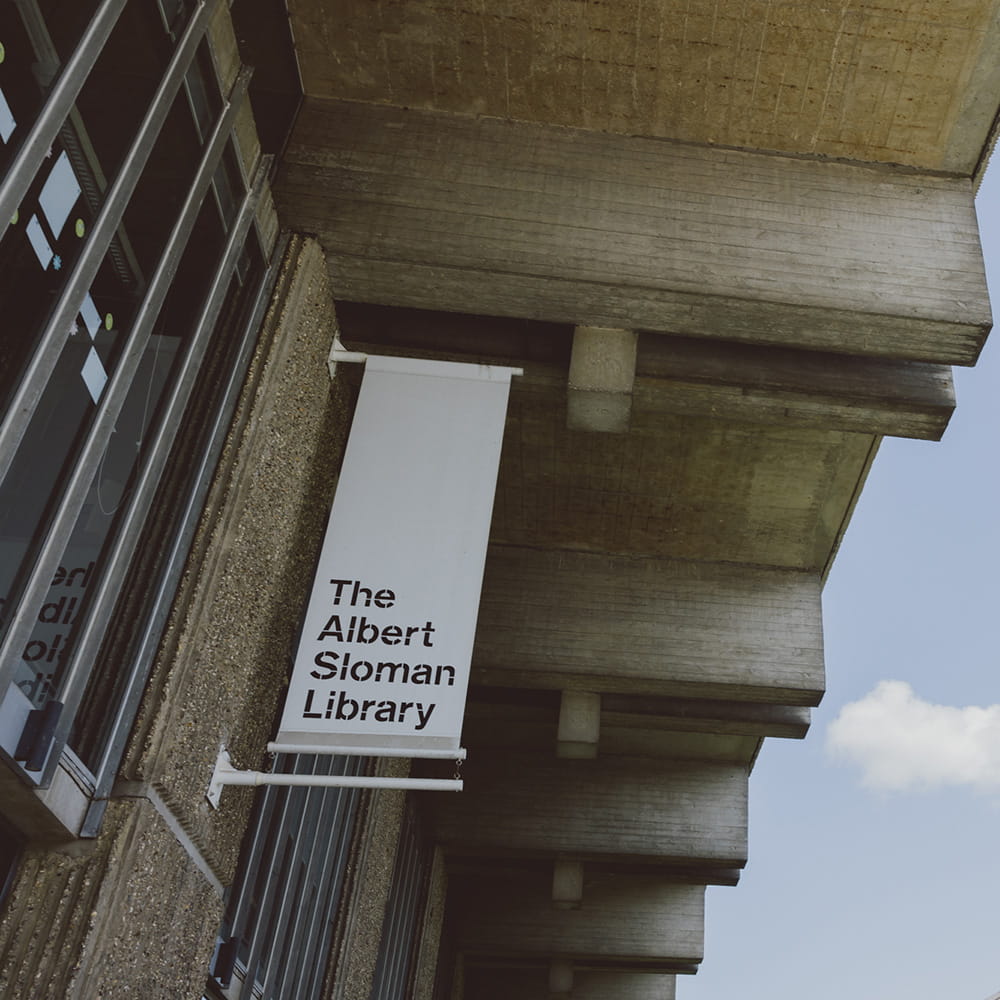
  • Performance and study facilities: Home to the 200-seat Lakeside Theatre, the Albert Sloman Library, rehearsal spaces, and creative study areas.
  • Student life: Cafés, restaurants, street food outlets, SU bar, social spaces, sports centre, gym, and a weekly food market.
  • Accommodation: A range of University of Essex accommodation options within walking distance of campus facilities.
  • Future-focused facilities: East 15 is developing bespoke studio spaces and specialist performance facilities at Colchester to support conservatoire-style training.

Your future

Progression and outcomes

On successful completion of the Cert HE Technical Theatre & Production Arts, students may be considered for direct entry to Year 2 of the following East 15 undergraduate courses:

BA (Hons) Stage Management (with pathways) at the Loughton Campus

BA (Hons) Creative Producing (Theatre and Short Film) at the Colchester Campus

The course also equips students with skills applicable to entry-level roles in theatre and related creative industries.

Entry requirements

UK entry requirements

    Applicants will need to be successful in an interview. Applicants should also have, or expect to have:

  • A-levels: E, or equivalent in UCAS tariff points.
  • BTEC: PPP, or equivalent in UCAS tariff points.
  • T-levels: Pass with E in core
  • IB: A Higher Level certificate grade 3
  • IB Career-related Programme: We consider combinations of IB Diploma Programme courses with BTECs or other qualifications.
  • International & EU entry requirements

    We accept a wide range of qualifications from applicants studying in the EU and other countries. Get in touch with any questions you may have about the qualifications we accept. Remember to tell us about the qualifications you have already completed or are currently taking.

    Sorry, the entry requirements for the country that you have selected are not available here. Please contact our Undergraduate Admissions team at ugquery@essex.ac.uk to request the entry requirements for this country.

    English language requirements

    If you do not require a student visa to study in the UK then we will assess your English language proficiency/ability at your interview or audition.

    If your first language is not English and you are an international student that requires a student visa to study in the UK then you will need IELTS 5.0 overall, with a minimum of 4.0 in each component. IELTS tests must be a UKVI IELTS taken at an approved IELTS test centre on the UKVI’s list, available here, in order to be accepted for entry to below degree-level courses. Tests must be taken within two years of the start of your course.

    Please see our immigration webpages for the latest Home Office guidance on English language qualifications.

Structure

Course structure

We offer dynamic and unique courses for actors, directors, producers, technical theatre specialists and students of theatre practice. Training at East 15 draws upon 50 years of tradition combined with a keen sense of the world of stage and screen today.

Our carefully selected modules will give you the chance to explore and develop your specialist training.

We understand that deciding where and what to study is a very important decision for you. We'll make all reasonable efforts to provide you with the courses, services and facilities as described on our website and in line with your contract with us. However, if we need to make material changes, for example due to significant disruption, we'll let our applicants and students know as soon as possible.

Components and modules explained

Components

Components are the blocks of study that make up your course. A component may have a set module which you must study, or a number of modules from which you can choose.

Each component has a status and carries a certain number of credits towards your qualification.

Status What this means
Core
You must take the set module for this component and you must pass. No failure can be permitted.
Core with Options
You can choose which module to study from the available options for this component but you must pass. No failure can be permitted.
Compulsory
You must take the set module for this component. There may be limited opportunities to continue on the course/be eligible for the qualification if you fail.
Compulsory with Options
You can choose which module to study from the available options for this component. There may be limited opportunities to continue on the course/be eligible for the qualification if you fail.
Optional
You can choose which module to study from the available options for this component. There may be limited opportunities to continue on the course/be eligible for the qualification if you fail.

The modules that are available for you to choose for each component will depend on several factors, including which modules you have chosen for other components, which modules you have completed in previous years of your course, and which term the module is taught in.

Modules

Modules are the individual units of study for your course. Each module has its own set of learning outcomes and assessment criteria and also carries a certain number of credits.

In most cases you will study one module per component, but in some cases you may need to study more than one module. For example, a 30-credit component may comprise of either one 30-credit module, or two 15-credit modules, depending on the options available.

Modules may be taught at different times of the year and by a different department or school to the one your course is primarily based in. You can find this information from the module code. For example, the module code HR100-4-FY means:

HR 100  4  FY

The department or school the module will be taught by.

In this example, the module would be taught by the Department of History.

The module number. 

The UK academic level of the module.

A standard undergraduate course will comprise of level 4, 5 and 6 modules - increasing as you progress through the course.

A standard postgraduate taught course will comprise of level 7 modules.

A postgraduate research degree is a level 8 qualification.

The term the module will be taught in.

  • AU: Autumn term
  • SP: Spring term
  • SU: Summer term
  • FY: Full year 
  • AP: Autumn and Spring terms
  • PS: Spring and Summer terms
  • AS: Autumn and Summer terms

COMPONENT 01: CORE

Foundation Skills in Lighting and Sound
(30 CREDITS)

COMPONENT 02: CORE

Foundation Skills in Production Arts
(30 CREDITS)

COMPONENT 03: CORE

Production Skills
(30 CREDITS)

This module will enable you to; take on stage management roles within productions with more responsibility, develop further their understanding of the production process in a professional environment, develop their use of working with a script as a source for information, develop the ability to interpret Design, and apply a range of techniques and practical skills when working on a practical productions

View Production Skills on our Module Directory

COMPONENT 04: CORE

Stage Management Skills 1
(15 CREDITS)

COMPONENT 05: CORE

Foundation Skills in Construction and Stage Craft
(15 CREDITS)

Use a working script as a source for scenic information. Use hand and power tools and bench machinery safely. Construct scenery using a range of materials including timber, ironmongery, adhesives, and canvas. Apply a range of techniques in the making of scenery including joinery, fastening and canvassing. Develop relevant computer literacy. Fit up and secure scenery safely, including flown scenery. Move and assemble scenic units safely. Use appropriate theatre and workshop terminology. Use further processes, following construction, required to finish scenery. Understand the use of rehearsal notes. React positively to changes communicated throughout the rehearsal process. Interpret ground plans in relation to staging and rigging. Participate in get-ins, fit-ups, strikes and get-outs.

View Foundation Skills in Construction and Stage Craft on our Module Directory

Fees and funding

Home/UK fee

£9,790

International fee

£22,600

If your course has the option to include a placement year or study abroad, and you choose to do so, you will pay the following:

Placement year

20% of your standard tuition fee for that year

Study abroad

Full year abroad

15% of your standard tuition fee for that year

Single term abroad

Standard tuition fee

Scholarships and financial support

There may be scholarships, bursaries or discounts available to help with the cost of this course.

Fees and funding guide

Home/UK fees and funding information

What's next

Open Days

Our events are a great way to find out more about studying at Essex. We run a number of Open Days throughout the year which enable you to discover what our campus has to offer. You have the chance to:

  • tour our campus and accommodation
  • find out answers to your questions about our courses, student finance, graduate employability, student support and more
  • meet our students and staff

Check out our Visit Us pages to find out more information about booking onto one of our events. And if the dates aren’t suitable for you, feel free to book a campus tour here.

Applying

You can apply to our full-time undergraduate courses through either the Universities and Colleges Admissions Service (UCAS) or the University of Essex Direct Application Form.

If you choose to apply through UCAS, you can find step-by-step guidance on how to fill your UCAS undergraduate application. UK students (as well as some EU and international students) who are still in school or college may apply through their institution. Your school will help you complete and submit your UCAS application. The option to apply through UCAS is also available to independent UK and international applicants.

The UCAS code for the University of Essex is ESSEX E70. The individual campus codes for our Loughton and Southend Campuses are ‘L' and ‘S' respectively.

For full details on how to apply, please visit the Applying for an Undergraduate Course page on the East 15 website.


Apply now

Interviews

Applicants to this course will need to participate in an interview, either online or in person. Once you have submitted your UCAS or University of Essex application, you will receive an email from us with instructions on how to book your interview. There is no fee to attend the interview.

The interview is an opportunity for you to share your passion and enthusiasm for the creative industries, be it theatre, film, TV, radio, or events.

If you live in the UK, you'll have the chance to visit our campus and meet some of our staff in person during your interview.

Offers for this course are made only after a successful interview.

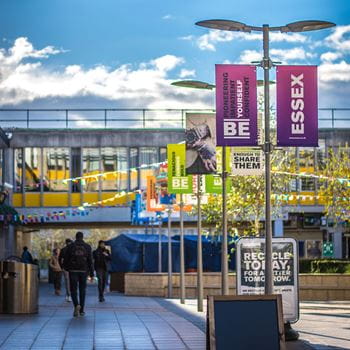
A sunny day with banners flying on Colchester Campus Square 4.

Visit Colchester Campus

Set within 200 acres of award-winning parkland - Wivenhoe Park and located two miles from the historic city centre of Colchester – England's oldest recorded development. Our Colchester Campus is also easily reached from London and Stansted Airport in under one hour.


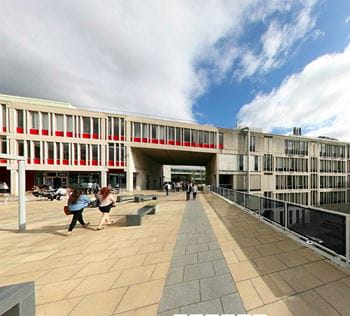
View from Square 2 outside the Rab Butler Building looking towards Square 3

Virtual tours

If you live too far away to come to Essex (or have a busy lifestyle), no problem. Our 360-degree virtual tour allows you to explore our University from the comfort of your home. Check out our Colchester virtual tour to see accommodation options, facilities and social spaces.

At Essex we pride ourselves on being a welcoming and inclusive student community. We offer a wide range of support to individuals and groups of student members who may have specific requirements, interests or responsibilities.

The University makes every effort to ensure that this information on its programme specification is accurate and up-to-date. Exceptionally it can be necessary to make changes, for example to courses, facilities or fees. Examples of such reasons might include, but are not limited to: strikes, other industrial action, staff illness, severe weather, fire, civil commotion, riot, invasion, terrorist attack or threat of terrorist attack (whether declared or not), natural disaster, restrictions imposed by government or public authorities, epidemic or pandemic disease, failure of public utilities or transport systems or the withdrawal/reduction of funding. Changes to courses may for example consist of variations to the content and method of delivery of programmes, courses and other services, to discontinue programmes, courses and other services and to merge or combine programmes or courses. The University will endeavour to keep such changes to a minimum, and will also keep students informed appropriately by updating our programme specifications. The University would inform and engage with you if your course was to be discontinued, and would provide you with options, where appropriate, in line with our Compensation and Refund Policy.

The full Procedures, Rules and Regulations of the University governing how it operates are set out in the Charter, Statutes and Ordinances and in the University Regulations, Policy and Procedures.

Ask us a question
Ask us a question

Want to quiz us about your course? Got a question that just needs answering? Get in touch with us on live chat!