The MA Curating combines practical curatorial experience with the history and theory of exhibition making, preparing you for careers in museums, galleries and the wider cultural sector.
You’ll develop the knowledge, practical skills and critical understanding needed to curate exhibitions that engage audiences and explore the social, political and cultural impact of art. Through hands-on projects, professional placements and interdisciplinary collaboration, you'll graduate ready to pursue a career in curating or continue into research.
Why this course
Our MA Curating balances practical experience with critical enquiry, giving you the opportunity to explore how exhibitions are conceived, developed and presented while understanding the wider role museums and galleries play in society.
You'll work alongside museum professionals and learn through workshops using the University's own art collections, developing practical skills in exhibition planning, interpretation, collections research and public engagement.
Alongside your practical work, you'll study the history and theory of curating with internationally recognised academics whose research is shaping the field. You'll explore topics including the social history of museums, exhibitions as sites of political critique and the relationship between artists, curators and audiences.
Interdisciplinary collaboration is central to the course. You'll work alongside students from art history and heritage studies to co-curate a public exhibition, reflecting the collaborative nature of today's cultural sector.
You'll also have the opportunity to apply for competitive placements at leading museums and galleries. Previous students have gained experience with organisations including Firstsite, the Hayward Gallery, Somerset House and the Victoria and Albert Museum.
By the end of the course, you'll have developed an impressive portfolio of practical curatorial experience, research expertise and professional skills, preparing you for careers across the arts and heritage sectors.
Who should apply
Graduates interested in curating, museums, galleries and contemporary visual culture
Anyone wanting to combine academic study with practical curatorial experience
Students interested in the social, political and cultural role of exhibitions and museums
Those seeking careers in museums, galleries, heritage organisations or the wider creative and cultural industries
What you'll learn
Curatorial practice: Develop practical skills in exhibition planning, interpretation and project management
History of exhibitions: Explore how museums and exhibitions have evolved and influenced society
Curatorial theory: Examine exhibitions as spaces for political, social and cultural debate
Collections research: Work with artworks and objects using object-based learning and archival research
Professional practice: Gain experience working with museums, galleries and cultural organisations
Your learning experience
Public exhibition: Co-curate a major exhibition at Firstsite, Colchester's award-winning contemporary art gallery
Competitive placements: Apply for opportunities with leading museums and galleries across the UK
Flexible study: Choose optional modules in art history, heritage, history and philosophy to broaden your expertise
Expert teaching: Learn from internationally recognised researchers and practising curators
Specialist facilities: Gain hands-on experience using the Essex Collection of Art from Latin America (ESCALA) and other collections through object-based learning
Careers and outcomes
An MA Curating prepares you for careers in:
Museums and galleries: Curator, exhibitions officer, collections manager or learning officer
Arts and heritage organisations: Project management, interpretation and public engagement roles
Creative industries: Arts management, publishing, communications and cultural consultancy
Commercial art sector: Auction houses, commercial galleries and arts organisations
Further study: PhD or MPhil research in art history, visual culture or curatorial practice
Employers of graduates from this course
Graduates from this course have gone on to work for organisations including:
National Portrait Gallery
Victoria and Albert Museum
Sotheby's New York
Momart Ltd
Why we're great.
We give you the opportunity to co-curate an exhibition.
We will support you in pursuing competitive placements at leading museums and galleries, from national museums such as the V&A to high-profile regional institutions such as Firstsite Gallery, which was named Art Fund Museum of the Year in 2021.
You will be taught by lecturers who produce some of the most innovative exhibitions and scholarship in the field. This is evidenced by the fact that we ranked 3rd in the UK for research outputs in art history (Grade Point Average, Research Excellence Framework 2021).
Course content
Components and modules explained
Components
Components are the blocks of study that make up your course. A component may have a set module which you must study, or a number of modules from which you can choose.
Each component has a status and carries a certain number of credits towards your qualification.
Status
What this means
Core
You must take the set module for this component and you must pass. No failure can be permitted.
Core with Options
You can choose which module to study from the available options for this component but you must pass. No failure can be permitted.
Compulsory
You must take the set module for this component. There may be limited opportunities to continue on the course/be eligible for the qualification if you fail.
Compulsory with Options
You can choose which module to study from the available options for this component. There may be limited opportunities to continue on the course/be eligible for the qualification if you fail.
Optional
You can choose which module to study from the available options for this component. There may be limited opportunities to continue on the course/be eligible for the qualification if you fail.
The modules that are available for you to choose for each component will depend on several factors, including which modules you have chosen for other components, which modules you have completed in previous years of your course, and which term the module is taught in.
Modules
Modules are the individual units of study for your course. Each module has its own set of learning outcomes and assessment criteria and also carries a certain number of credits.
In most cases you will study one module per component, but in some cases you may need to study more than one module. For example, a 30-credit component may comprise of either one 30-credit module, or two 15-credit modules, depending on the options available.
Modules may be taught at different times of the year and by a different department or school to the one your course is primarily based in. You can find this information from the module code. For example, the module code HR100-4-FY means:
HR
100
4
FY
The department or school the module will be taught by.
In this example, the module would be taught by the Department of History.
This co-curricular module comprises a series of fortnightly lectures by academics and some museum professionals to present current research. Lectures will cut across different geographies and chronological limits, encouraging students to think broadly about key formal, conceptual, and political issues that have informed the history of art and curation.
A 2:2 degree in any discipline with a minimum of 3 modules relating to visual culture:
Visual Culture modules include, but are not limited to:
Advertising
Aesthetics
Archaeology
Architecture
Art History
Curatorial/Museum Studies
Digital Imaging
English Literature
Fashion
Film Studies
Film and Literature
Fine Art
Graphic Design
History
Landscape Design
Media Studies
Photography
If you do not hold a degree which includes relevant modules, then we can still consider you. You should be able to show that you have relevant professional experience in one of the following fields:
Archaeological site
Fashion
Gallery
Museums
Publishing
Theatre
Other cultural institution
If you do not have a relevant degree or relevant experience, then we may ask you to provide a sample of written work which demonstrates your interest in this field.
International & EU entry requirements
We accept a wide range of qualifications from applicants studying in the EU and other countries. Get in touch with any questions you may have about the qualifications we accept. Remember to tell us about the qualifications you have already completed or are currently taking.
Sorry, the entry requirements for the country that you have selected are not available here. Please contact our Graduate Admissions team at pgquery@essex.ac.uk to request the entry requirements for this country.
English language requirements
If English is not your first language, we require IELTS 6.5 overall with a minimum
component score of 6.0 in writing and 5.5 in all other components.
If you do not meet our IELTS requirements then you may be able to complete a pre-sessional English
pathway that enables you to start your course without retaking IELTS.
Additional Notes
The University uses academic selection criteria to determine an applicant’s ability to
successfully complete a course at the University of Essex. Where appropriate, we may ask
for specific information relating to previous modules studied or work experience.
We hold Open Days for all our applicants throughout the year. Our Colchester Campus events are a great way to find out more about studying at Essex, and give you the chance to:
tour our campus and accommodation
find out answers to your questions about our courses, student finance, graduate employability, student support and more
meet our students and staff
If the dates of our organised events aren’t suitable for you, feel free to get in touch by emailing tours@essex.ac.uk and we’ll arrange an individual campus tour for you.
We aim to respond to applications within two weeks. If we are able to offer you a place, you will be contacted via email.
For information on our deadline to apply for this course, please see our ‘how to apply' information.
Visit Colchester Campus
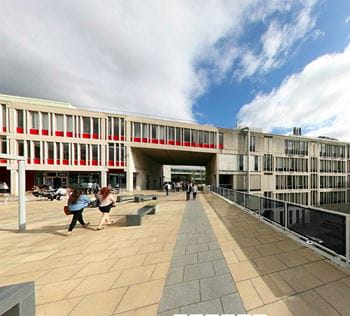
Set within 200 acres of award-winning parkland - Wivenhoe Park and located two miles from the historic city centre of Colchester – England's oldest recorded development. Our Colchester Campus is also easily reached from London and Stansted Airport in under one hour.
If you live too far away to come to Essex (or have a busy lifestyle), no problem. Our 360-degree virtual tour allows you to explore our University from the comfort of your home. Check out our Colchester virtual tour to see accommodation options, facilities and social spaces.
At Essex we pride ourselves on being a welcoming and inclusive student community. We offer a wide range of support to individuals and groups of student members who may have specific requirements, interests or responsibilities.
The University makes every effort to ensure that this information on its programme specification is accurate and up-to-date. Exceptionally it can be necessary to make changes, for example to courses, facilities or fees. Examples of such reasons might include, but are not limited to: strikes, other industrial action, staff illness, severe weather, fire, civil commotion, riot, invasion, terrorist attack or threat of terrorist attack (whether declared or not), natural disaster, restrictions imposed by government or public authorities, epidemic or pandemic disease, failure of public utilities or transport systems or the withdrawal/reduction of funding. Changes to courses may for example consist of variations to the content and method of delivery of programmes, courses and other services, to discontinue programmes, courses and other services and to merge or combine programmes or courses. The University will endeavour to keep such changes to a minimum, and will also keep students informed appropriately by updating our programme specifications. The University would inform and engage with you if your course was to be discontinued, and would provide you with options, where appropriate, in line with our Compensation and Refund Policy.
The full Procedures, Rules and Regulations of the University governing how it operates are set out in the Charter, Statutes and
Ordinances and in the University Regulations, Policy and Procedures.
3.png?mw=300)