Essex Law Professor Reframes How We Think About Property in Uncertain Times

Professor Ting Xu, Essex Law School.
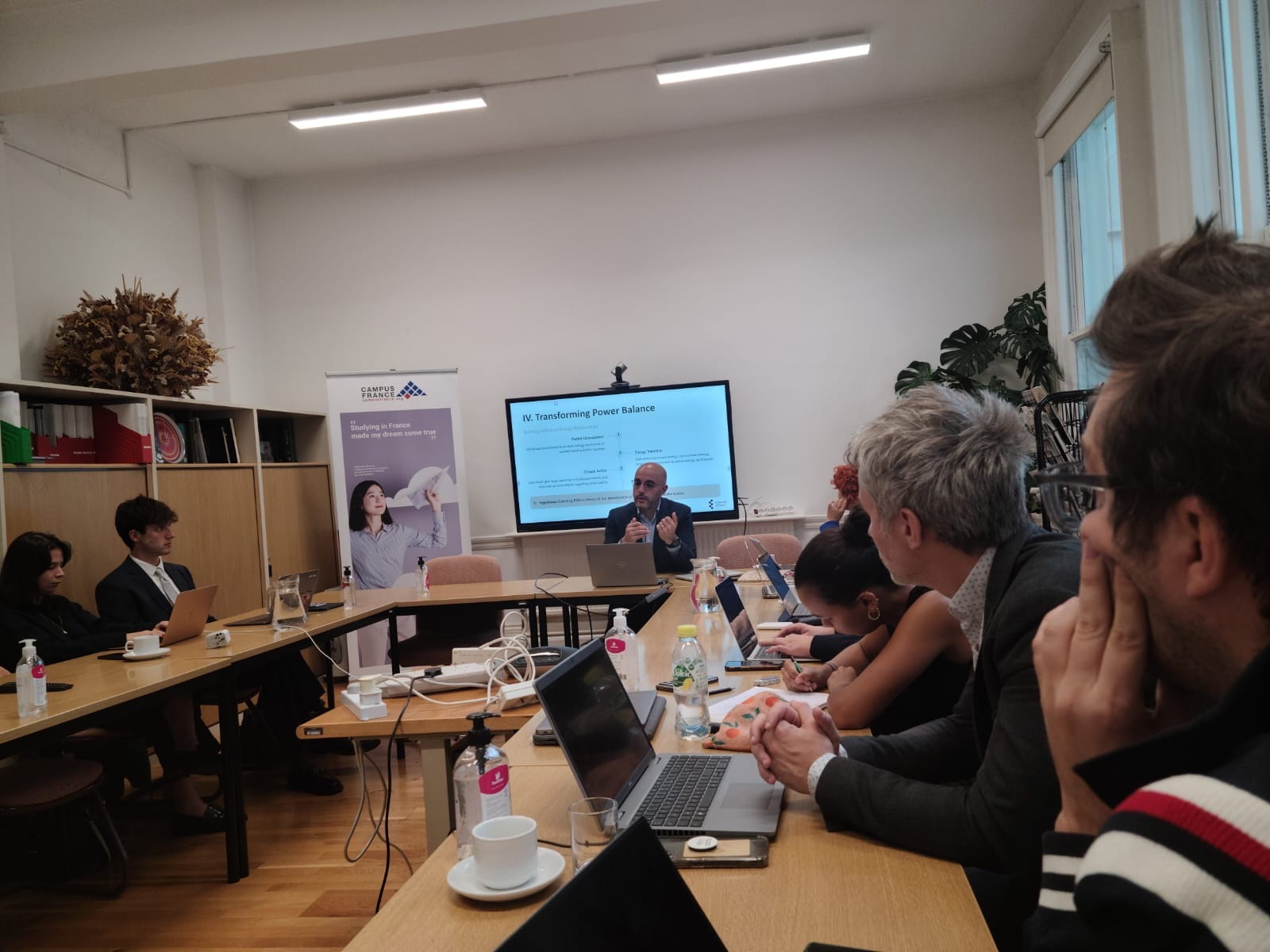
This post draws on my presentation at the workshop ‘Property, Resilience and Sustainability’ (University of Essex, 24–25 November 2025) and on my book-in-progress (with Wei Gong), supported by a British Academy/Leverhulme Trust Senior Research Fellowship.
Property is often described as a set of rights, a social relation, or a legal form anchored in rules of possession and transfer. These descriptions remain useful, yet they rest on an underlying expectation of stability—an assumption that property stands on firm ground, disturbed only occasionally by change.
My current book project, Reframing Property in Uncertain Times, begins from a different intuition:
‘Property does not endure despite uncertainty; it endures through it.’
Economic transformation, ecological stress, political upheaval, and social change do not appear as anomalies. They form the conditions under which property must continually be shaped and reshaped.
Rather than denying the importance of rules, the project asks a different question: how does property endure when the world around it is unsettled? Durability, in this sense, depends less on the pursuit of certainty than on the capacity to adapt. The inquiry that follows is simple but far-reaching: what allows property to persist through discontinuity, tension, and ambiguity?
Law in Resilience
Resilience is a common term across disciplines for how systems adapt under pressure. In legal scholarship, law and resilience are often seen as separate: law is viewed as a tool for designing flexible regulations in areas like environmental, financial, or administrative sectors. Resilience is seen as an external process, while law acts as an engineer.
This book treats law as part of resilience, not just an external instrument. Legal rules, institutions, and interpretive practices do more than respond to disruption; they help shape how disruption is recognised, absorbed, or redirected. Courts, government officials, and communities all play a part in this process. They reinterpret rules as circumstances shift, improvise governance solutions, and craft the forms of legitimacy that make change endurable. Adaptation happens inside the legal order, as well as around it.
Seen in this light, the project engages with Resilient Property Theory (RPT) while examining resilience from a different perspective. The frameworks differ in focus, yet they illuminate related questions about adaptation and institutional change. My aim is not to compete with RPT but to offer a perspective that complements and enriches future collaboration.
RPT examines how property adapts—and sometimes resists adaptation—within liberal-democratic settings, where constitutional norms, formal legality, and democratic expectations frame the terms of institutional change. My focus lies elsewhere. I trace how resilience takes shape in environments where legality is plural, informal, or strategically flexible, and where adaptation proceeds through administrative practice, community governance, and lived forms of knowledge rather than through constitutional contestation. This shift in vantage point places the emphasis on how institutions endure under sustained ambiguity—and how law is constituted within that very process of adjustment.
The Resilience Triad
To study this dynamic, the book develops a framework I call the resilience triad. It brings together three domains through which property institutions respond to uncertainty: entitlements, governance practices, and resources, held together by circulating forms of legal knowledge.
- Entitlements involve claims recognised as legitimate by law, custom, or sustained social practice.
- Governance practices encompass the administrative routines, community decisions, and informal arrangements that give these claims practical meaning.
- Resources - principally land, housing, and the physical conditions shaped by environmental and economic change—ground the entitlements and governance practices in everyday life.
None of these elements operates in isolation. They move together, though not always in concert. Entitlements may shift quickly, governance practices may adjust cautiously or unevenly, and resource conditions may change irrespective of institutional capacity. These differences in pace and direction create uneven patterns of adaptation, revealing the tensions that accompany institutional resilience.
Legal knowledge mediates these movements. It provides the vocabularies, documents, and interpretive habits through which people understand what they may assert, concede, or negotiate. Contracts, cadastral records, policy circulars, village rules, and court decisions function not only as technical artefacts but also as tools through which communities and officials read shifting conditions and translate them into workable forms of order. Through this circulation of knowledge, law acquires the flexibility that resilience demands.
The resilience triad helps trace how adaptation happens. It also allows us to distinguish between forms of resilience that simply preserve existing inequalities and others that bring learning, redistribution, or repair. This distinction matters. Endurance alone is not a virtue. As I argue in the book,
‘Resilience is not always benign. The challenge is to understand when adaptation enables fairness and when it deepens vulnerability’.
In the book, I approach resilience through a layered framework. At a descriptive level, it captures how institutions endure or adjust when conditions change. At an analytical level, it helps explain the mechanisms through which adaptation takes place—how entitlements shift, how governance practices evolve, and how material conditions reshape what property can sustain. And at a normative level, resilience raises questions about fairness: when do adaptive processes redistribute vulnerability, and when do they reinforce existing inequalities? This layered conception helps distinguish between resilience as simple survival and resilience that carries the possibility of learning, renewal, or more equitable outcomes.
Community and Legal Knowledge
Two themes run through the book: the role of community and the significance of legal knowledge. These themes shift attention away from abstract design principles and towards lived forms of governance.
Communities—whether households, lineages, neighbourhoods, or other collective arrangements—often serve as the first sites where adaptation takes place. They mediate between formal rules and everyday practice. They share risk, resolve conflict, and negotiate obligations as circumstances change. Community, in this sense, is not an idealised space of harmony, but an institution shaped by cooperation, contestation, and the ongoing work of maintaining legitimacy. It provides one of the social foundations on which property’s resilience is built.
Legal knowledge organises adaptation at an epistemic level. It shapes how people interpret the law, test its boundaries, and claim authority. Documents circulate between state and society, allowing individuals and groups to read shifting conditions and make sense of institutional change. Through this circulation, law becomes capable of absorbing uncertainty—rules bend without breaking, and legitimacy is renewed even when formal categories fall short.
Together, community and legal knowledge help show how property institutions reorganise under uncertainty. They reveal the processes through which adaptation is lived, negotiated, and worked through within institutions.
Why China? What China Contributes to Theory
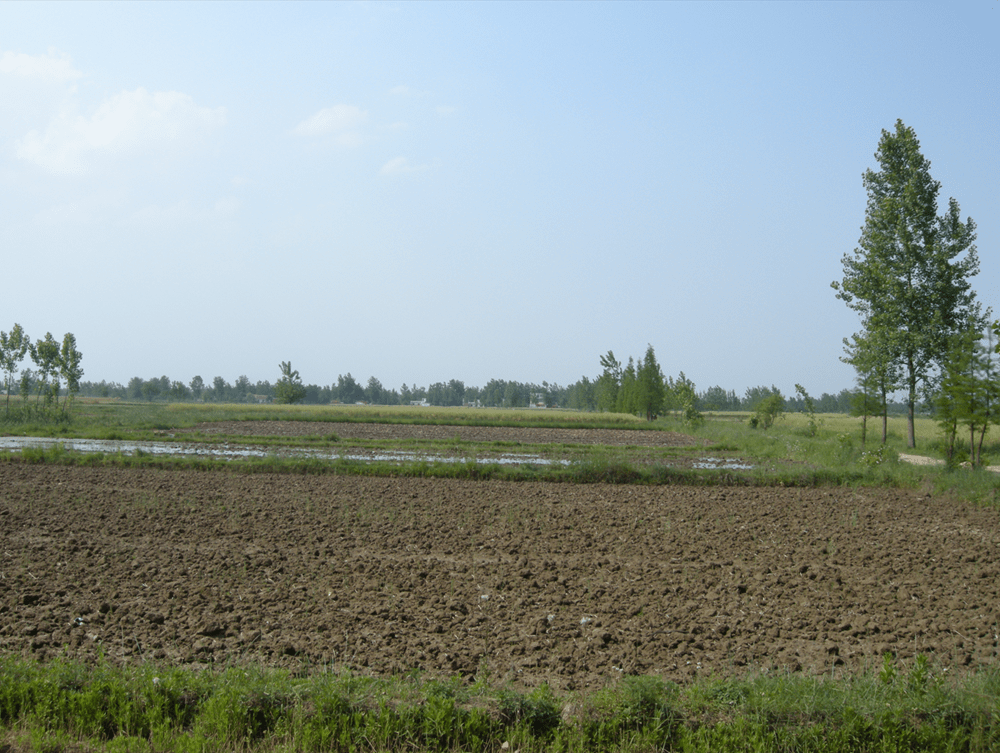
China provides a particularly rich vantage point from which to examine these dynamics. Over the past four decades, land institutions have been repeatedly reorganised: collectivised, decentralised, marketised, and partially re-collectivised. These shifts were not linear. They involved negotiation across multiple levels of governance, significant local variation, and continuous experimentation.
The project theorises from the Chinese experience rather than only about it. China’s changing property landscape reveals how institutions endure through adaptation: how households reinterpret rights, how communities negotiate obligations, and how courts and administrators manage ambiguity while maintaining a workable sense of order. These dynamics speak to broader debates about institutional resilience across diverse political and social settings, especially those marked by rapid change or persistent uncertainty.
Conclusion
This work builds a foundation for understanding property as a dynamic institution that evolves through uncertainty. By highlighting law's role in resilience and tracing adaptation across entitlements, governance, and resources, it seeks to show how property systems reorganise and endure.
The fuller argument develops across the empirical chapters of the book and remains in progress. I look forward to continuing the conversation and refining these ideas as the project evolves.
.jpg)