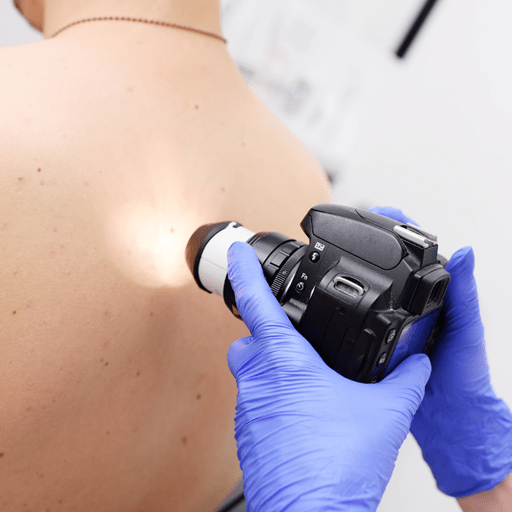
The University of Essex’s Dr Haider Raza has been working with Check4Cancer on the new teledermatology triage system, that will help to alleviate pressure on health services by slashing waiting times and detecting aggressive forms of skin cancer at the earliest opportunity.
The new SKINTEL® AI model, detailed in the Nature journal, Scientific Reports, combines image analysis with 22 different patient metrics such as age, skin tone, hair colour and family history, to determine whether a suspicious lesion requires further investigation and possible biopsy.
Dr Haider Raza, Senior Lecturer in Artificial Intelligence at the University of Essex, said: “What sets SKINTEL® apart from existing dermatology AI systems is its ability to combine high-quality image analysis with rich patient metadata and built-in explainability.
“Rather than acting as a black box, the system can show clinicians why a lesion has been flagged, which is critical for trust and safe adoption.
"Importantly, SKINTEL® is designed as a clinical decision-support tool, it augments medical expertise rather than replacing it, ensuring that final decisions always remain under the oversight of trained healthcare professionals.”
Researchers analysed 79,246 images of skin lesions from 19,295 people who attended private skin cancer clinics in the UK from 2015-2022 as part of the project.
By analysing the images and patient data, the AI was able to correctly identify 99.5 per cent of skin cancer cases, as well as 82.5% per cent of non-cancerous lesions.
The specificity of 82.5% is much higher than published data and means that less patients need to be recalled to diagnosed 99% of the skin cancers.
Dr Raza, of Essex’s School of Computer Science and Electronic Engineering, said: “Accurately identifying non-cancerous lesions is just as important as detecting cancer itself.
“High specificity means fewer unnecessary recalls, biopsies, and follow-up appointments, which reduces patient anxiety and avoids placing additional strain on already stretched services.
“By reliably ruling out benign cases while still detecting over 99% of cancers, SKINTEL® has the potential to significantly shorten waiting times, optimise specialist capacity, and support earlier intervention where it is truly needed.”
SKINTEL® was developed as part of a Knowledge Transfer Partnership (KTP) between Check 4 Cancer and Dr Raza.
Professor Gordon Wishart, CEO of Check4Cancer, said “This has been an excellent collaboration with the University of Essex with results that exceed the performance of human reporters and existing AI models.
“We are now focused on further clinical validation studies of SKINTEL® and getting regulatory approval so that we can deploy the model as a decision support tool for healthcare professionals involved in skin cancer diagnosis pathways to accelerate early skin cancer detection.”
Funded and run by Innovate UK, KTPs connect experts with businesses to find new and innovative ways of working.
3.png?mw=300)