

.png?mw=300)


News
Exhibition celebrates space age synthetics
-
Date
Wed 15 Oct 25

A space age inspired silver dress bought in a north London boutique in the 1960s is the centrepiece of the latest exhibition curated by research student Amber Butchart.
It features in her new show, The Synthetic Revolution, which charts the history and impact of polyester.
The exhibition has opened at the Haworth Gallery in Accrington, where the first polyester fibres were produced and later marketed as Terylene.
It is part of a series of events programmed for the British Textile Biennial, which takes place in the heartland of Britain’s industrial textile industry, east Lancashire and explores local stories that have had a global impact.
The Synthetic Revolution has been co-curated by Amber, who is the well-known face of fashion history from the BBC’s Great British Sewing Bee, and artist Claire Wellesley-Smith.
It is Amber’s second exhibition curated as part of her PhD, which focuses on propaganda textiles between 1946 and 1970.
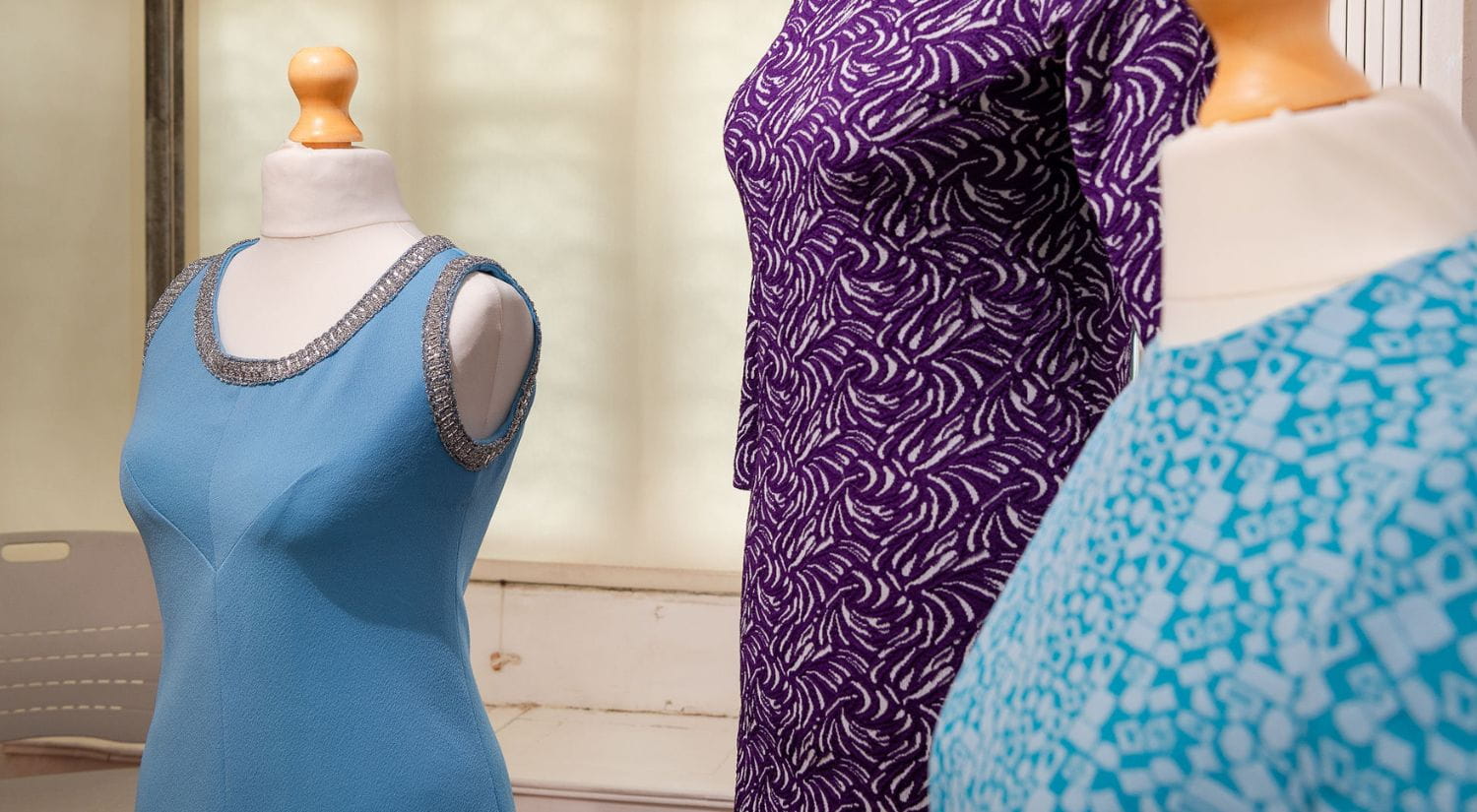
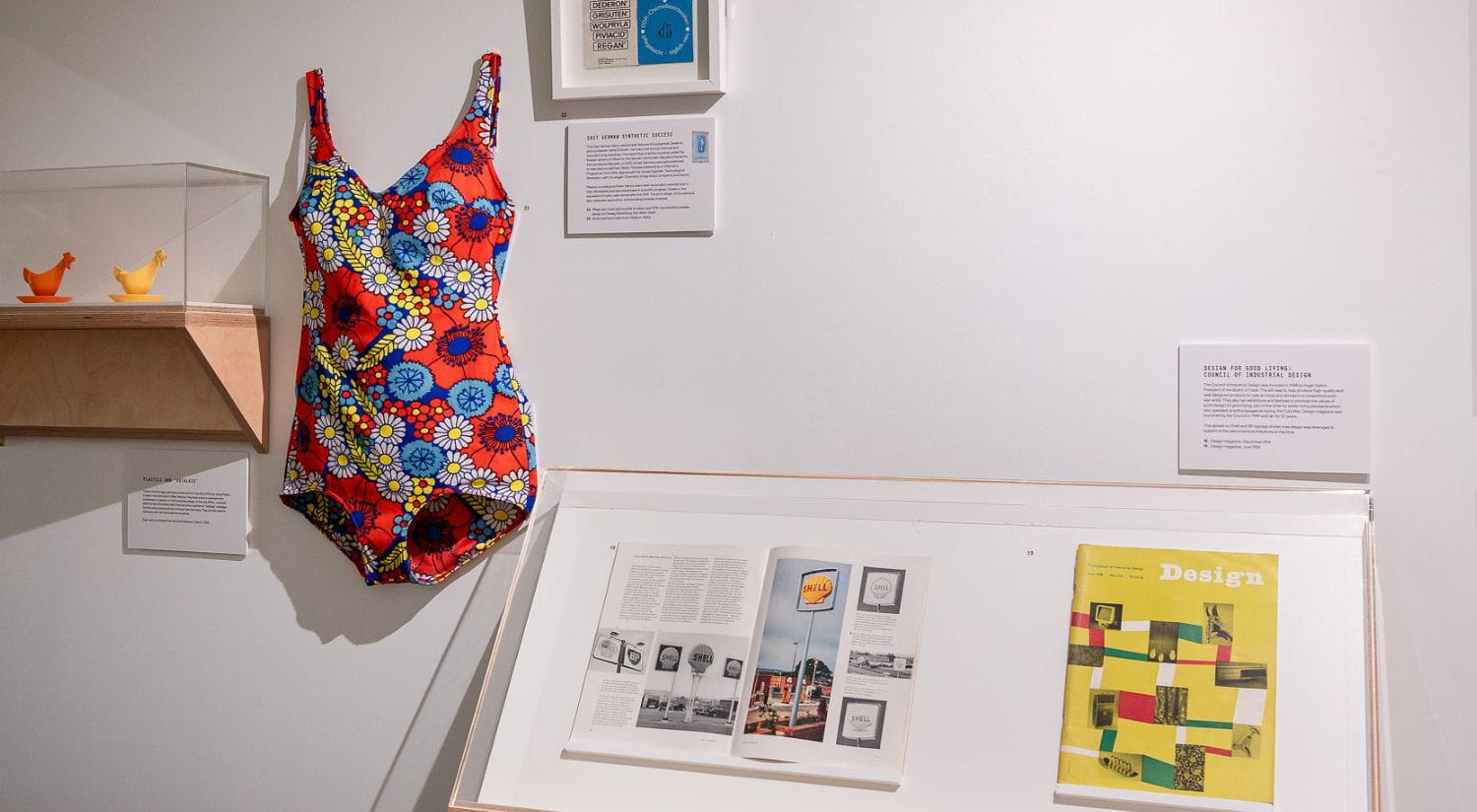
The exhibition is divided into four sections on the invention of synthetic fibres in the lab; why polyester was hailed as a labour-saving device in the home; its use in the Cold War when synthetic fibres were used in conflict and for protection clothing; and consumer fashion of the mid-20th century.
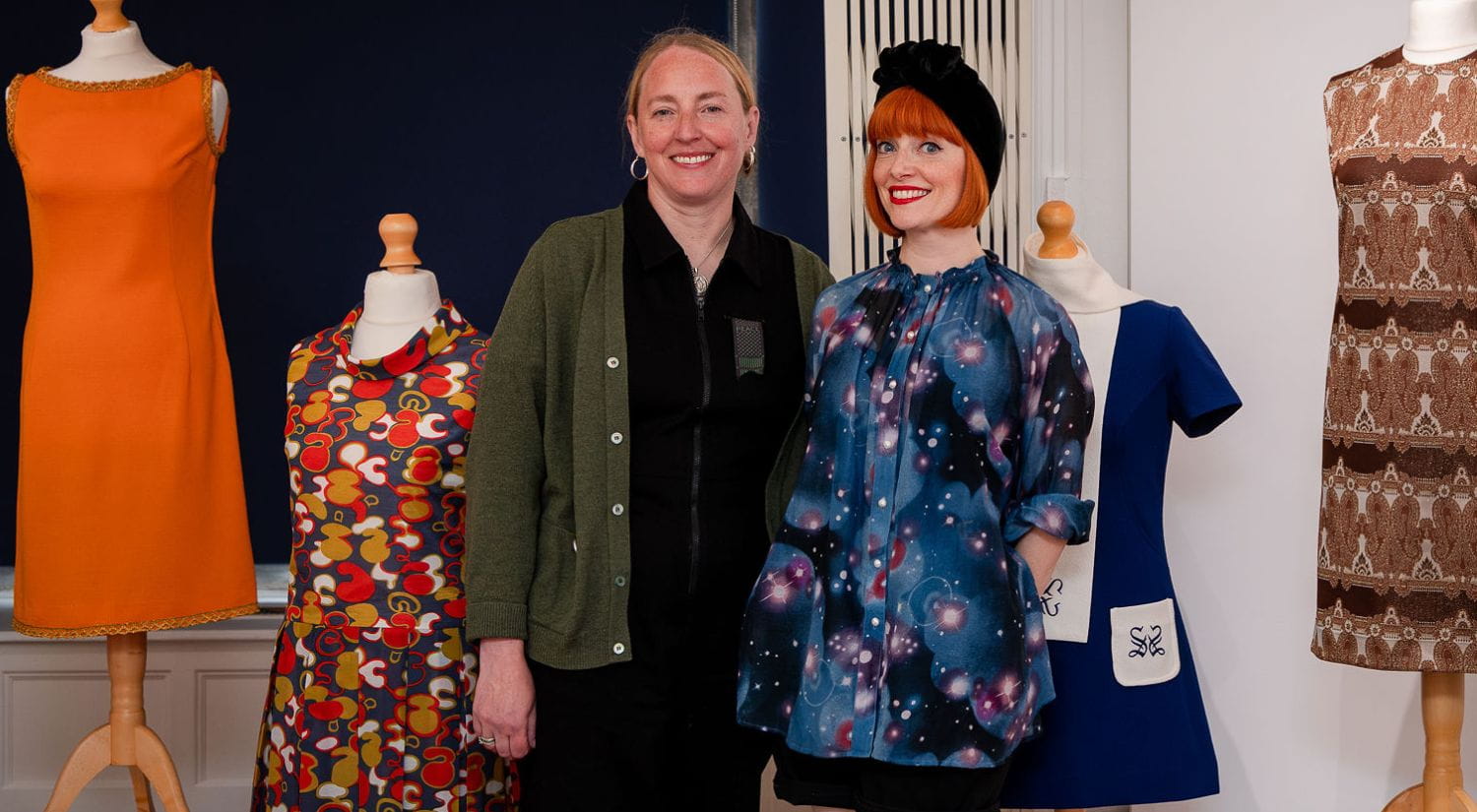

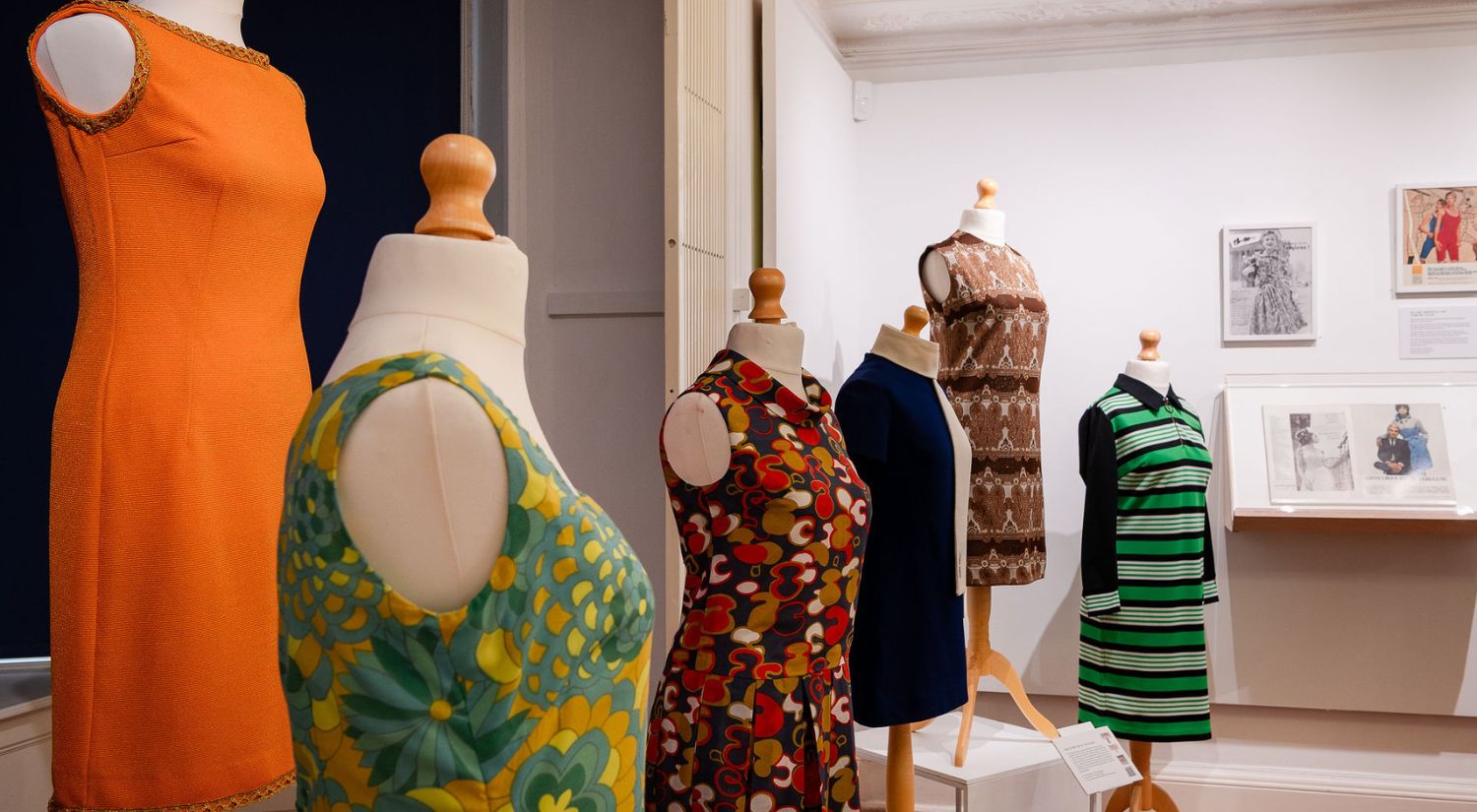
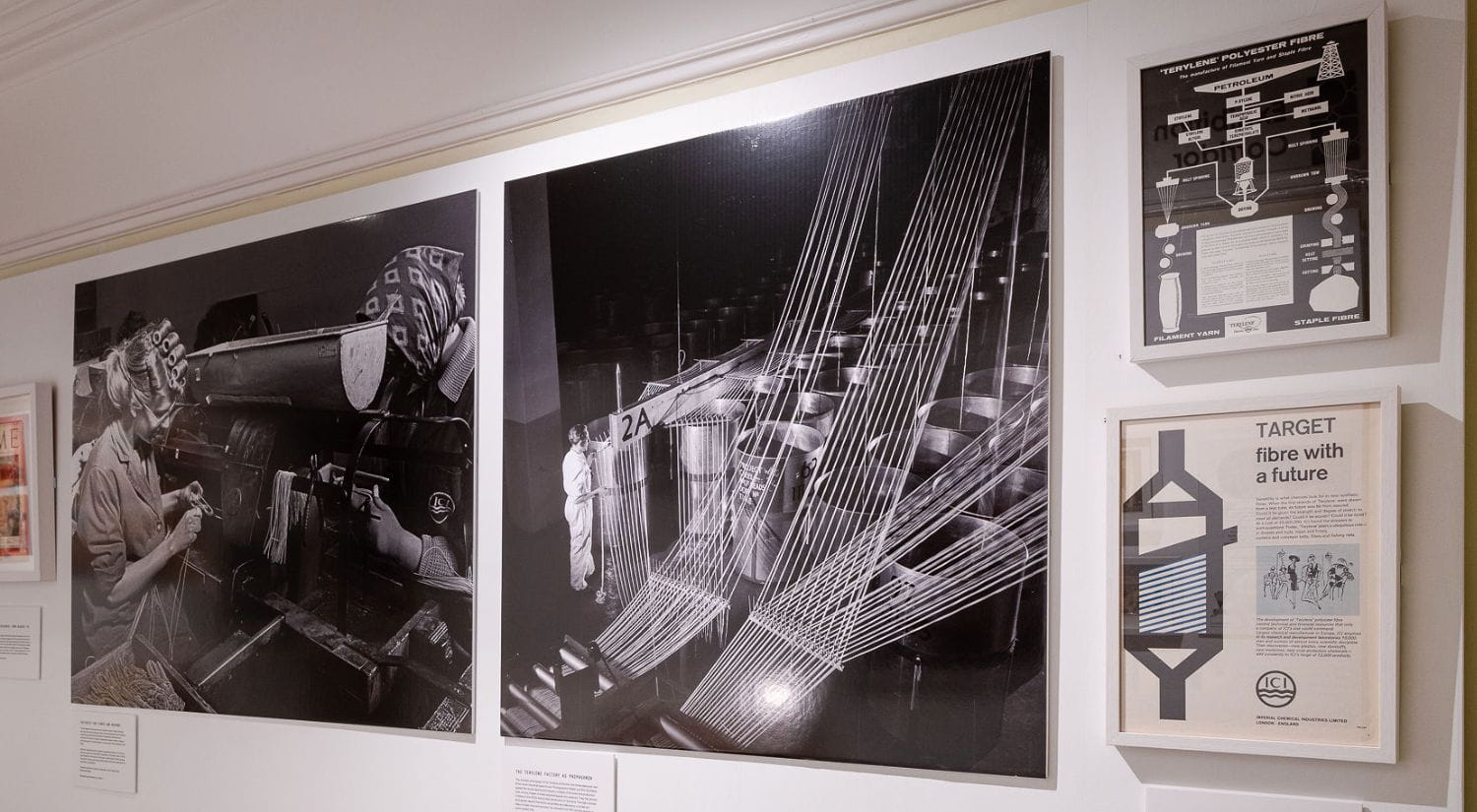
Amber, who has been working with the Biennial team since 2019, and hosts its podcast series Cloth Cultures, worked specifically on the Cold War and fashion elements of the show.
“In the 1950s and 1960s polyester was seen as this wonder fabric. Plastic in general at this time was becoming an everyday product and polyester was seen as something that could revolutionise fashion and reduce women’s labour,” she explained.
At the centre of the exhibition is a silver dress owned by Amber’s mother. Like a lot of synthetic fashion from the 1960s it was inspired by the international space race and reflects the ambitions and inter-galactic utopian dreams of the time.
That relationship between space and fashion however went both ways, as illustrated in the exhibition by Pathe footage of astronauts from the pre-moon landing Mercury missions.
“Those pressure suits that Mercury mission astronauts wore were spray painted silver. These technologically advanced synthetic garments were actually brown or green underneath, but space suits in film were always silver so they had to be silver,” Amber explained.
The exhibition explains how the global development of synthetic fibres was driven by companies experimenting with chemical and nuclear weapons and protective clothing and heavily linked to Cold War competition between east and west.
In the USA, Apollo mission space suits were made by the International Latex Corporation, whose consumer arm, Playtex, created the women’s underwear that spearheaded the highly desirable 1950s nipped-in waist silhouette.
This relationship, which saw seamstresses sewing underwear for consumers also sewing space suits, is illustrated in the exhibition by a Playtex girdle packaging tube, decorated with a picture of a stereotypically beautiful 1950s woman.
Competition across the Iron Curtain is reflected by USSR propaganda leaflets, promoting communist space endeavours, illustrated with pictures of mills and textile production, highlighting the critical importance of protective fabrics for space travel.
By the 1970s Amber explained, the utopian ideal, closely connected to the space race and synthetic fashion, was waning, in favour of environmental and anti-war movements and the “desirability of synthetic fabrics was starting to fall away. Polyester came to be seen as a cheap product that didn’t feel very nice on the skin.”
Companies were forced to become cleverer, changing the names of their products and altering blends so fabrics were less obviously synthetic.
“Today, polyester fibres are the most prolific fibre in the fashion industry. As a population we have less material literacy than we once did, and this is exploited by fast fashion companies and greenwashing. Fewer people understand what they are wearing because most things are made overseas and it can be difficult to distinguish between natural and synthetic fibres,” Amber explained.
“It is of huge contemporary relevance as we live through a plastic crisis and imminent climate change,” she added.
The Synthetic Revolution is at the Haworth Gallery in Accrington until Christmas. Listen to the Cloth Cultures episode.
Header picture courtesy of Matt Savage.