MSc Sport and Exercise Science is a one-year postgraduate taught degree studied on a full-time or part-time basis at our Colchester Campus.
As a science-driven Masters degree you’ll explore the biological, physiological, biomechanical, nutritional and psychological factors that underpin human performance, health and exercise. You will train in both the practical and theoretical elements of sport and exercise science, developing the expertise needed to analyse movement, understand physiological adaptation, and apply evidence-based approaches to improving performance and wellbeing.
Considering this course? Book a 1:1
Speak directly with Chris McManus, Programme Lead and get personalised advice about the course, your application and your future career options.
Why this course
Studying Sport and Exercise Science at Essex gives you access to a research-active academic community, state-of-the-art laboratories and a curriculum shaped by current scientific practice.
Key benefits include:
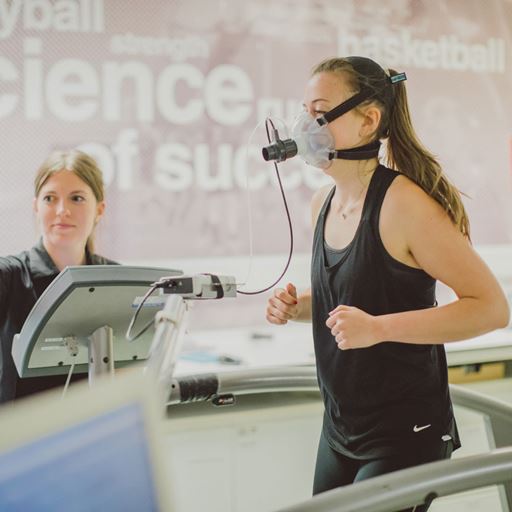
Hands-on laboratory experience using specialist equipment for biomechanics, physiology, nutrition and psychology
Science-based teaching that integrates cutting-edge research with applied practice
Small-group seminar learning, enabling discussion, collaboration and shared expertise
Flexible study options with full-time and part-time pathways
Tailor your degree to your career goals through specialist ‘qualifiers’ in areas such as Biomechanics, Performance Analysis, Physiology and Sports Nutrition - your chosen pathway appears on your degree transcript when you graduate, e.g. MSc Sport and Exercise Science (Sports Nutrition)
This MSc is ideal if you’re ready to specialise beyond undergraduate study, deepen your applied sport science expertise and build professional authority in areas such as human performance analysis, applied exercise physiology, biomechanics, sports nutrition and evidence-based practice. You’ll develop the advanced scientific, analytical and professional skills that employers, elite performance environments and research teams expect.
Who should apply
You’ll be a great fit if you are:
A sport and exercise science graduate aiming to advance into specialist or applied roles
A coach, trainer, or practitioner seeking stronger scientific foundations for your work
A health, fitness or wellbeing professional wanting to expand into performance or exercise science
An aspiring researcher interested in physiology, biomechanics, nutrition or sport psychology
An international student looking to study sport and exercise science in the UK with access to advanced laboratory facilities
What you’ll learn
You’ll develop advanced scientific knowledge across the core disciplines of sport and exercise science while building the practical expertise to apply research in real-world performance, health and exercise environments.
You'll gain expertise in:
Advanced exercise physiology: Assess and optimise human performance using laboratory-based physiological testing and evidence-based training principles
Biomechanics and movement analysis: Analyse technique, evaluate movement efficiency and reduce injury risk through applied biomechanical assessment
Sport and exercise nutrition: Design and evaluate nutrition strategies that support performance, recovery and long-term health
Sport psychology and performance strategies: Explore how psychological principles influence motivation, resilience and high-performance environments
Research design and data analysis: Develop the ability to design robust research projects, analyse complex datasets and communicate scientific findings with clarity and confidence
Your learning experience
Your learning experience combines advanced scientific training, hands-on laboratory work and expert academic supervision, giving you the skills and confidence to operate in professional sport, health and research environments.
Interactive seminars led by research-active academics, encouraging discussion, critical thinking and applied problem solving
Practical laboratory sessions in physiology, biomechanics, nutrition and psychology, where you’ll conduct assessments, analyse data and apply scientific techniques
Independent research project supported by specialist supervisors, allowing you to explore a topic aligned with your career goals or chosen qualifier
Collaborative learning working with peers on applied tasks that mirror real-world sport and exercise science practice
By the end of the course, you'll be able to:
Design and deliver evidence-based performance programmes
Conduct laboratory-based physiological and biomechanical assessments
Analyse and interpret sport performance and health data
Critically evaluate scientific literature and translate research into practice
Independently design and complete a postgraduate research project
From Premier League football clubs and leading healthcare providers to globally recognised universities, our alumni are making an impact in performance sport, rehabilitation and applied sport science worldwide.
We also connect you with work experience, internships and industry partners to boost employability and professional credibility throughout your studies.
Specialise your degree
You can focus your learning and research on one of four topics and receive a ‘qualifier’ on your degree transcript when you graduate, e.g. MSc Sport and Exercise Science (Sports Nutrition). This qualifier allows you to demonstrate to future employers that you have directed your studies towards this topic and have a wealth of knowledge in that ever-growing area of sport and exercise science.
To take one of these qualifiers, you will start the MSc Sport and Exercise Science with all other students, then pick two or three specialist modules (depending on your chosen area) in your first week. You will not need to apply for a different course.
Specialise in Biomechanics
Designed for those with a passion and wanting to advance their skills within Human Biomechanics, this qualifier offers a deep dive into human biomechanics, both in theory and practice.
Our curriculum is tailored to provide a comprehensive understanding of key health and exercise science topics within clinical human biomechanics. The curriculum also ensures a strong grounding in related areas of sports and exercise science.
Through hands-on experience in state-of-the-art facilities and collaborative seminar-based learning, you will emerge well-equipped to pursue a career heavily involving biomechanics, research, or other professional pathways in the field of sports and exercise science.
To be eligible for the qualifier 'MSc Sport and Exercise Science (Biomechanics)', you must successfully complete the following modules:
Designed for those wanting to advance their knowledge, understanding, and skills within performance analysis, this qualifier offers a deep dive into performance analysis within sport, both in theory and practice.
This curriculum is tailored to provide a comprehensive understanding of key components of contemporary practice within performance analysis in sport, including data collection, analysis, interpretation, and translation to inform decision-making in applied environments. It also ensures a strong grounding in related areas of sport and exercise science which complement and support performance analysis practices within different applied sport environments.
Through hands-on experience with industry-standard performance analysis equipment and software, and collaborative and innovative learning approaches, you will emerge well-equipped to pursue a career in performance analysis within applied sport environments, research, or other professional pathways in the field of sport and exercise science.
To be eligible for the qualifier 'MSc Sport and Exercise Science (Performance Analysis)' you must successfully complete the following modules:
Designed for those wanting to advance their skills within physiology, this qualifier offers a deep dive into applied, clinical, and exercise physiology.
This curriculum is designed to provide a comprehensive understanding of key concepts and techniques in clinical and performance physiology across sport and exercise contexts. It also ensures a strong grounding in related areas of sports and exercise science. You will emerge well-equipped to pursue a career heavily involving physiological testing, research, or other professional pathways in the field of sports and exercise science.
To be eligible for the qualifier 'MSc Sport and Exercise Science (Physiology)' you must successfully complete the following modules:
You will cover a broad range of topics from biochemistry and physiology to sports nutrition and dietary analysis, ensuring a well-rounded education. You will engage with practical case studies as well as theoretical learning, which will enhance your understanding and prepare you for real-world challenges. Both the course content and professional practice elements are designed to be relevant in both national and international contexts.
Integrated within the sports nutrition modules are complimentary opportunities to complete additional courses:
UK Anti-Doping (UKAD) 'Introduction to Clean Sport' endorsed by the Chartered Institute for Management of Sport and Physical Activity (CIMPSA)
Ionising Radiation (Medical Exposure) Regulations (IR(ME)R) certification, a prerequisite to operate ionising radiation medical devices such as a DEXA
To be eligible for the qualifier 'MSc Sport and Exercise Science (Sports Nutrition)' you must successfully complete the following modules:
You will be encouraged to take the Certification of the International Society for Sports Nutrition (CISSN) exam towards the end of the course and, if completed successfully, will receive the title of Certified Sports Nutritionist. This course qualifier is also designed to align with some of the core competencies required to become a Registered Associate Nutritionist (Association for Nutrition) and Graduate Registration with the Sport and Exercise Nutrition Register (SENr).
Why we're great.
Gain in-depth knowledge by using our cutting-edge advanced research equipment.
Align your degree with your interests in sport and exercise science, or gain more specialist knowledge in biomechanics, performance analysis, physiology, or sports nutrition.
Have the opportunity to undertake a final dissertation research project in an area of your interest, supervised by experts in their field.
The University of Essex is committed to supporting and developing high performance athletes. Find out whether you could be eligible for a sports scholarship or bursary, plus a range of additional benefits too when you join the University of Essex.
“I am currently studying a Master’s in Sports and Exercise Science with a pathway in Nutrition. This degree focuses more on sport, health, performance, and research, which has strengthened my analytical thinking and ability to interpret data. It has also given me an understanding of how sport organisations work and the impact that exercise and diet have on both athletes and the wider population, which I can personally relate to through my own experience as a competitive tennis player.”
Ana Guardiana Campos, MSc Sport & Exercise Science student and tennis scholar
Course content
Course structure
Our research-led teaching is continually evolving to address the latest challenges and breakthroughs in the field. The following modules are based on the current course structure and may change in response to new curriculum developments and innovation.
We understand that deciding where and what to study is a very important decision for you. We'll make all reasonable efforts to provide you with the courses, services and facilities as described on our website and in line with your contract with us. However, if we need to make material changes, for example due to significant disruption, we'll let our applicants and students know as soon as possible.
Components and modules explained
Components
Components are the blocks of study that make up your course. A component may have a set module which you must study, or a number of modules from which you can choose.
Each component has a status and carries a certain number of credits towards your qualification.
Status
What this means
Core
You must take the set module for this component and you must pass. No failure can be permitted.
Core with Options
You can choose which module to study from the available options for this component but you must pass. No failure can be permitted.
Compulsory
You must take the set module for this component. There may be limited opportunities to continue on the course/be eligible for the qualification if you fail.
Compulsory with Options
You can choose which module to study from the available options for this component. There may be limited opportunities to continue on the course/be eligible for the qualification if you fail.
Optional
You can choose which module to study from the available options for this component. There may be limited opportunities to continue on the course/be eligible for the qualification if you fail.
The modules that are available for you to choose for each component will depend on several factors, including which modules you have chosen for other components, which modules you have completed in previous years of your course, and which term the module is taught in.
Modules
Modules are the individual units of study for your course. Each module has its own set of learning outcomes and assessment criteria and also carries a certain number of credits.
In most cases you will study one module per component, but in some cases you may need to study more than one module. For example, a 30-credit component may comprise of either one 30-credit module, or two 15-credit modules, depending on the options available.
Modules may be taught at different times of the year and by a different department or school to the one your course is primarily based in. You can find this information from the module code. For example, the module code HR100-4-FY means:
HR
100
4
FY
The department or school the module will be taught by.
In this example, the module would be taught by the Department of History.
The research project module is an opportunity for you to carry out an individual scientific investigation on a topic relating to your degree specialisation. It will help develop your skills in reviewing synthesising and critically appraising academic literature. You will also be expected to design, analyse and interpret data and present findings in a scientific paper format.
Further Research Methods in Sport, Exercise and Health
(30 CREDITS)
This module will focus on the fundamental assumptions underlying quantitative research, including; research design methods, sampling, and the validity and reliability of measurements in exercise science. Students will master the techniques needed to critically appraise published research and carry out a piece of original research.
This module focuses on developing the skills and knowledge required to effectively work within multidisciplinary teams in applied settings. You will explore the roles and contributions of various disciplines – such as physiology, biomechanics, and data science – in supporting the performance and health of clients or athletes. In sporting environments, this might involve collaboration between sports scientists, coaches, physiotherapists, and team doctors, while in clinical settings, you will consider how exercise physiologists, nutritionists, and medical professionals work together to optimise health outcomes. Through reflective practice and real-world scenarios, you will gain insights into effective teamwork, communication, and problem-solving, equipping you to thrive in collaborative professional environments.
You will learn via a range of teaching methods, including:
lectures
seminars
small group laboratory sessions
practical skills sessions
Postgraduate Taught students in the School of Sport, Rehabilitation and Exercise Sciences typically attend two-hour workshops, or a one-hour lecture and one-hour seminar for each module each week.
Assessment
Our modules are assessed by a combination of exams, essays, verbal/visual presentations and written reviews.
Entry requirements
UK entry requirements
We welcome applications from individuals holding a 2:2 degree (or equivalent) in disciplines that provide a strong foundation in areas relevant to sport and exercise science. Suitable academic backgrounds include, but are not limited to:
Life Sciences: Fields that explore biological systems and functions
Health and Medical Sciences: Disciplines focused on human health, disease prevention, and medical practices
Psychological and Behavioural Sciences: Studies related to human behaviour, cognition, and mental processes
Physical and Natural Sciences: Areas such as physics, chemistry, and environmental sciences that contribute to understanding physical phenomena
Engineering and Technology: Fields that apply scientific principles to design and build systems, structures, and devices
Animal and Veterinary Sciences: Disciplines focusing on animal biology, health, and management
Applicants should have engaged with modules or coursework in subjects such as anatomy, physiology, psychology, biomechanics, nutrition, data analysis, or related areas.
We will also consider applicants with a 2:2 degree in other disciplines, who possess substantive professional experience in sports, exercise, health, or animal-related fields and who provide detailed information on this experience when applying (for example, a CV, personal statement, or reference(s)).
We may also consider applicants with a third-class degree (or equivalent) who can demonstrate significant relevant professional experience in sport, exercise, health, or related fields, and who provide detailed information on this experience when applying (for example, a CV, personal statement, or reference(s)). These applications are assessed on a case-by-case basis.
International & EU entry requirements
We accept a wide range of qualifications from applicants studying in the EU and other countries. Get in touch with any questions you may have about the qualifications we accept. Remember to tell us about the qualifications you have already completed or are currently taking.
Sorry, the entry requirements for the country that you have selected are not available here. Please contact our Graduate Admissions team at pgquery@essex.ac.uk to request the entry requirements for this country.
English language requirements
If English is not your first language, we require IELTS 6.5 overall with a minimum
component score of 5.5 in all components.
If you do not meet our IELTS requirements then you may be able to complete a pre-sessional English
pathway that enables you to start your course without retaking IELTS.
Additional Notes
The University uses academic selection criteria to determine an applicant’s ability to
successfully complete a course at the University of Essex. Where appropriate, we may ask
for specific information relating to previous modules studied or work experience.
We hold Open Days for all our applicants throughout the year. Our Colchester Campus events are a great way to find out more about studying at Essex, and give you the chance to:
tour our campus and accommodation
find out answers to your questions about our courses, student finance, graduate employability, student support and more
meet our students and staff
If the dates of our organised events aren’t suitable for you, feel free to get in touch by emailing tours@essex.ac.uk and we’ll arrange an individual campus tour for you.
We aim to respond to applications within two weeks. If we are able to offer you a place, you will be contacted via email.
For information on our deadline to apply for this course, please see our ‘how to apply' information.
Visit Colchester Campus
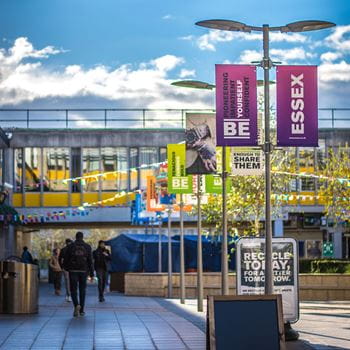
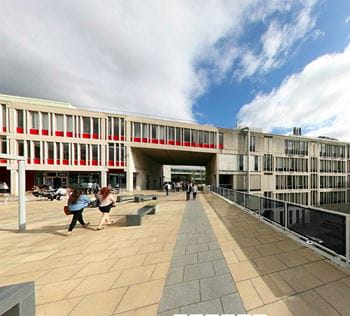
Set within 200 acres of award-winning parkland - Wivenhoe Park and located two miles from the historic city centre of Colchester – England's oldest recorded development. Our Colchester Campus is also easily reached from London and Stansted Airport in under one hour.
If you live too far away to come to Essex (or have a busy lifestyle), no problem. Our 360-degree virtual tour allows you to explore our University from the comfort of your home. Check out our Colchester virtual tour to see accommodation options, facilities and social spaces.
Chat to us
Got a question about this course? Chat with Aleksandra Birn-Jeffery from the School of Sport, Rehabilitation and Exercise Sciences.
At Essex we pride ourselves on being a welcoming and inclusive student community. We offer a wide range of support to individuals and groups of student members who may have specific requirements, interests or responsibilities.
The University makes every effort to ensure that this information on its programme specification is accurate and up-to-date. Exceptionally it can be necessary to make changes, for example to courses, facilities or fees. Examples of such reasons might include, but are not limited to: strikes, other industrial action, staff illness, severe weather, fire, civil commotion, riot, invasion, terrorist attack or threat of terrorist attack (whether declared or not), natural disaster, restrictions imposed by government or public authorities, epidemic or pandemic disease, failure of public utilities or transport systems or the withdrawal/reduction of funding. Changes to courses may for example consist of variations to the content and method of delivery of programmes, courses and other services, to discontinue programmes, courses and other services and to merge or combine programmes or courses. The University will endeavour to keep such changes to a minimum, and will also keep students informed appropriately by updating our programme specifications. The University would inform and engage with you if your course was to be discontinued, and would provide you with options, where appropriate, in line with our Compensation and Refund Policy.
The full Procedures, Rules and Regulations of the University governing how it operates are set out in the Charter, Statutes and
Ordinances and in the University Regulations, Policy and Procedures.
3.png?mw=300)