Observing International Romani Day – a Q&A with a member of the English Romani Gypsy Community
As an Inclusion Manager, I have the privilege of hearing stories that change the way I understand identity, courage and belonging.
Some stories and experiences arrive quietly in my email inbox, or by sitting down over a cup of coffee; but others arrive loudly and enthusiastically - often as members of the University work to advocate for their communities. Whatever approach someone might use to connect – I consider it a privilege to engage with the different communities represented here at Essex.
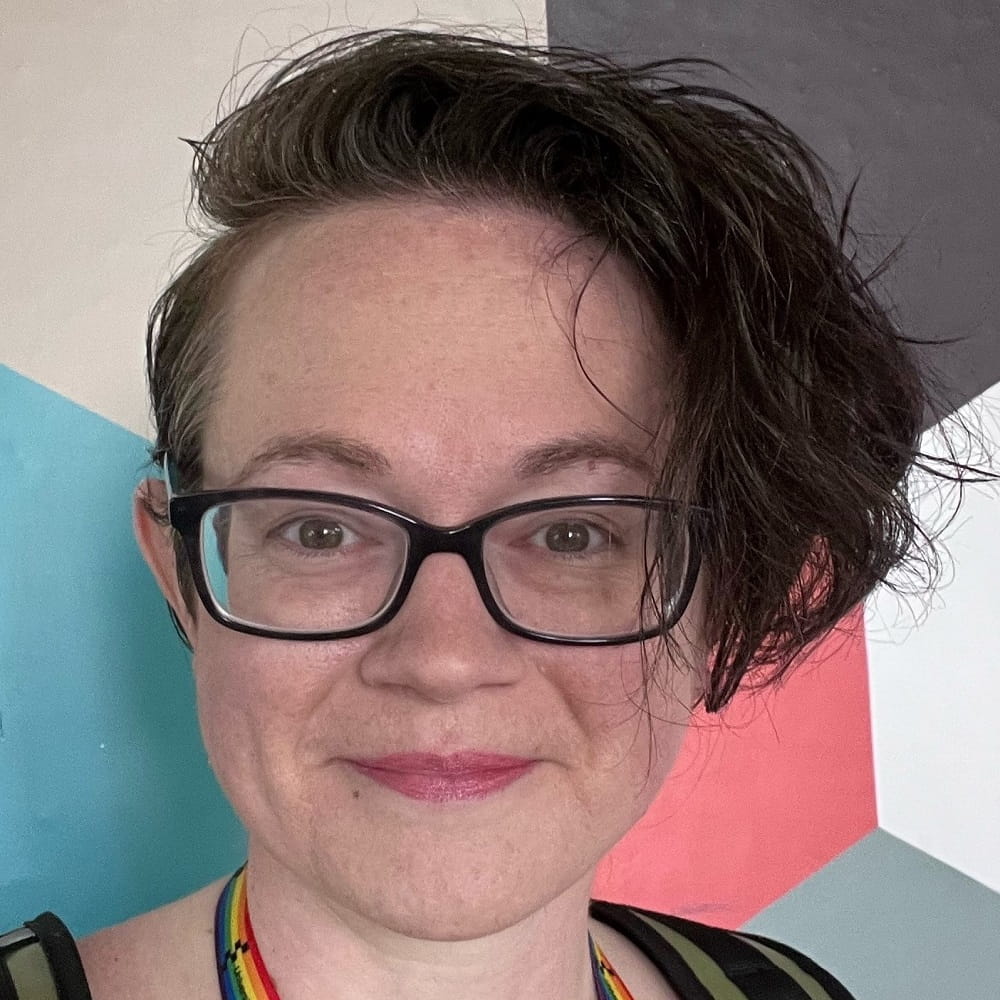
When I met Sean recently, it was due to his relentless advocating for changes to the wording on our Gypsy, Romani and Traveller Pledge in line with recent changes to terminology. Sean is a UoE Creative Writing PhD student studying the lives of the modern English Romani Gypsies.
.jpg)
As someone who has not had much exposure to this particular group, it was a fantastic opportunity to learn more, and I was struck by his willingness to talk about his heritage and explain the obstacles he and other members of the GRT community face when pursuing an education. Wednesday, 8 April is International Romani Day.
With gratitude to Sean for his openness, below is an interview I conducted with Sean on his experience as an English Romani Gypsy.
If you are a member of the GRT community and would like to contact Sean, who is interested in creating a network for the GRT community at Essex, please email Sean at ss20339@essex.ac.uk.
Can you tell us a little about your heritage and how you identify within the Gypsy, Roma and Traveller communities?
I was born in a house, so I don’t have any memories of travelling about in trailers or bender tents. My parents had moved into a house, whereas others remained in fixed stopping sites, so any resemblance of community gradually eroded the longer they stayed. Both of my parents are from a long line of English Gypsies, so, even with my stationary lifestyle, I grew up immersed in the fragments of the language (Romanes) they spoke to each other and to their friends, and I would occasionally visit my grandparents when they had lived on a site.
However, for the sake of surviving amongst non-Romani (gorjer) people, my parents kept their identities quiet. For a long while, I felt a disconnect with my culture and identity - a symptom of having to hide it. It wasn’t until much more recently that I started to take pride in my identity, wearing my nan’s old red scarf and the old horse rings – small victories in reclaiming an identity I have long had to repress for the sake of survival.
What role has your Romani background played in shaping who you are today?
I think, in having to live a life where you are aware that much of the world despises you, it makes you tough. Not in a physical way, but an emotional sense. You have to work twice as hard to get half the rewards, and so my aggressive persistence in all my passions – from my writing to my activism, to my public speaking and my current PhD – have been a product of this immense hard work and struggle. The uniqueness of my perspective emerges from a feeling of displacement – ethnically, we (the Roma) derive from northern India, but none save a few very traditional communities have much of that Indo-Aryan texture to the culture anymore.
We have no nation to claim as our own, so our culture is very mercurial and adaptive to our environments. Whilst I have an English accent, and I’m paler than a polar bear, I don’t feel necessarily English, or have any attachment to the nation beyond tea and Gregg’s sausage rolls. My identity is unfixed and nationless, and because of that, my relationship with the world is one of isolation and constant change. This feeling emerges in all of the writing I have produced, which I am keen to explore further.
How did your background influence your educational journey growing up?
Both of my parents attended very segregated schools. My dad barely had any schooling because of the sheer bullying and abuse he encountered from literally everyone, and my mother was taught in separate classes from the other students. In identifying herself as Romani to teachers, she was often abused and then expelled by staff. My parents have grown to be capable people, but their opportunities could have been even greater if they had been allowed to attend properly.
Knowing this, I have the drive and sheer audacity to do what they could not because of societal limitations. I have had the privilege to attend school and so I have worked twice as hard to prove myself against those who would doubt a Gypsy could achieve educational success.
Were there any particular challenges or barriers you had to navigate as a Romani student?
From a very early age, my parents urged me not to mention I was Romani at school. This to protect me – my siblings, who are older than me, attended and suffered dearly from both staff and students who knew what they were. I had the luck of attending different schools, and so I kept my identity under wraps to prevent further discrimination. This was not easy. Everyone spoke negatively of the “Pikeys”; in several classes, the subject of Gypsies emerged between student and staff, and it was never nice.
Abuse and racist rhetoric abounded, and the teachers did nothing to prevent it – in fact, they encouraged it. I did not speak up against it, for I knew I would be entirely on my own. The way my sister had been thrown and beaten by bullies for what she was, and how the teachers blamed her for being the cause of this behaviour, echoed back to me in those moments. I had to act unperturbed and dismissive of it to effectively survive in these environments.
What motivated you to pursue a PhD, and does your research connect in any way to your heritage or lived experience?
My PhD’s primary aim is to provide a realistic and accurate portrayal of the English Romani Gypsies today. Much of the representation of the English Roma is either outdated or racist or both. Most people believe a Gypsy to be the stereotypical criminal or a horse-riding, wagon-driving witch. Neither of these is true, and what truth there is in the image of the old wagons and horse driving has largely gone out of fashion. My distinct, but increasingly common, upbringing as a Gypsy living in a house means I have experienced my culture in a vastly different way to how it was a generation ago.
Unfortunately, things have changed massively for the English Gypsies, and yet the existing material, even from other Gypsy academics, is still focused on recalling these old ways of life that most of us don’t follow anymore. There is a dire need for positive and accurate representation, and a need to protest the popularity of the racism towards people like us. I hope, by providing a sympathetic and realistic depiction of my people, others may read it and realise, quite simply, we aren’t as bad as the world imagined us to be.
Many GRT individuals face discrimination or misunderstanding. What are some misconceptions you often encounter?
I once dated someone who thought I had placed a curse on them, and others were terrified of my mother for the same thing. You’d swear it’s the Victorian era all over again with how absurdly superstitious people are around Gypsies. The most common misconceptions I’ve heard is that my culture is inherently filthy, or that we marry each other’s cousins. The worst for me, however, is a subtle one. Nowadays, I take excessive pride in my identity and will happily mention what I am.
However, in announcing what I am, it’s strangely popular for the listener to bring up the fact that “I’m one of the good ones.” They immediately bring up their own bad experiences, and similar hearsay from friends and family, as if the only thoughts they have about my people are of prejudice and disgust. It’s a subtle discrimination that suggests that nobody cares to think of my people as anything other than thieves and criminals, but as soon as they meet me, they try and backtrack on their blatant racism.
Have you experienced bias—subtle or explicit—within academic or broader societal settings?
Much of my negative experiences came from my former schooling. However, I still experience degrees of bias when I try to use my voice at university. Whilst, once again, it is very subtle, there is such a lack of care for the racism held against Gypsies that when I bring it up in many academic spaces – I’m drowned out by others stating that my experience of racism is lesser. It makes my plight all the harder when some academic circles still do not consider my people within an ethnic category. It feels as if racism against Gypsies isn’t treated with the same level of regard as other racism.
My hope is that one day all English Gypsies can be open about their identity without the fear of harassment or prejudice. But for that to happen people need to understand our history, our culture and our demands for fairer treatment. My issues lie with the current Romani activists, academics and spokespeople, like Damian Le Bas, Judith Okley and Mikey Walsh, who are unfortunately contributing to the outdated, Othering and Orientalising racist imagery that has plagued us for centuries.
There needs to be a total revision of how we speak up for our rights and our identity, but also an encouragement from the wider public to take interest in us outside of misguided prejudices. If the public can at least acknowledge and criticise the wholly inaccurate and damaging depictions of the Roma, there is a chance in which a fairer world for Gypsies can be a reality.
What forms of inclusion or allyship have been meaningful to you?
I think attending university has been a massive boon to growing confidence in my identity. I have opened up to people from various backgrounds, ethnicities and beliefs, and have found allyship and solace in their enthusiasm and interest for my culture. Their curiosity has made me more confident and comfortable in expressing my Gypsiness. However, I don’t feel there are any efforts made to actively include openly Gypsy people – there are no categorised events or policies put in place to encourage others like me to feel secure or safe in expressing their identity without fear of discrimination. Whilst there are policies in place protecting us from racial discrimination, they are frequently poorly enforced when Gypsies are involved, due to a lack of care or awareness.
What do you wish more people understood about Romani communities?
We are not what the news tells you we are, or what Peaky Blinders says we were. We are a people of many-faces, attitudes and beliefs. We are, like any other culture, a diverse, multifaceted people who take pride in ourselves and are, contrary to popular belief, clean and able people. The reason for our secrecy and defensiveness is only because we are relegated to feel like we are unimportant and unwanted. If the wider public are to truly understand us, they must forget their racist preconceptions of us.
How do you stay connected to your culture while navigating academic or professional environments?
My culture and my academic life have no negative conflict. In fact, in pursuing my academic interests, I have grown closer to it, as my parents and wider family have ardently encouraged me to pursue my interests. The belief that Gypsies don’t want to be educated is a blatant lie in most cases; what stops us is the imminent feeling we’ll be rejected because of what we are.
What would you want the Inclusion team to prioritise when thinking about GRT visibility, inclusion and belonging?
There should be a greater emphasis on celebrating Gypsy identity. This could be achieved by encouraging a space, either through a society or various events, in which Gypsies can meet and collaborate with other Gypsies. After all, without a cohesive community, there can be no way in which our voices can be heard, and so facilities must be prepared for this movement. In addition, a more vocal recognition of GRT History Month and our sacrifices during the International Holocaust Memorial Week.
By publicly recognising these events, Gypsies will feel acknowledged – I know, the bare minimum, but it’s an unavoidable fact that Romani identity is aggressively sidelined and negatively dismissed in popular conversation. A positive celebration of our identity will encourage a healthier and fairer conversation about our people, and slowly allow the general public to become more aware of their deeply held prejudices.
What hopes do you have for the next generation of GRT students and scholars?
I hope that even more Gypsies attend university and use their unique voices to pursue whatever passions they have. However, this can only happen through a collective effort to dismantle the negative stereotypes and prejudices that actively impede our journey into these academic spaces. There should also be a far greater effort from Gypsy and non-Gypsy scholars to provide a more accurate depiction of our culture today; they can still talk about the old ways and traditions, but there must be a recognition that the culture has changed vastly. In presenting our voices and lifestyles accurately, we have a chance to change the hearts and minds of others, and plant change for a better, safer future.
How do you imagine your work might influence or support others from similar backgrounds?
My PhD is a launchpad to dismantle the decades of misinformation shared by both academics and the public. I hope to authentically represent my people as they are today, and promote a feeling of hope that I am aware many of us lack. I have found a dire lack of enthusiasm about the future – many Gypsies feel uninspired, as if they have begun to slowly accept the fact things will never change. I hope, through my academic work and collaborations with other Romani people, that there is a chance to resurrect hope.