Designing Behaviour Change: How Students Brought Social Marketing to Life at Essex Business School

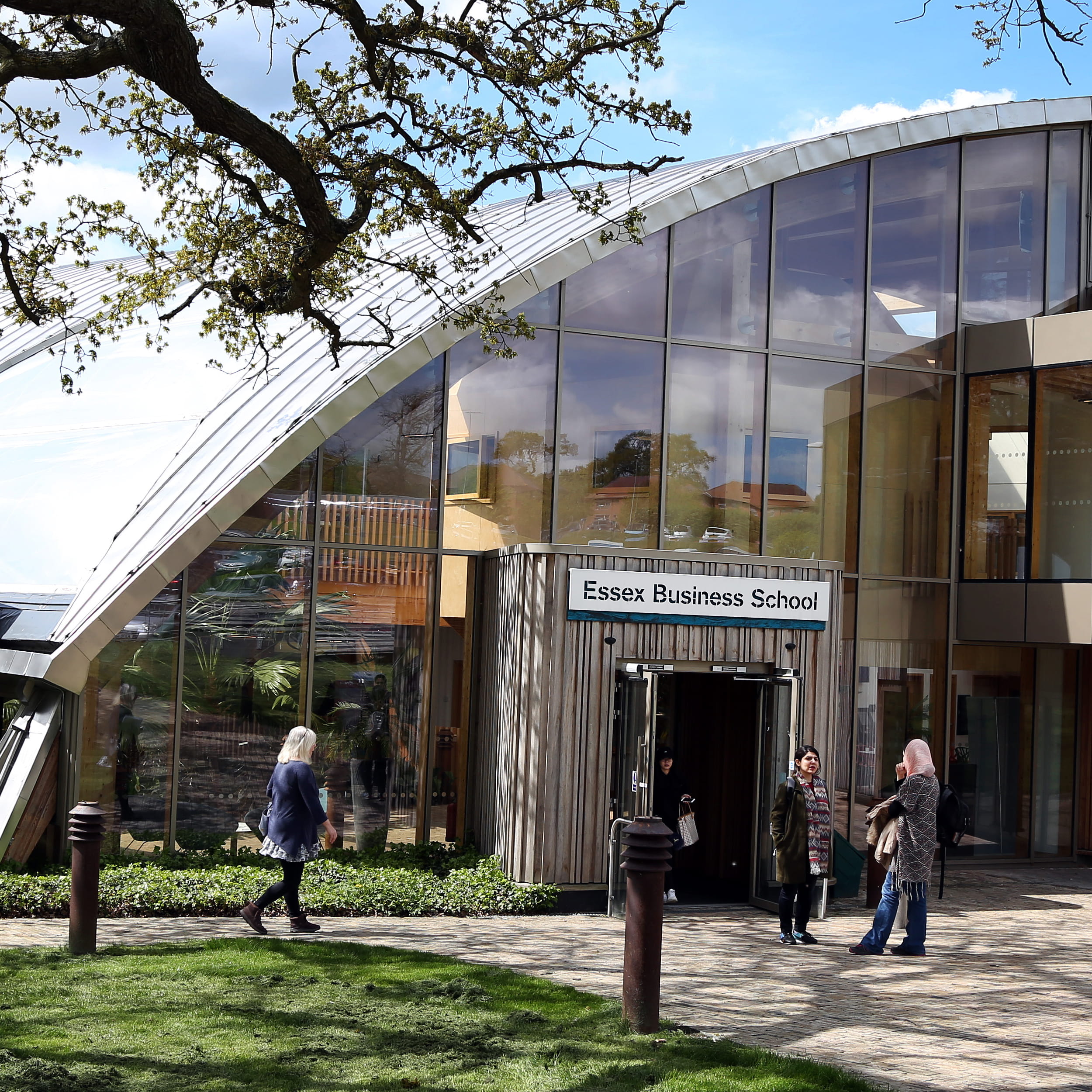
In the autumn of 2025, the teaching of a new module was unfolding across the University of Essex Campus. Across corridors, accommodation blocks, study spaces, social media feeds and in everyday moments student lead Social Marketing campaigns were being implemented.
This newly launched module, designed and delivered for the first time by Dr Abhisek Kuanr and Dr Jordon Lazell, asked students to do something unusual. Rather than solely learn from case studies, textbook examples and analysis of past campaigns, students were tasked to design and launch their own. Not hypothetically. Not safely contained within the classroom. But live, visible, and real.
Social Marketing has risen in interest over the last few years, with students requesting more information about this topic as a desirable career pathway. In short, Social Marketing refers to the application of marketing principles and techniques to influence behaviours that benefit individuals and communities for the greater social good.
Right from the beginning of the module students were encouraged to think about how small design choices influence everyday decisions. For example, asking students to develop a marketing pitch for a humble bottle of water to communicate a wider story of brand sustainability and social good. Whilst these first exercises were deliberately modest, this was just an introduction to the larger task that followed.
When students become social impact teams
Very quickly, the centre of gravity shifted away from the classroom and towards the students themselves.
Working in small teams, students became social impact organisations. Each group identified a social issue they recognised from their own lived experience on campus and to be translated into a specific behaviour they wanted to influence. Not just a change in attitudes or issue awareness, but a practical behaviour change.
Students were responsible for everything that followed. Framing the issue. Understanding the audience. Choosing tone and channels. Designing materials. Launching the intervention. Observing what happened. Reflecting honestly on what worked and what did not.
What emerged was not a set of neat campaigns, but a collection of thoughtful, messy, human attempts to change behaviour in real contexts.
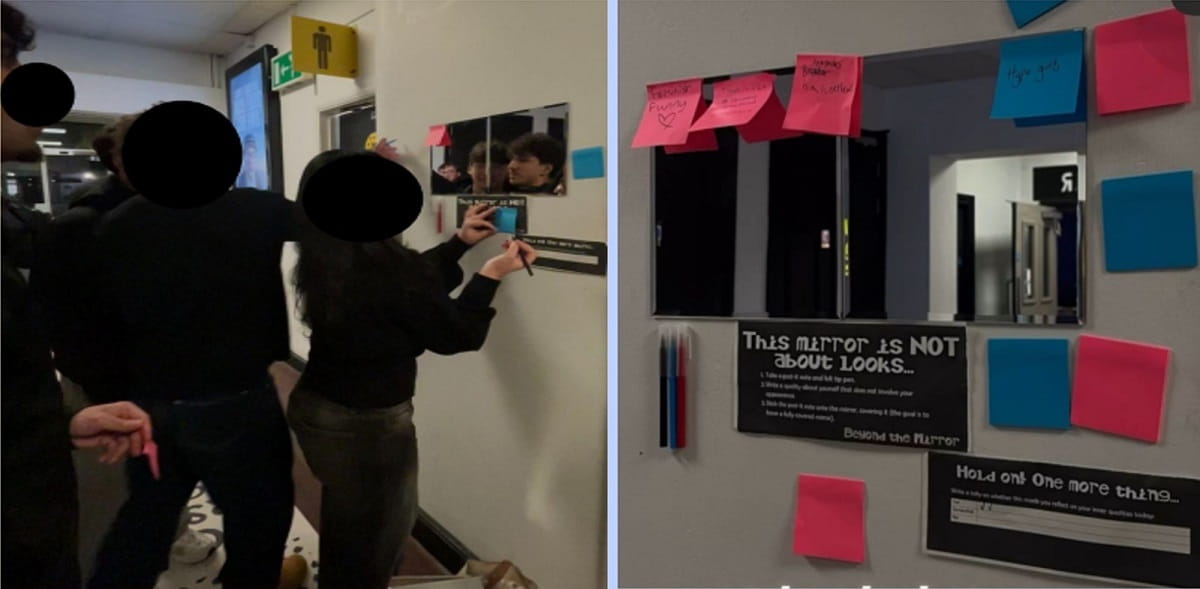 Exhibit 1 : Beyond the Mirror Campaign
Projects rooted in real student experience
The campaigns students developed reflected issues they were already navigating in their own lives.
Some focused on late-night noise in student accommodation, reframing being quiet not as enforcement or restriction, but as peer respect and shared responsibility. Their posters, memes, and reels used humour and familiarity to prompt small changes such as lowering voices, using headphones, or closing doors gently. Students observed peers stopping to read, scanning QR codes, and even leaving handwritten feedback about how noise affected their sleep, studies, and sports performance.
Others addressed wellbeing and self-perception in quieter ways. One group transformed an everyday mirror into a space for reflection, inviting students to pause and write anonymous thoughts about stress, confidence, and identity. What began as a simple installation quickly became a shared space of expression, with social proof building as more notes appeared.
Another set of projects tackled loneliness and connection, designing simple prompts that encouraged students to check in on one person each week. Rather than heavy messaging, these campaigns relied on relatability, warmth, and digital formats students already used, reaching thousands through short-form video and stories.
Across very different topics, students kept encountering the same insight. Behaviour change happens through small, doable actions, not through information alone. Also that practical behaviour change means understanding the competing demands of stakeholders which may see an issue from differing perspectives.
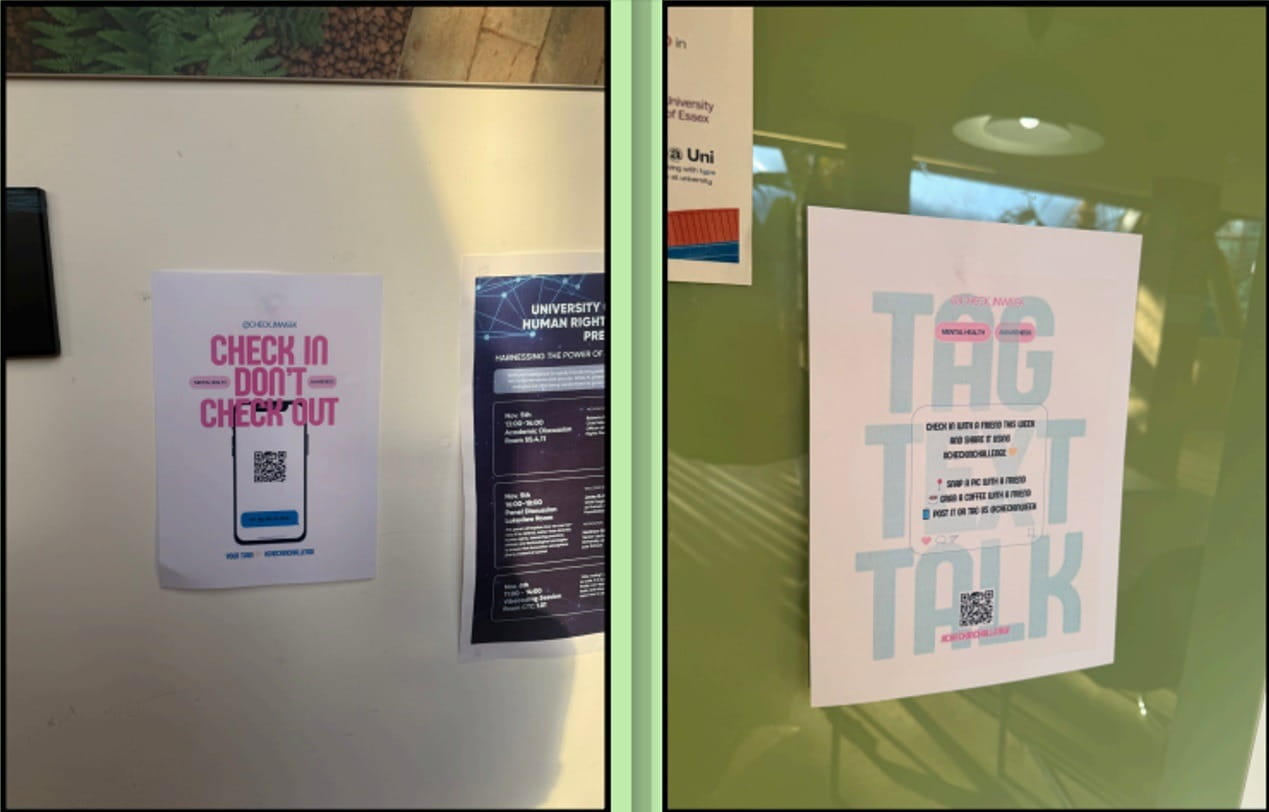 Exhibit 2: "Check In, Don’t Check Out" posters in high-footfall campus areas
Digital reach, offline presence, and honest observation
Students were encouraged to think beyond single channels. Many projects combined physical materials with digital content, using posters to drive Instagram engagement, QR codes to link offline encounters to online spaces, and social media stories to keep momentum alive.
Students tracked views, reach, and interactions, but also paid attention to quieter signals. Who stopped. Who smiled. Who commented. Who ignored the message entirely.
They also learned that not all content performs equally. Informational posts often reached fewer people than humorous or meme-based formats. Some posters were removed. Certain moments, such as large crowds leaving the student union late at night, proved difficult to influence at all. These were not framed as failures.
They were treated as evidence. Students began to understand that behaviour change is constrained by context, timing, and social dynamics, and that even well-designed interventions have limits.
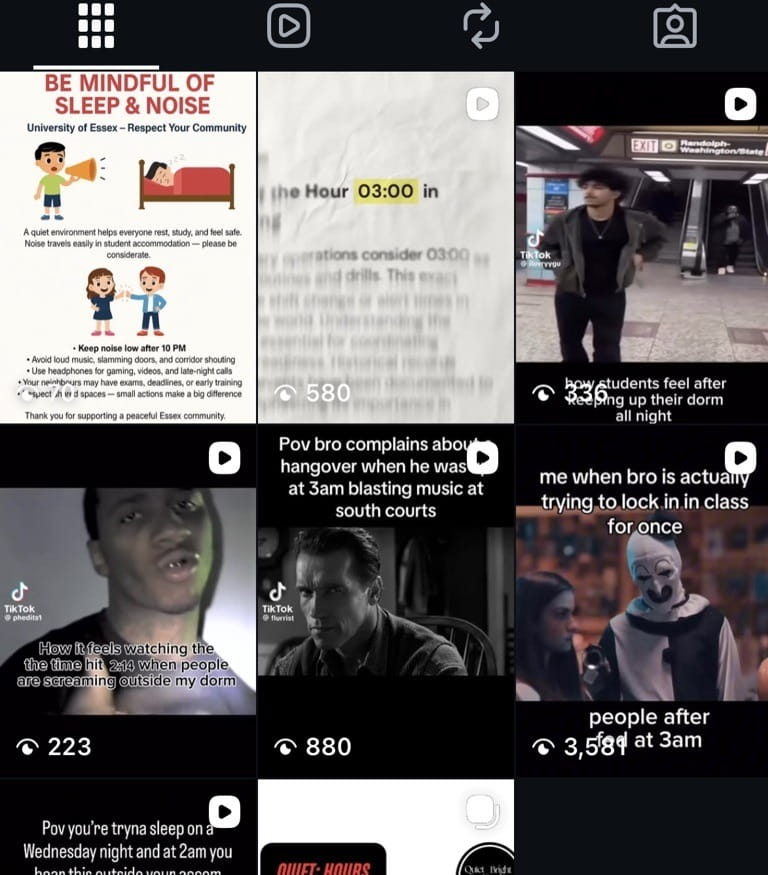
Exhibit 3 : Quiet hours, Bright Futures campaign.
Assessment designed to support judgement, not performance
A key feature of the module was how assessment was introduced and supported. Rather than relying only on written briefs, students were given short video walk-throughs explaining the purpose and expectations of each assessment.
These videos focused less on technical requirements and more on how to think about the task. What good judgement looks like. How to evaluate impact ethically. How to reflect honestly on uncertainty and trade-offs.
This approach helped students focus on learning rather than compliance. They knew what was expected, why it mattered, and how assessment connected directly to what they were doing on campus.
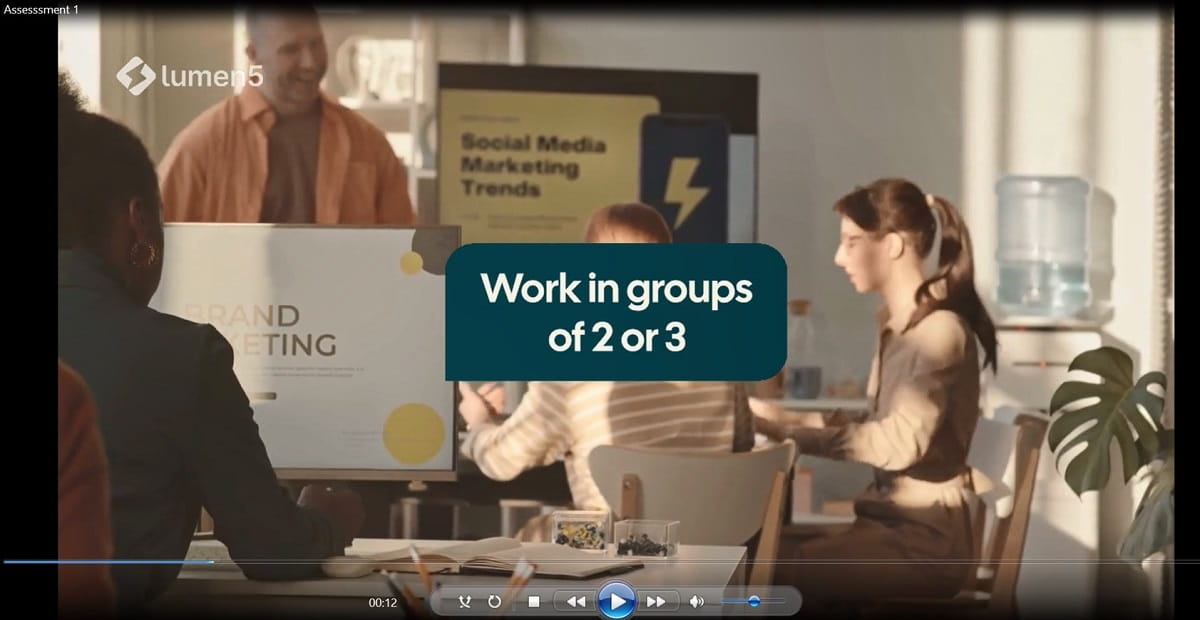 Exhibit 4 : Screen Grab of Moodle Assignment in Video
Reflection as the moment learning deepens
Alongside the group campaign, each student completed an individual reflective assessment.
This is where many students made sense of their experience. They wrote about surprises, ethical discomfort, failed ideas, unexpected engagement, and moments where theory suddenly became useful. They reflected on how their own assumptions shaped design choices and how seeing real behaviour challenged those assumptions.
For many, this was the point where marketing education shifted from technical to personal.
Marketing stopped feeling like persuasion alone and began to feel like responsibility.
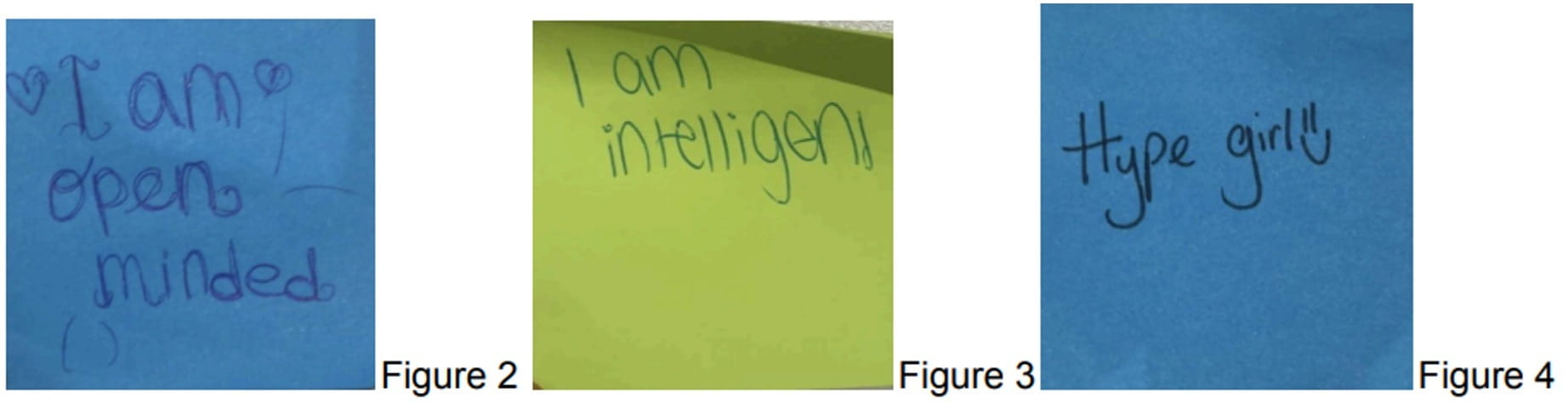
Exhibit 5 : Actual Reflections from Beyond The Mirror Campaign
Why this approach matters
This first run of the Social Marketing module demonstrates what impact-led business education can look like when students are trusted with real problems.
The projects were not perfect. They were not supposed to be. They were thoughtful, ethical, creative attempts to influence behaviour in complex environments. Students were placed in the driving seat, in the same way as real Social Marketing Professionals. Students learned to design, observe, adapt, and reflect, developing professional judgement alongside practical skills.
Most importantly, the centre of the module was not the lecturer or the framework. It was the students and the work they brought into the world. Each week, lecturers checked in with each student group to ask about the progress of their campaigns, offering advice and guidance of how to overcome any challenges experienced. However, this was always in the context of these campaigns being student lead.
Overall students got to experience what it means to design for real behaviour change. To experience the highs and lows of being responsible for their own practice project. The wider aim is that this process of taking responsibility goes beyond this single module. That this way of thinking travels with students and is not confined to a single module.
The blog discussed the Module BE520 Social Marketing, which can be studied as part of the BSc (Hons) Marketing Management Degree delivered by Essex Business School.