Learning from Global Health Governance: Insights from the UN Study Excursion Geneva through Photos
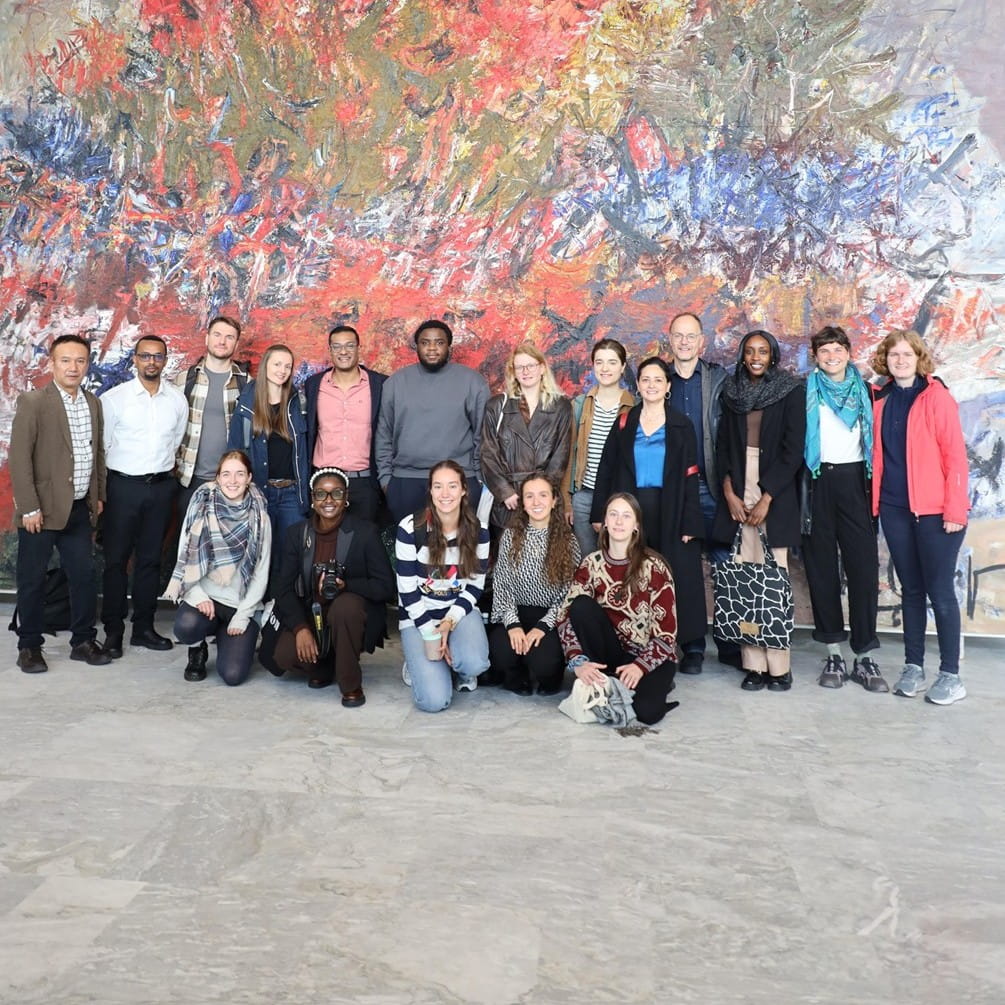
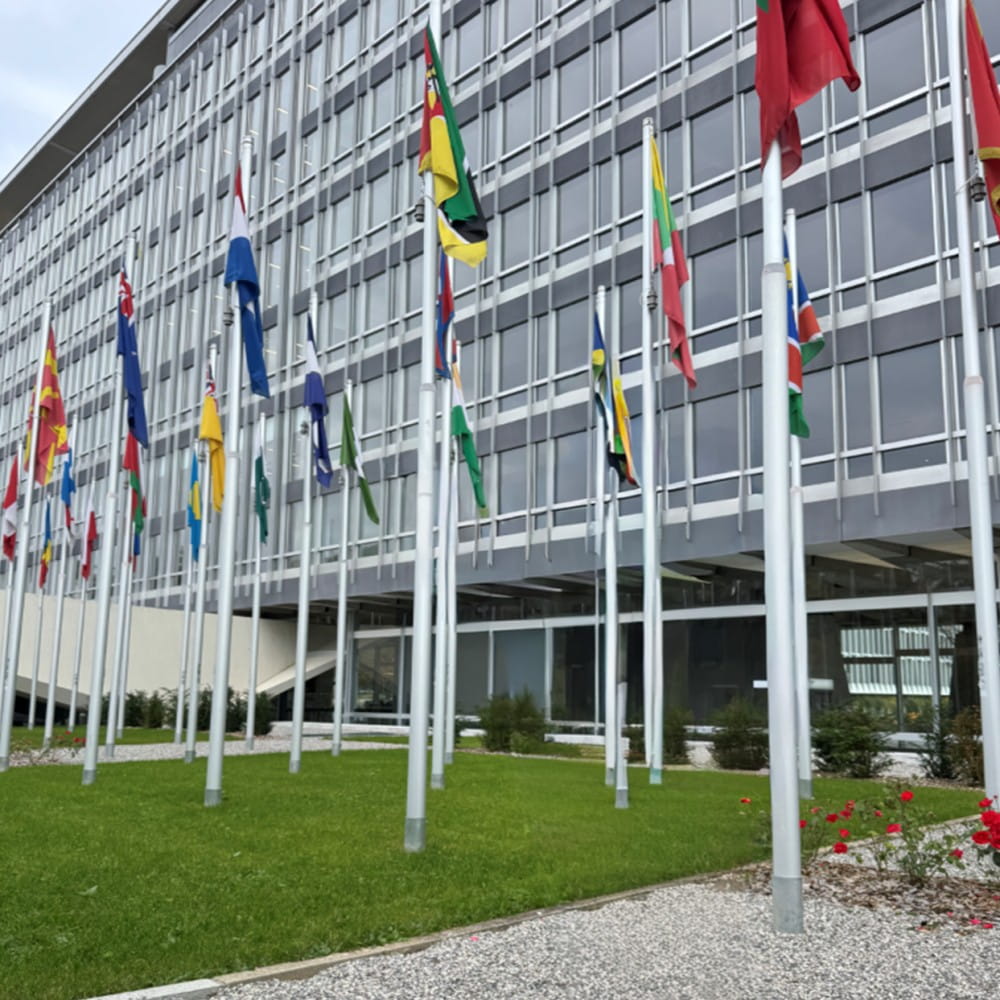
From 8th to 11th October 2025, a delegation of selected Global Health Fellowship interns from the Centre for Global Health and Intersectional Equity Research (CGHIER) and GEMMS PhD students at the University of Essex participated in a study excursion to Geneva. The visit provided a rare opportunity to engage directly with experts and policymakers from WHO, IOM, and other UN agencies driving global health governance, humanitarian coordination, and migration health agendas. The study visit aimed to strengthen participants’ understanding of the intersections of health, migration, gender, and inequality, and to critically examine how global institutions navigate complex challenges in promoting health equity particularly in contexts of mobility and precarity.
Day 1: Visit to the International Red Cross (ICRC) Red Crescent Museum
Our excursion began with a visit to the ICRC museum red crescent museum which embodies the historical and ethical foundations of humanitarian action. Through its immersive exhibits, it traces the evolution of the Red Cross movement from its inception after the Battle of Solferino to its present-day engagement in crisis worldwide. The exhibits centred around defending human dignity, restoring family links and reducing natural risks with each interactive multimedia, personal testimonies an artistic installation communicating the moral and emotional complexity of humanitarian work. I was particularly moved by the section on family reunification which documented how the ICRC uses tracing services to reconnect families separated by war or migration.

Image: Shelves preserving the records of those missing from war at the Red Crescent Museum.
Day 2: World Health Organization (WHO)
Global Health Governance
We began the day at WHO headquarters with sessions on Global Health Governance led by Dorine Van der Wal and Sexual and Reproductive Health and Rights (SRHR) led by Aasa Hanna Mari Nihlen and Christina Pallitto. The session offered deep insights into how WHO coordinates global health responses amidst complex power dynamics. The session touched on the architecture of global health governance highlighting the challenges of multilateral coordination, financing dependencies and geopolitical influences.
Sexual and Reproductive Health and Rights
The SRHR session resonated strongly with my own research interests. The speakers discussed WHO’s work on reproductive justice, focusing on evidence-based policy advocacy, safe abortion access and combating gender-based violence including female genital mutilation (FGM). Reflections also touched on the commercial and political determinants shaping global SRHR agenda, a research area I have also had an opportunity to contribute to as part of my work at the centre.
Migration and Health
The session led by Claudia Marotta’s session centred around migration and the evolving role of migration health within global health governance. A key point was how cross order migration especially concerning screening and crisis response remains a complex and politically sensitive area. Migration health was once part of the Global Health Strategy but was dropped during a crisis, only to remerge around 2020 under broader themes like climate and environment. Despite renewed attention, there’s been pushback for countries and little political commitment for example migration was not mentioned in recent global declarations or at the World Health Assembly. Countries like Italy and Luxembourg continue to support migration health through funding and expertise often with help from philanthropies. The conversation also highlighted gaps in migration data and the risks of reinforcing exclusions through how data is collected. There was agreement on the need for evidence-based narratives and better communication to reframe migration health alongside stronger collaboration and investment in positive storytelling.
An ‘aha’ moment for me is how migration remains politically sensitive even within global governance structures like WHO and often sidelined despite its clear health implications. The lack of visibility in global forums shows how easily it slips off the agenda. The importance of narratives and data also re-echoed the fact that who gets counted and how stories are told deeply shape action.
International Organization for Migration (IOM)
In the afternoon, we visited the IOM and Health Department where Aleksandar Arnikov discussed IOM’s mandate and operational offering insights into how global heath governance is enacted through networks of institutions (WHO, UN organizations, IOM and national missions) at the intersections of politics, policy and practice. This complex mix made me reflect on the tension between normative commitments i.e. rights, equity and universality and the political realities of financing, competition and sovereignty.
Discussions positioned IOM as both humanitarian and intergovernmental actor bridging mobility management and rights-based health service delivery. Discussions also centred around the role of private actors within the particularly in light of the current global funding climate, highlighting how partnerships and financing models increasingly shape priorities and implementation strategies. A key takeaway was IOM’s pragmatic yet politically constrained role. While the organization promotes migrant health, it mut navigate member state interests and funding dependencies. I was intrigued by how IOM operationalizes ‘migration health’ as a technical domain often depoliticized yet deeply shaped by border politics and sovereignty concerns.
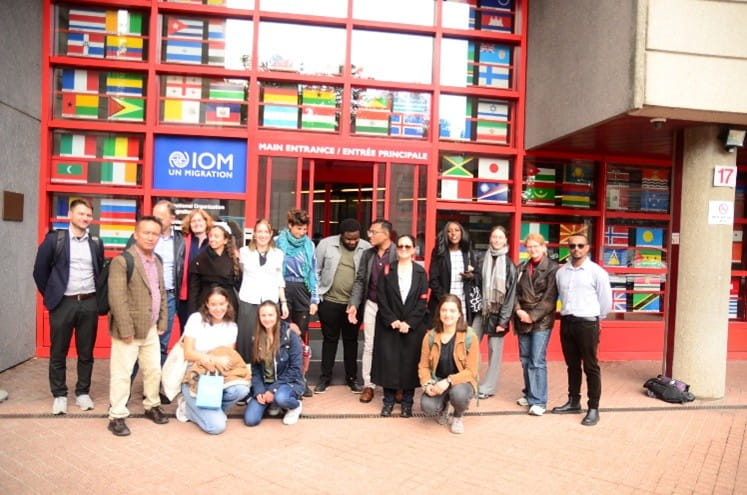
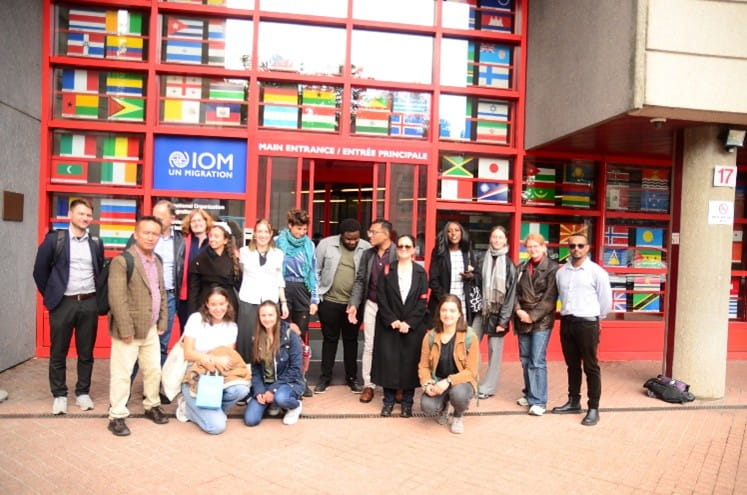
Image: Outside the IOM headquarters following reflections on global approaches to migration and health.
Day 3: World Health Organization (WHO)
Polio Eradication
The morning session returned us to WHO for briefings on Polio eradication with Oliver Rosenbauer. The session highlighted both triumphs and challenges of one of the longest running global health campaigns. The persistence of polio in conflict zones illuminated how health interventions are intertwined with security and trust. Polio remains endemic in Pakistan and Afghanistan with persistent transmission liked to the biodiversity of the virus and logistical gaps in response systems. Discussions underlined how polio eradication is as much a political challenge as a medical one e.g. Pakistan’s refusal to sue vaccines from India. Resistance, weak planning and inequitable access continue to undermine progress. The reliance on both public systems and private actors shows how interconnected global health delivery has become yet success hinges on community trust and strong coordination.
Tuberculosis
This discussion was let by Dr Tawfiq Islam and covered the integration of TB, HIV and SRHR strategies emphasizing a more holistic approach to disease prevention, planning and transmission control. TB was described as ‘social disease with medical complication’ highlighting the social and structural determinants that influence its spread and treatment outcomes. The DOTS strategy was revisited, focusing on its five key components: commitment, detection, effective treatment, monitoring and commodities.
Collaboration with the UNGA secretariat was mentioned in the context of global reporting and accountability mechanisms including the Global TB report and app. Discussions also highlighted the economic burden of TB noting the direct and indirect costs faced by people with TB and the financial impact of affected households. References were made to Lusaka Agenda which calls for a shift from vertical programs to broader health systems strengthening.
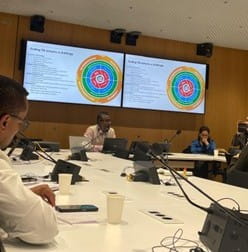
Image: Dialogue on global and local efforts to eliminate tuberculosis.
Day 4: Palais des Nations and CERN
The guided tour on the history, structure and functions of the UN deepened my appreciation for its evolution and constraints. The architecture itself spoke legacy standing on land that originally belonged to the Reveille de la Vie Foundation. Before the UN era, the site was associated with Wilson Palace Hotel named after US president Woodrow Wilson a key figure in founding the League of Nations (LON). The building was constructed on 7th September 1929 after the LON decided Geneva would host its headquarters due to its political neutrality. During the tour we came across a tree from Lebanon planted in the park in 1832 which represents peace and endurance. Today the UN has 193 member states. We also had the opportunity to sit in the room where the LON held meetings until 1936 and finally ceasing operations in 1939 with the outbreak of WWII. The tour also revealed the exhibits of the charter of the UN signed in 1945 which drew on lessons from the league’s failure.
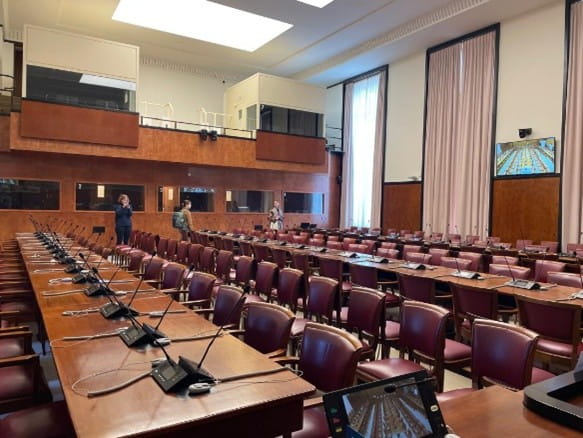
Image: Inside the walls where the League of Nations once convened.
Following the guided tour, the group engaged in a reflection session facilitated by Prof Anuj Kapilashrami. We revisited themes of global governance, health equity and had the chance to situate our experiences within our current research and experiences in various country contexts. The dialogue also challenged asymmetric power dynamics between the global north and global south with respect to access to opportunities.
Visit to CERN
The visit to CERN offered an interesting perspective beyond health governance. The facility embodies global collaboration in science research transcending nationality in pursuit on shared human knowledge. I particularly enjoyed interactive exhibition about the solar system (fun fact: when I was growing up I wanted to be an astrologer and was fascinated with the solar system). This visit drew a parallel between scientific cooperation and global health diplomacy which both rely on collective trust, resource sharing/ collaboration and global solidarity.
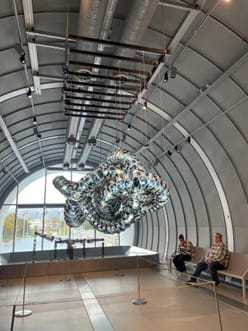
Image: An installation at CERN capturing the elegance, complexity and interconnectedness of particles, people and the universe.
Final words
This excursion offered a rare, multidimensional lens on global health governance in practice. It deepened my understanding of how values, human rights, equity, solidarity translate or sometimes fail to translate in institutional settings. This also made me more critically aware of the political determinants influencing global health and migration agendas resonating with my ongoing research. Beyond the academic and personal space, I made wonderful connections that will outlive the study excursions itself. My mind is enriched, and my heart is full!!!