

.jpg?mw=300)
Essex Blogs19 December 2025
Essex Sociology and Criminology Research Newsletter Winter 2025
Here is the latest edition of the Department of Sociology and Criminology’s research newsletter. As always, it highlights the outstanding research achievements and contributions of our colleagues over the past months.
We hope you enjoy reading about our work, with our best wishes for a wonderful end to the year, and a very Merry Christmas.
Drawing on data collected as part of an Independent Social Research Foundation small group project, Isabel and co-authors have published an article entitled "Citizenship, sex work and taxes: perspectives from three European contexts" in European Societies. It is out now as OnlineEarly and will be part of the February 2026 issue.
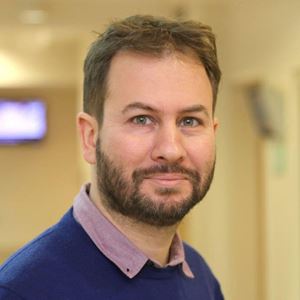 Shaul was invited in October to give a seminar at Egenis, the Centre for the Study of Life Sciences at the University of Exeter. He presented a paper titled “Internalizing What? Internalizing How? Time and Space in Metaphors of Inner Life,” in which he outlined some of the findings from his work on internalization over the past two years.
He is co-organising, together with colleagues at Newcastle, a symposium in December titled “Jewish Diaspora and Migration after October 7". The event will examine the moral, political, and cultural implications for Diaspora Jews in the wake of the catastrophe in Gaza and Israel/Palestine.
.jpg?h=0&w=0&hash=335BA659E2B347C6467861DBD81C19EA)
.jpg?h=300&w=300&hash=D4112AF7B154A41A7EFE36F339E85A7E) EJ-Francis Caris-Hamer published a first journal article titled “Lessons in Lockdown: Rethinking LGBTQ+ Inclusion in Post-Pandemic English Secondary Schools - Teachers' Perspectives”. The journal article shows how COVID-19 reshaped LGBTQ+ inclusion in English secondary schools, closing safe spaces and exposing how fragile equality commitments can be under pressure. Through teachers' accounts, it highlights meso-level institutional harm and symbolic compliance, where policies exist on paper but students' safety, belonging and everyday wellbeing remain precarious. The article is available on open access.
EJ-Francis Caris-Hamer published a first journal article titled “Lessons in Lockdown: Rethinking LGBTQ+ Inclusion in Post-Pandemic English Secondary Schools - Teachers' Perspectives”. The journal article shows how COVID-19 reshaped LGBTQ+ inclusion in English secondary schools, closing safe spaces and exposing how fragile equality commitments can be under pressure. Through teachers' accounts, it highlights meso-level institutional harm and symbolic compliance, where policies exist on paper but students' safety, belonging and everyday wellbeing remain precarious. The article is available on open access.
EJ has also delivered a Trans Ally workshop on behalf of the university Students' Union, for all staff and students.
Sergio and his colleagues have received the prestigious Replication Award from the Academy of Sociology. The award recognises the multilab study Lo Iacono et al. (2023): “The Competitive Advantage of Sanctioning Institutions Revisited” (PNAS Nexus).
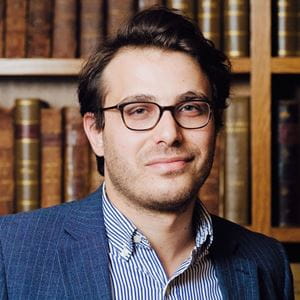 This term, Giacomo published a single-author, peer-reviewed article in the British Journal of Sociology titled “Life Course Social Mobility and Parenthood: Counterfactual Estimates of the Motherhood Class Penalty in Britain”, contributing to research on social mobility, parenthood, and inequality in Britain.
He collaborated again with the Fawcett Society on a new version of the Gender Pay Gap Calculator, analysing recent Labour Force Survey data to produce updated estimates of the gender pay gap and developing a fully redesigned web application. He also invited Professor Jonathan Gershuny (UCL) to the department to give a talk on his life’s work on time use, unpaid labour and production estimation.
Giacomo continued to expand the online R learning resource he created for Essex students, which is increasingly used beyond the department and the UK, raising the profile of the department. Finally, he submitted an ERC Starting Grant application for a project on time use and welfare, bringing to completion a long and demanding application process and marking a major milestone in his research agenda.
In the summer, Nigel’s book Monstrous Nature and Representations of Environmental Harms was published by Temple University Press, Philadelphia. Co-authored with Avi Brisman this is a (sort-of) sequel to their 2014 book Green Cultural Criminology and described in one review as a critique of the “representations that sustain denial, indifference, or despair in the face of environmental devastation”. In September he attended the European Society of Criminology conference in Athens and presented papers on "Historical Harm and the Modern/Colonial Criminalisation of Protest by Indigenous Communities in Latin America" as part of (former colleague) Anna Di Ronco’s roundtable on her co-edited book on the criminalization of dissent, and on ‘Drugs Cryptomarkets in Europe and Latin America’ with Meropi Tzanetakis (former visiting researcher in the department). He also co-organised a pre-conference event on ‘Environmental crime, policing and social control’.
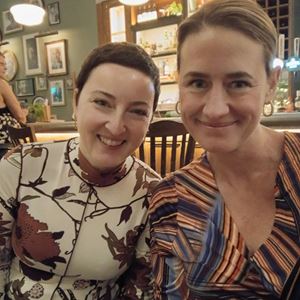 Linsey McGoey gave invited talks recently in Berlin (for a workshop titled ‘How Do We Know? Religion and Contestations of Institutional truth’ October 30-31st 2025), and in Nice, where she served as a senior mentor and gave a talk on agnotology in science and medicine for the European Society for Dermatological Research’s Future Leaders Academy. Linsey also gave a talk at the Cambridge Union in September for a panel debate on the public’s role in science. The panel was co-organized by Essex PhD graduate Daniela Boraschi, pictured with Linsey, who is now an Isaac Newton Trust Postdoctoral Fellow, Kavli Centre for Ethics, Science, and the Public, University of Cambridge.
Linsey’s recent publications include ‘Hierarchies of White Advantage and Reciprist Epistemology (in press, Media Theory), and two review articles:
- McGoey, L., (2025). The weaponry of racial capitalism: Gargi Bhattacharyya (2024) The futures of racial capitalism (Polity). Economy and Society. 54 (1), 172-184
- McGoey, L., (2025). All happy families. Finance and Society, 1-8
Maitrayee contributed to a workshop on drugs and informal marketplaces in October, organised by criminologists from Marseilles and Naples at the University of Naples. She was an invitee to the Essex Devolution Conversation and Sunday lunch at the Old Waterworks in early November, which brought together artists, activists, volunteers, researchers, and councillors to share their ideas on decentralised governance. Maitrayee will contribute to the forthcoming Oxford Handbook of Marketplaces and will participate in their workshop in St Gallen next summer.
Samuel published his monograph “Outsourcing Crimmigration Control: Digital Borders, the IOM, and Biometric Statehood” (Oxford University Press). You can read it in Open Access.