




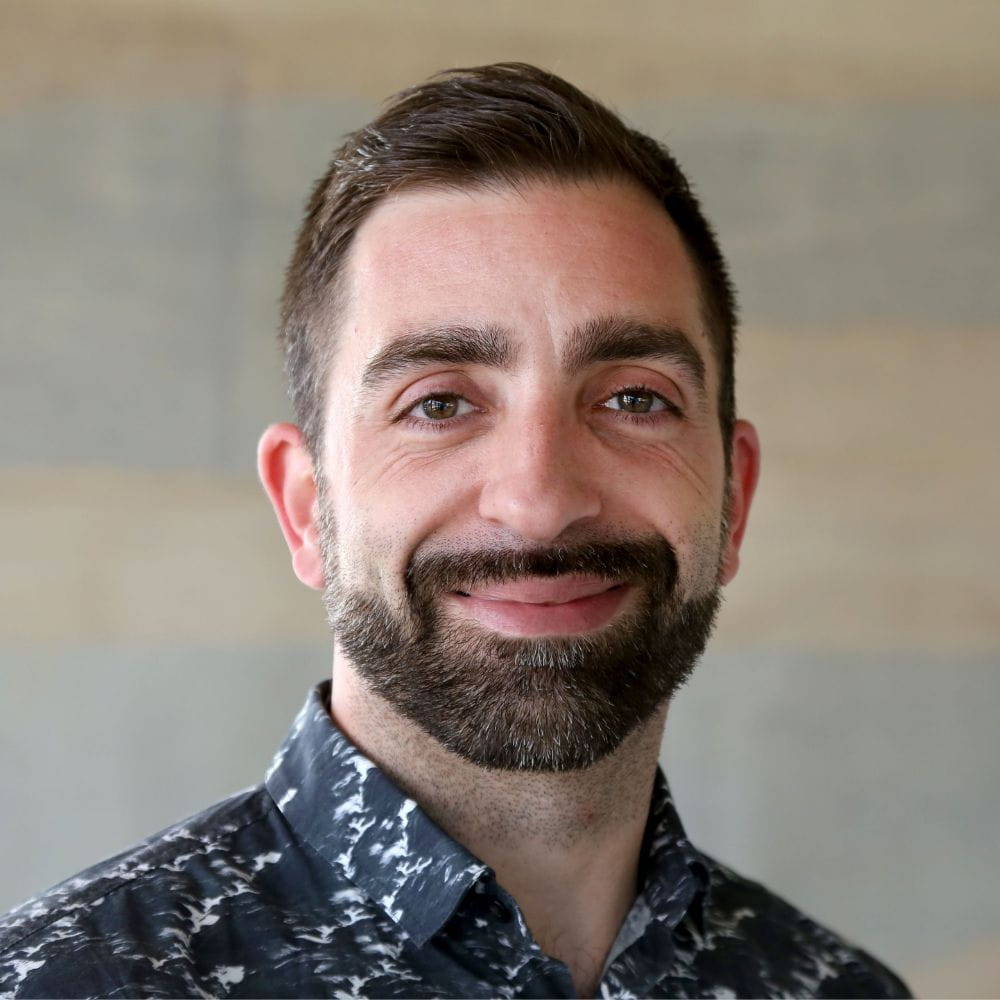


Dr Ese Owie

-
Email
eo24978@essex.ac.uk -
Location
Colchester Campus
Profile
Biography
Dr Ese Stephen Owie is an accomplished international trade law, international law, trade policy, trade economics, energy and sustainable finance practitioner. In the course of a sterling multi-jurisdictional career spanning over two decades, Dr Owie has garnered extensive experience in advising national governments, multilateral agencies, nonprofits, and private organisations on sustainable trade, regional economic integration, renewable energy and infrastructure optimisation strategies, amongst others. In his capacity as an international trade expert, Dr Owie provides technical advice on trade policy formulation and negotiations in the Global South, especially in Africa. Through The Cavendish Institute, a Think Tank he co-founded in 2016, he provides timely, pragmatic and cost-efficient advice, representation and capacity building in the context of trade negotiations, formulation and implementation of national trade policy, and the settlement of disputes. The institute has risen to become a high-calibre, reputable institute, comprising a core team of experienced trade practitioners based in Geneva, London, Washington DC, Paris, Johannesburg, Nairobi and Abuja, with academic and consulting capacity drawn from its global network of trade experts. As President of the Cavendish Institute, Dr Owie has applied his expertise in all areas of international trade law, policy and economics, within and beyond the World Trade Organization (WTO) context on matters ranging from the Doha Development Agenda to WTO dispute settlement, from GATT to GATS, trade remedies, trade competition, agriculture, market access, domestic regulation, trade and environment to trade and investment. He is also a specialist in numerous trade-related issues including WTO accessions, from observership via bilaterals to pre- and post-accession implementation services regulation and related policymaking, the design of goods offers and their negotiation, trade and climate change, SPS and NTBs, trade facilitation, subsidies, and government procurement. A respected practitioner in the area of bilateral and regional trade systems, Dr Owie has advised on African Union trade law and policy, including the process leading to the negotiation, ratification and entry into force of the African Continental Free Trade Agreement (AfCFTA). Furthermore, through his academic and public engagements, he has exhibited profound understanding and expertise in various aspects of European, Caribbean and Pacific trade relations with Africa, and he has worked on regional integration processes and agreements such as SADC, COMESA, Pacific Islands Forum, ASEAN and CARICOM. Between 2011 and 2016, Dr Owie served as Executive Director & Chief Responsibility Officer of the Centre for International Trade & Policy (CITaP), Geneva, Switzerland. CITaP is a think tank and research centre that provides cutting-edge, actionable advice to governments and non-state actors on, amongst other things, the mainstreaming of environmental, social and governance (ESG) considerations in trade policy formulation and sequencing, sustainability and developmental strategy. Dr Owie currently serves as Senior Advisor to the Remaking Trade for a Sustainable Future Project, an international research initiative dedicated to re-examining the foundations of global trade law and policy in light of the sustainability imperatives of the twenty-first century and the sustainable development mandate embedded in the WTO’s 1994 Marrakesh Agreement. In his advisory role, Dr Owie contributes to the development of next-generation trade governance frameworks that integrate sustainable development, digital trade, artificial intelligence, and data governance. Working closely with the Project’s co-leads, Professor Daniel C. Esty (Yale University) and Professor Joel Trachtman (Tufts University), his work seeks to translate cutting-edge scholarship into policy-relevant reform pathways for the WTO, with particular emphasis on special and differential treatment, sustainability-aligned subsidy disciplines, climate-trade coherence, and the governance implications of emerging technologies. Dr Owie is also currently an Associate Professor of International Trade Law, International Relations, Trade Diplomacy, and Policy at EUCLID (Pôle Universitaire EUCLIDE / Euclid University). His teaching and research focus on trade policy, trade economics, financial markets regulation, international business, and geopolitical risks. He has held Visiting Research Fellowships at leading institutions, including the University of Lincoln (UK), the University of Cape Town (South Africa), and the Lagos Business School, Pan-Atlantic University (Nigeria). In October 2024, he commenced a Visiting Fellowship at the University of Essex Law School (UK), further cementing his reputation as a thought leader in international trade and sustainable development. At Essex Law School, his fellowship advances, among other things, a research and policy agenda on “Integrating Sustainability into the Rules of Global Trade”, contributing to the broader project of remaking global trade as an instrument of equitable and climate-aligned development. A consistent advocate of the convergence of theory and practice in governance especially in emerging economies, between 2009 and 2011, Dr Owie served as Special Adviser (Cabinet Rank) to His Excellency Governor Adams Oshiomhole of Edo State, Nigeria and helped shaped the Administration’s strategic policy direction. He also served as Executive Chairman (Cabinet Rank) of the Edo State Board of Internal Revenue and a Member of the State Executive Council, where he functioned as the Administrative Head of the State’s Internal Revenue Service. At the Board of Internal Revenue, he led a transformation of the State’s Internally Generated Revenue institutional framework and grew monthly revenue from approximately ₦250 million per month to over ₦1.6 billion monthly within one year. Dr Owie is also deeply committed to advancing climate action and its intersection with sustainable development. In the wake of the 2008 global financial crisis, Dr Owie co-founded Climate Change Africa (CCA), a third sector policy action and research centre that is committed to taking urgent action to cut greenhouse gas emissions, speed the global shift to renewables, and foster a sustainable green economy. CCA has, over the years, worked to centre Global South voices in the global climate change debate, recognising that a diverse and inclusive movement is critical to solving the climate crisis, and that to build this coalition, nations must ensure that those directly impacted – particularly those who have been excluded in the past – are at part of the movement for change and that climate solutions address systemic inequities. He is currently the CEO of the University of Oxford Climate Alumni Network (OxCAN), a UK-registered charity, where he spearheads initiatives that mobilise Oxford alumni, academics, and policymakers globally to drive impactful climate solutions. Under his leadership, OxCAN has become a vibrant platform fostering collaboration, knowledge sharing, and advocacy in addressing the climate crisis. In recognition of his visionary leadership, Dr Owie was invited to join the 2024–25 cohort of the Foundry Fellowship at the Kuo Sharper Center for Prosperity and Entrepreneurship at the Massachusetts Institute of Technology (MIT). This honour, extended to only the most outstanding leaders from Africa, underscores his dedication to innovation, ecosystem development, entrepreneurship, and shaping transformative policies for a sustainable future. Dr Owie earned a DPhil in Public International Law from the University of Oxford (UK), where he was a member of Linacre College. His area of specialisation focused on the development of bespoke subsidy templates designed to promote the liberalisation of trade in services, particularly within the framework of the WTO. In his pathbreaking thesis, Dr Owie adeptly explored the legal, trade, and economic policy alternatives for regulating subsidies and implementing a managed phaseout of detrimental, fiscally inefficient, trade-distorting subsidies in developing nations. He also holds an LLM in International Law from the University of Hull (UK), where he graduated with distinction and was awarded the Josephine C. Onoh Memorial Prize for the Overall Best Graduating Student. He obtained a Bachelor of Laws degree (LLB) from the University of Benin (Nigeria) and a BL from the Nigerian Law School. He has also earned professional certificates in multi-dimensional fields, including privacy rights, comparative tax policy, regulation management, infrastructure development, forced displacement, and artificial intelligence and innovation, amongst others. Dr Owie is also an alumnus of The Hague Academy of International Law (The Netherlands), a member of the London Branch of the International Law Association (ILA), the American Society for International Law (ASIL), the London Shipping Law Centre, and the Society of Legal Scholars (UK). He is an Associate Fellow of the Nigeria Leadership Initiative (NLI), where he was a member of the inaugural Future Leaders Class in 2007. In addition, he serves as a member of the Governing Board of the African Paradiplomacy Network.
Qualifications
-
DPhil (Public International Law) University of Oxford,
-
LL.M (With Distinction) Public International Law University of Hull,
-
LL.B University of Benin,
-
B.L (Certificate of Call to the Nigerian Bar) Nigerian Law School,
Appointments
University of Essex
-
Visiting Fellow, Law, University of Essex (1/10/2024 - present)
Other academic
-
Associate Professor of Public International Law, Law, Euclid University (1/5/2024 - present)