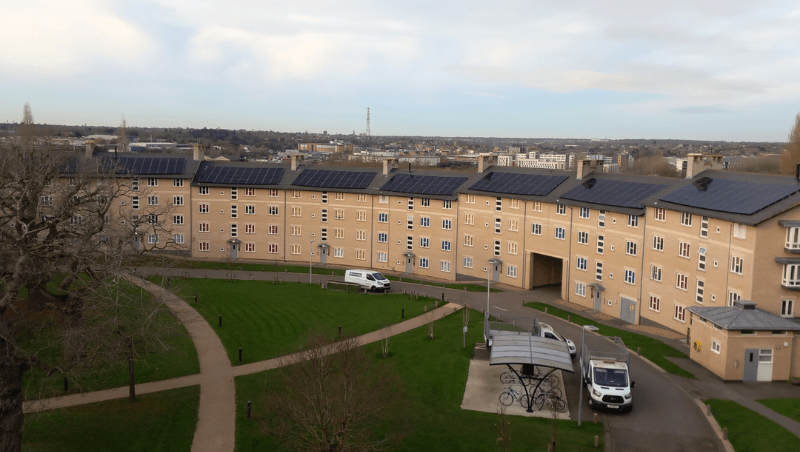
Around 8 per cent of the electricity used each year on campus is created directly onsite by more than 5,000 solar panels installed on rooftops and buildings.
This peaked in July 2025, when 39 per cent of electricity used that month came from onsite solar panels.
It comes as the latest Sustainability report published by the University shows Essex has reduced its annual carbon emissions by 58.3 per cent since 2013, with gas use also plummeting by 39 per cent since 2019.
Essex is aiming to reach net zero by 2035.
Rob Davey, Director of Sustainability, said: “Generating our own renewable electricity is a win-win for the University. It lowers our carbon emissions; reduces our reliance on electricity from the national grid and it lessens what we spend on energy.
“Often sustainability progress can go unseen, but a lot of our recent PV Solar installations are visible from the ground, so our community can see the amazing progress we are making.
“We are exploring further PV Solar installations, lighting and heating upgrades which will allow us to continue on our journey lowering the University’s environmental impact.”
The Grounds team at the Colchester Campus, who manage the award-winning Wivenhoe Park, have also taken significant steps to improve sustainability by installing an on-site plant nursery.
Based within a fully equipped polytunnel, the nursery is home to plants such as geraniums, rhododendrons, dogwood, verbena and hydrangea, as well as trees including oak, beech, walnut and yew.
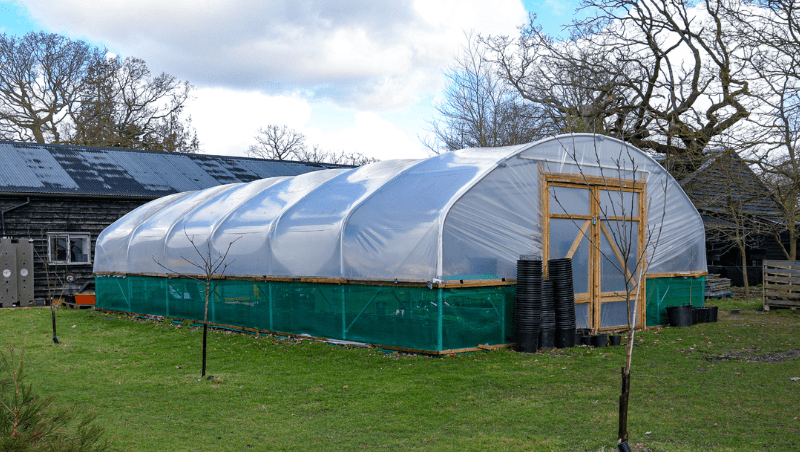
All are grown from seeds or cuttings taken from plants on campus, and all the compost used comes from green waste collected on campus throughout the year.
Kanisha Braddick, Director of Facilities Services, said: “The work delivered by our Grounds team shows the difference that skilled and passionate professionals can make. From conservation and ecological enhancement to our new on‑site nursery using plants grown from campus stock.
"Mick Minshull, Head of Facilities Infrastructure & Service Development leads the Grounds team to drive meaningful improvements to biodiversity and sustainability in the external estate.
“Their efforts ensure Wivenhoe Park remains a thriving, resilient and environmentally responsible landscape for our community to enjoy.”
The Grounds team is also using electric/battery-powered machinery such as lawnmowers and trimming equipment to reduce day-to-day emissions.
Other successful initiatives include the creation of a furniture reuse facility, which has saved an estimated eight tonnes in carbon emissions by ensuring unwanted furniture is used elsewhere on campus, rather than disposed of.
Changes to waste management have also been key to the sustainability mission, with just 0.06 per cent responsible for the University’s carbon emissions.
The changes made at Essex were reflected in the latest People and Planet rankings, which saw Essex climb 13 places to 36th in the UK.
Compiled annually by the student campaigning network, People and Planet, the university league table is the only comprehensive and independent league table of 147 UK universities ranked by their environmental and ethical performance.
3.png?mw=300)