How the brain revs up to make racing drivers go faster
-
Date
Tue 18 Nov 25

A racing driver’s brain is constantly rewiring itself to help it move through the gears when it comes to concentration and planning, new research has shown.
The revolutionary study, which involved a mix of novice racers and Formula E drivers, found the brain evolves to become more efficient when zooming around a race track at high speeds.
It has led to hopes that the monitoring of brain signals will one day lead to a new type of training programme based on neurotechnology.
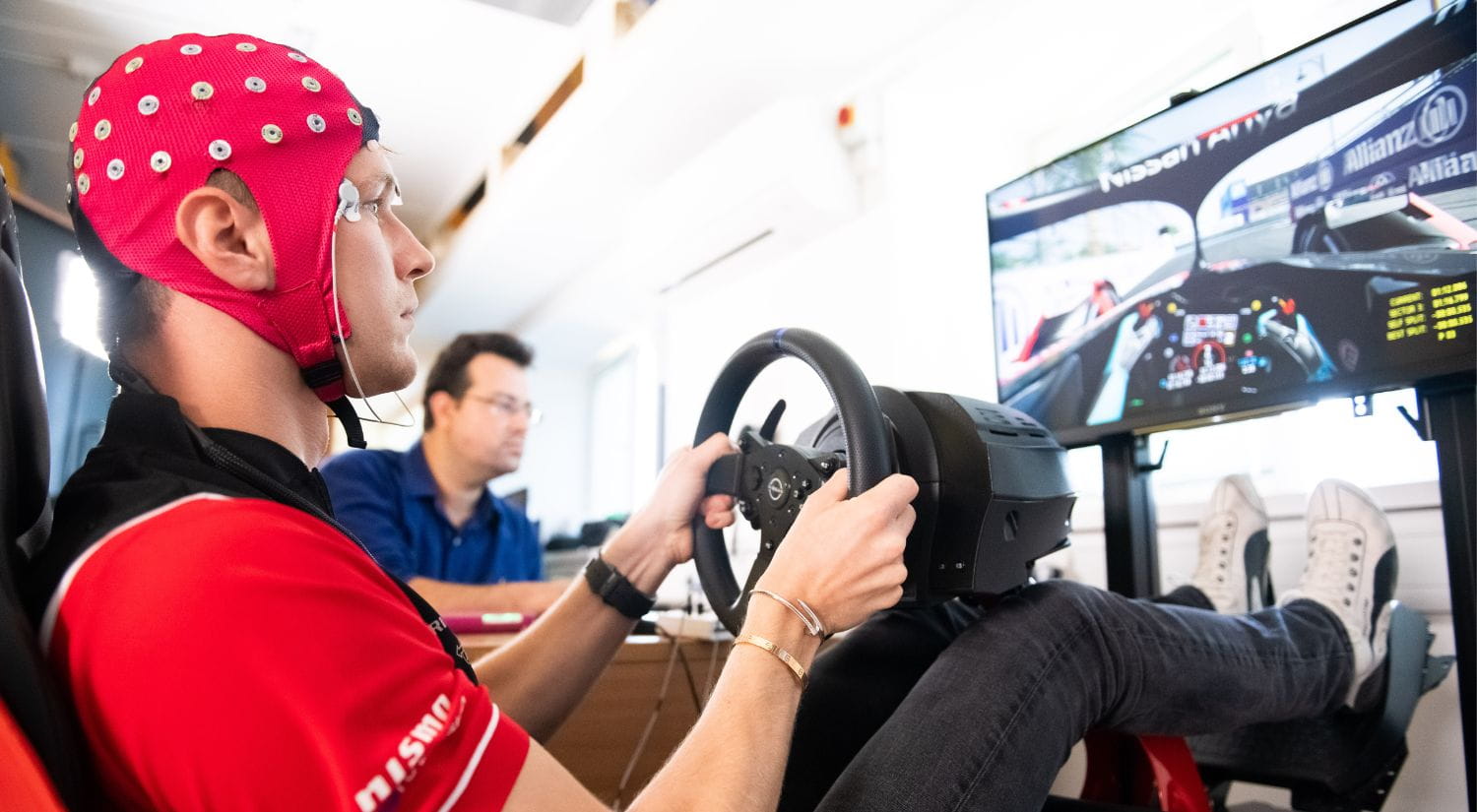
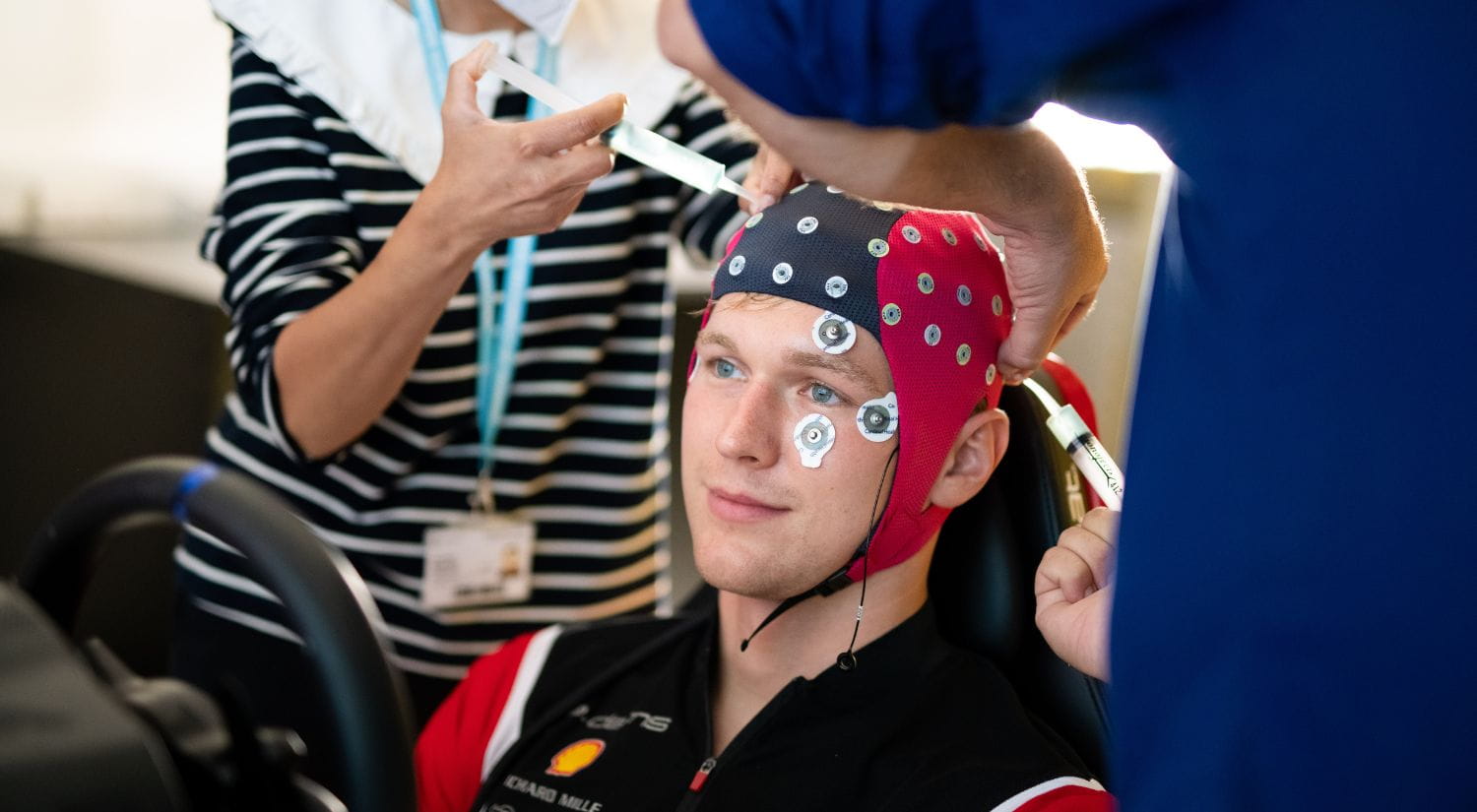
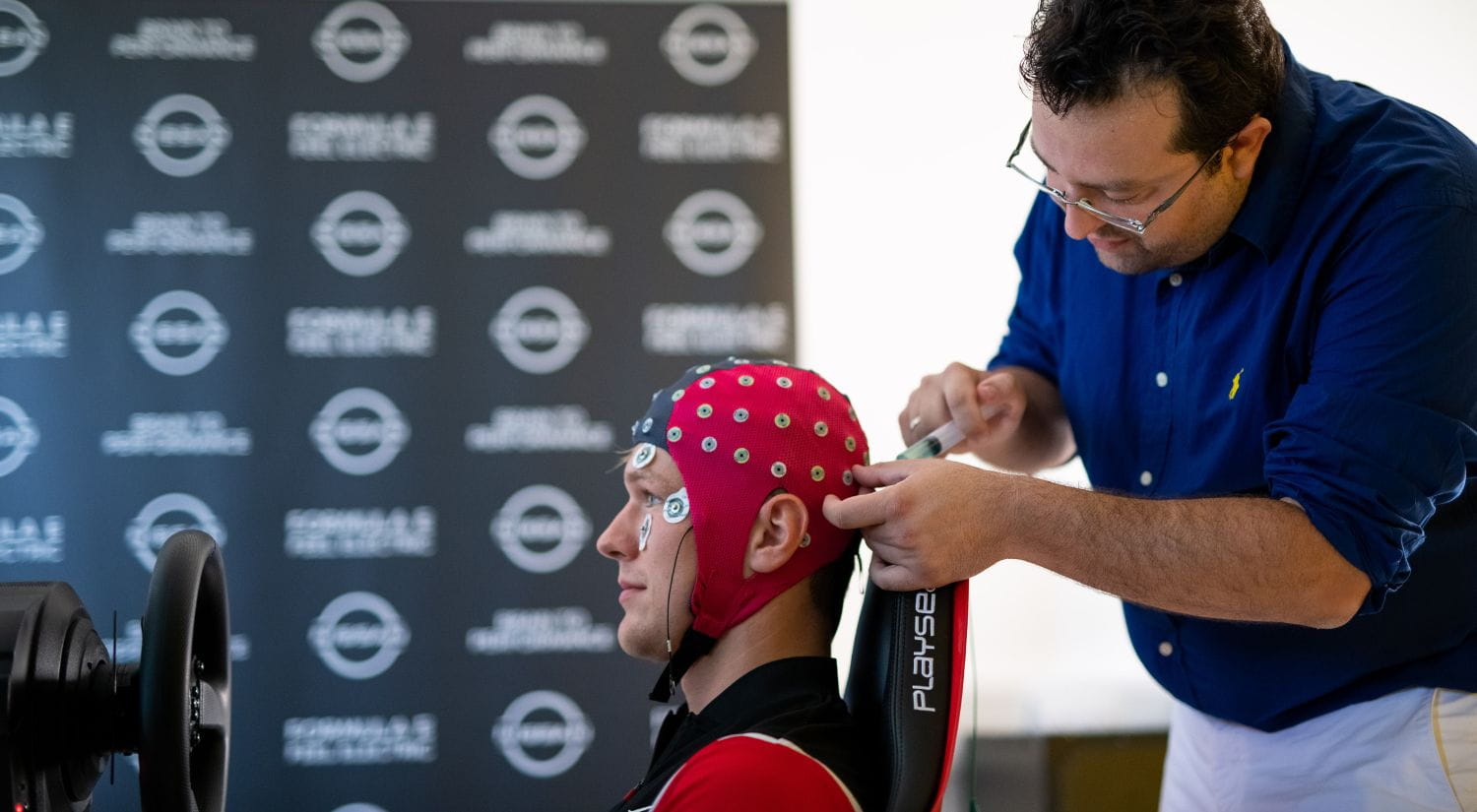
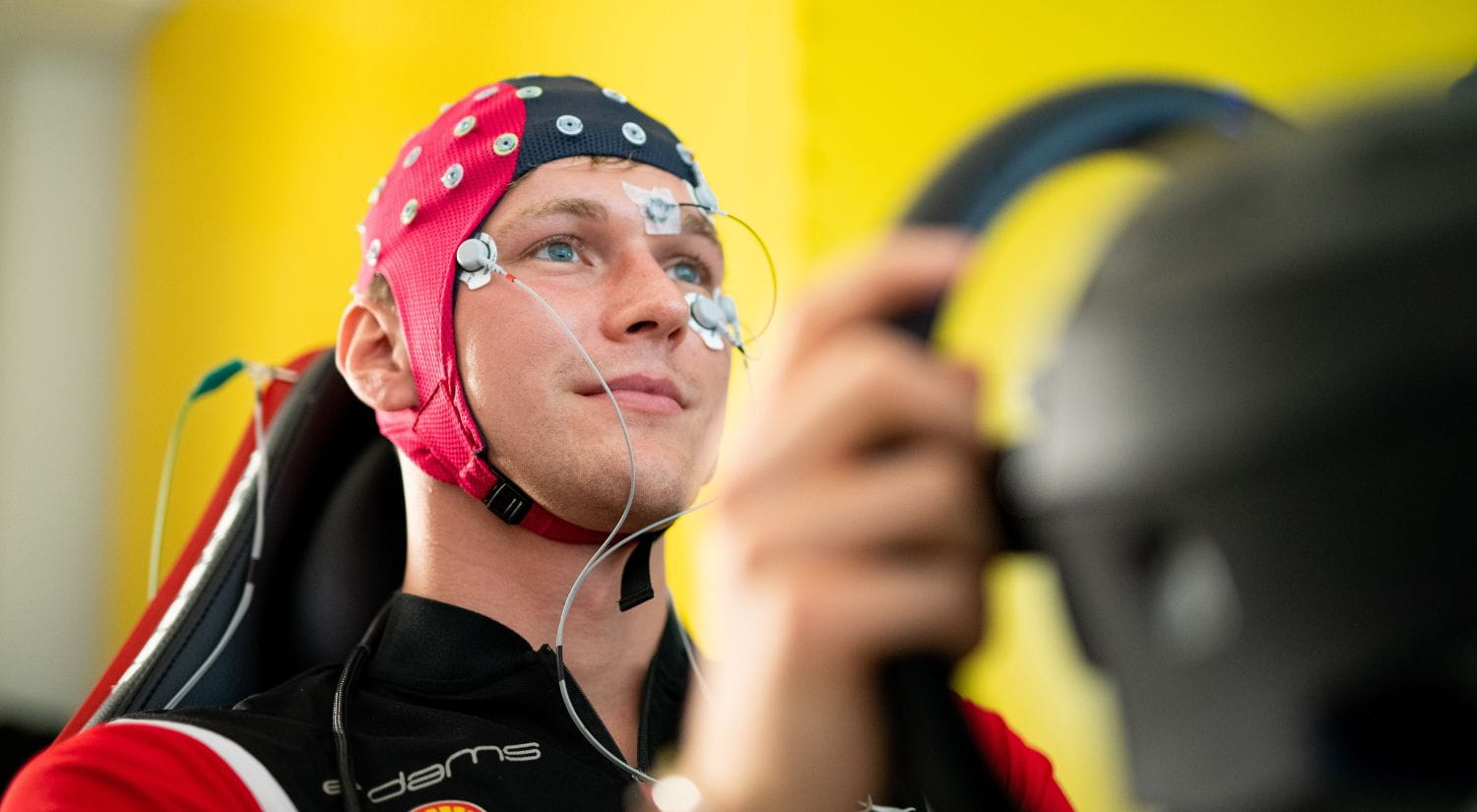
A team of scientists from Nissan Motorsport, Nissan Formula E and the University of Essex were able to identify the changes when studying the brain activity of participants taking part in a racing simulator at Essex’s Brain-Computer Interfaces and Neural Engineering Lab.
Researchers noticed that improved lap times and driving occurred when the front part of the brain, responsible for planning and controlling movements, started working better with the back part, which manages eyesight and reactions.
This improvement in the process known as alpha activity was matched by an increase in the strength of theta brainwaves, which suggests increased focus and attention.
'Changes in brain waves'
Researcher Dr Serafeim Perdikis, of Essex’s School of Computer Science and Electronic Engineering, said: “These changes in brain waves and connectivity help explain why practicing a tough skill like racing makes people better at it.
“The brain isn’t just telling your hands and feet what to do—it’s also learning the best way to do it, becoming more efficient with practice.”
The research team, which also included Lucian Gheorghe and Mushfika Sultana, noticed brainwaves grew strongest in the novice drivers who showed the most improvement in performance.
The study, published in the Journal of Neural Engineering, showed significant alterations in some of the novice drivers’ brain activity.
The Formula E drivers that took part also showed similar changes.
Participants in the study wore a special cap that monitors electrical signals in the brain.
'Aspire to leverage the knowledge'
They were monitored across 10 different sessions, with researchers collecting a range of data from lap times, number of collisions, braking, and how well they followed the racing line of the virtual Diriyah street circuit.
The team say the findings have given a valuable insight into the power of the brain when learning new skills and believe brain-computer interface research will one day form a key part of training for racing drivers.
Dr Perdikis added: ”This work represents a first step into race training regimes enhanced by advanced neurotechnology.
“In the near future, we aspire to leverage the knowledge acquired from it to enable brain-computer interface training protocols and artificial intelligence algorithms capable of analysing brain and other bio signals in real-time so as to provide precise feedback to the race drivers, thus facilitating and accelerating the optimisation of their performance.”