




Postgraduate Course
MA Intercultural Communication and Translation
.jpg?mh=512&mw=512&hash=144B3791933B288275DDFC7B8F11B9FB)
Overview
The details
Intercultural Communication and Translation
October 2026
Full-time
Our MA Intercultural Communication and Translation prepares you to work in global environments where communication across languages, cultures, and digital platforms is essential.
The course is designed for graduates and professionals who want to develop advanced skills in intercultural communication, translation, and language technologies, without requiring prior expertise in specific language pairs. It offers a flexible and inclusive approach to language and communication, focusing on transferable skills that are relevant across a wide range of professional contexts.
You will explore how meaning is created, adapted, and negotiated across languages and cultures, and how digital tools and technologies are transforming communication practices. The course combines theoretical insight with hands-on training, enabling you to engage critically with communication processes while developing practical skills in areas such as localisation, audiovisual translation, and technology-supported workflows.
Throughout the course, you will learn to:
- analyse communication across languages, cultures, and media
- use contemporary language technologies and digital tools relevant to professional communication practices
- adapt communication for different audiences and contexts
- make informed and ethical decisions in multilingual environments
Teaching is delivered through a combination of lectures, seminars, and practice-based sessions, allowing you to develop both analytical and applied skills.
The course culminates in a dissertation, where you will investigate a topic of your choice and apply your learning in depth.
Why we're great.
- Study in one of the UK’s leading departments for language and linguistics, ranked 1st in the UK for research impact in modern languages and linguistics (REF 2021), and benefit from teaching informed by internationally recognised research.
- Develop practical skills in translation, interpreting, audiovisual communication, and language technologies through applied learning and engagement with professional practices.
- Gain a flexible and inclusive skill set that does not depend on specific language pairings, preparing you for a wide range of careers in global communication, media, and multilingual professional contexts.
Our expert staff
You will be taught by specialists in translation, intercultural communication, and language technologies in the Department of Language and Linguistics.
Our staff combine academic expertise with professional experience across areas such as translation and localisation, audiovisual communication, discourse and intercultural communication, and critical engagement with digital tools in language practices. This ensures that your learning is informed by both current research and real-world professional contexts.
Teaching on the course is research-led and reflects contemporary developments in multilingual communication, including technology-mediated communication, global communication practices, and the ethical dimensions of language use.
You will benefit from a collaborative teaching environment that brings together expertise from across the Department, as well as contributions from external collaborators, allowing you to engage with a range of perspectives and approaches to language, communication, and technology.
Specialist facilities
You will have access to digital learning resources and laboratory spaces that support project-based learning and independent practice throughout the course.
You will have access to facilities that support applied learning in translation, audiovisual communication, and language technologies.
Digital resources and laboratory spaces support project-based learning and independent work throughout the course.
Your future
This course prepares you for careers in sectors where communication across languages, cultures, and digital environments is essential.
You will develop a versatile and in-demand skill set that can be applied across a range of professional contexts, including translation and localisation, audiovisual media, digital content and marketing, international business, and roles within global organisations and public services.
Graduates may pursue roles such as:
- translation and localisation specialist
- audiovisual translation and subtitling practitioner
- content management or multilingual communication specialist
- communication and intercultural advisor in international organisations
- roles in digital media, marketing, and global content development
Throughout the course, you will develop key employability skills, including analytical thinking, intercultural awareness, digital literacy, and the ability to adapt communication for different audiences and contexts.
We work closely with the University’s Careers Services to support your professional development, offering guidance on internships, placements, and career planning.
The course also provides a strong foundation for further academic study. Graduates may progress to doctoral research in areas such as intercultural communication, translation studies, and related fields within linguistics and communication.
Course content
Course structure
Most of our courses combine compulsory and optional modules, giving you freedom to pursue your own interests. The purpose of the list of modules below is to illustrate the range and variety of topics available on this course. Depending on the course structure, you are able to choose between many of these modules to tailor your study to your individual interests.
Our research-led teaching is continually evolving to address the latest challenges and breakthroughs in the field. The course content is therefore reviewed on an annual basis to ensure our courses remain up-to-date so modules listed are subject to change.
We understand that deciding where and what to study is a very important decision for you. We'll make all reasonable efforts to provide you with the courses, services and facilities as described on our website and in line with your contract with us. However, if we need to make material changes, for example due to significant disruption, we'll let our applicants and students know as soon as possible.
Components and modules explained
Components
Components are the blocks of study that make up your course. A component may have a set module which you must study, or a number of modules from which you can choose.
Each component has a status and carries a certain number of credits towards your qualification.
| Status | What this means |
| Core |
You must take the set module for this component and you must pass. No failure can be permitted. |
| Core with Options |
You can choose which module to study from the available options for this component but you must pass. No failure can be permitted. |
| Compulsory |
You must take the set module for this component. There may be limited opportunities to continue on the course/be eligible for the qualification if you fail. |
| Compulsory with Options |
You can choose which module to study from the available options for this component. There may be limited opportunities to continue on the course/be eligible for the qualification if you fail. |
| Optional |
You can choose which module to study from the available options for this component. There may be limited opportunities to continue on the course/be eligible for the qualification if you fail. |
The modules that are available for you to choose for each component will depend on several factors, including which modules you have chosen for other components, which modules you have completed in previous years of your course, and which term the module is taught in.
Modules
Modules are the individual units of study for your course. Each module has its own set of learning outcomes and assessment criteria and also carries a certain number of credits.
In most cases you will study one module per component, but in some cases you may need to study more than one module. For example, a 30-credit component may comprise of either one 30-credit module, or two 15-credit modules, depending on the options available.
Modules may be taught at different times of the year and by a different department or school to the one your course is primarily based in. You can find this information from the module code. For example, the module code HR100-4-FY means:
| HR | 100 | 4 | FY |
|---|---|---|---|
|
The department or school the module will be taught by. In this example, the module would be taught by the Department of History. |
The module number. |
The UK academic level of the module. A standard undergraduate course will comprise of level 4, 5 and 6 modules - increasing as you progress through the course. A standard postgraduate taught course will comprise of level 7 modules. A postgraduate research degree is a level 8 qualification. |
The term the module will be taught in.
|
COMPONENT 01: CORE
MA Dissertation
(60 CREDITS)
What interests you? Write a 12,000-14,000-word dissertation on a research topic of your choosing, with supervision from our expert staff. Gain research planning, organisational and project management skills while increasing your knowledge of the subject. Build your research abilities for future employment or a PhD.
COMPONENT 02: COMPULSORY
Principles of Interpreting
(30 CREDITS)
What does it mean to interpret across languages in real time, and how do the principles of interpreting change across professional settings? Principles of Interpreting offers a specialist introduction to interpreting as both a professional practice and an academic field. Across the Autumn and Spring terms, you move from the foundations of conference interpreting to the core principles of public service interpreting, exploring key modes, settings and debates such as consecutive and simultaneous interpreting, dialogue interpreting, ethics, quality, technology and interpreter-mediated interaction.
COMPONENT 03: COMPULSORY
Principles of Translation
(15 CREDITS)
How do translation decisions shape communication across cultures? How does context influence meaning? What responsibilities do translators hold in professional practice? This module introduces key concepts, theories, and current debates in Translation Studies, exploring translation as a socially and culturally situated practice. Through discussion and analysis of real examples, students will critically evaluate translation choices, engage with contemporary issues in the profession, and develop the skills needed for advanced study and professional careers in translation.
COMPONENT 04: COMPULSORY
Audiovisual Translation
(15 CREDITS)
What is audiovisual translation? This module will introduce you to the key theoretical concepts and professional practices in audiovisual and multimodal text translation. You will explore key theories and current trends in the field and develop a critical awareness of the practical, linguistic, social and cultural issues associated with audiovisual translation. Practical assignments in subtitling, dubbing and voiceover will help you to apply your knowledge and develop the technical skillss required to work in this specialised field.
COMPONENT 05: COMPULSORY
Research Methods
(15 CREDITS)
What are research methods? What are the differences between quantitative and qualitative research? Learn more about the research tools available for studying applied linguistics and TEFL. Examine each available research method in-depth. Build your understanding, while preparing for your MA dissertation or other future research projects.
COMPONENT 06: COMPULSORY
Subtitling: Principles and Practice
(15 CREDITS)
Want to produce accurate and reader-friendly interlingual subtitles? How do you recognise good subtitling? What skills does it require? Develop your understanding of the subtitling process. Learn to use the spotting and word-processing functions of professional subtitling software, while building your proof reading and editing skills.
View Subtitling: Principles and Practice on our Module Directory
COMPONENT 07: COMPULSORY
Intercultural Communication across Media, Languages, and Contexts
(15 CREDITS)
This module provides an in-depth introduction to intercultural communication across languages, media, and contexts. It explores how meaning is created, negotiated, and interpreted in multilingual and multicultural settings, combining theoretical perspectives with applied analysis. The module is designed for students from diverse academic backgrounds and focuses on developing analytical skills that can be applied to a range of real-world communication scenarios.
View Intercultural Communication across Media, Languages, and Contexts on our Module Directory
COMPONENT 09: COMPULSORY
Professional Skills for Translators and Interpreters
(0 CREDITS)
Keen to gain technical translation practice? Study a range of technical texts, building your experience of translation in this area. You will receive guidance on preparing for such work and understand how to research terminology for technical translation tasks.
View Professional Skills for Translators and Interpreters on our Module Directory
Teaching
This Masters course combines theoretical learning with applied learning, enabling you to develop both analytical understanding and professional skills.
Teaching takes place through a mix of lectures, seminars, and practice-based sessions. Lectures introduce key concepts and frameworks in intercultural communication, translation, and language technologies, while seminars provide space for discussion, critical analysis, and collaborative learning.
You will also take part in practical sessions and workshops where you apply your learning to communication tasks across a range of contexts. These may include engaging with language technologies, analysing communication across different contexts, and developing outputs such as translations, subtitles, or digitally mediated content.
Throughout the course, you will engage with current research and professional practices, supported by guided reading, case studies, and applied activities. Teaching is designed to be interactive and inclusive, with opportunities for discussion, group work, and independent exploration.
You will be supported by experienced academic staff and have opportunities to engage with the wider research community through departmental seminars and guest sessions.
Assessment
Assessment on this course is designed to support both academic development and professional skill-building and is based entirely on coursework rather than exams.
You will be assessed through a range of tasks that reflect applied communication contexts and academic inquiry. These may include:
- analytical essays and critical evaluations
- applied projects in translation, localisation, and audiovisual communication
- assignments involving the use of language technologies and digital tools
- reflective work linking theory and practice
These assessments enable you to demonstrate both your theoretical understanding and your ability to apply knowledge in practical and professional contexts.
Dissertation
The course concludes with a 12,000–14,000-word dissertation (or equivalent), allowing you to explore a topic of your choice in depth.
Working with an academic supervisor, you will design and carry out an independent research or practice-based project related to intercultural communication and/or translation, including work supported by language technologies. This may involve analytical research, applied work, or a combination of both.
The dissertation enables you to integrate the knowledge and skills developed throughout the programme and produce a substantial piece of work that reflects your academic and professional interests.
Entry requirements
UK entry requirements
A 2.2 degree or international equivalent in one of the following subjects:
- Education
- English Language and Literature
- English Language Studies
- Linguistics
- Modern Languages
- Teaching (English)
You may also be considered with a lower-class degree if you have teaching experience or if you have a 2:2 degree in an unrelated area but which contains a substantial element of English language, language education, linguistics, language studies or language teaching, or who can demonstrate a personal or professional interest or expertise in English and/or English language teaching.
International & EU entry requirements
We accept a wide range of qualifications from applicants studying in the EU and other countries. Get in touch with any questions you may have about the qualifications we accept. Remember to tell us about the qualifications you have already completed or are currently taking.
Sorry, the entry requirements for the country that you have selected are not available here. Please contact our Graduate Admissions team at pgquery@essex.ac.uk to request the entry requirements for this country.
English language requirements
If English is not your first language, we require IELTS 6.5 overall with a minimum component score of 6.0 in writing and 5.5 in all other components.
If you do not meet our IELTS requirements then you may be able to complete a pre-sessional English pathway that enables you to start your course without retaking IELTS.
Additional Notes
The University uses academic selection criteria to determine an applicant’s ability to successfully complete a course at the University of Essex. Where appropriate, we may ask for specific information relating to previous modules studied or work experience.
Fees and funding
Home/UK fee
£11,025
International fee
£23,875
Scholarships and financial support
There may be scholarships, bursaries or discounts available to help with the cost of this course.
Fees and funding guide
What's next

Open Days
We hold Open Days for all our applicants throughout the year. Our Colchester Campus events are a great way to find out more about studying at Essex, and give you the chance to:
- tour our campus and accommodation
- find out answers to your questions about our courses, student finance, graduate employability, student support and more
- meet our students and staff
If the dates of our organised events aren’t suitable for you, feel free to get in touch by emailing tours@essex.ac.uk and we’ll arrange an individual campus tour for you.
2026 Open Days (Colchester Campus)

Applying
You can apply for this postgraduate course online. Before you apply, please check our information about necessary documents that we'll ask you to provide as part of your application.
We aim to respond to applications within two weeks. If we are able to offer you a place, you will be contacted via email.
For information on our deadline to apply for this course, please see our ‘how to apply' information.
Visit Colchester Campus
Set within 200 acres of award-winning parkland - Wivenhoe Park and located two miles from the historic city centre of Colchester – England's oldest recorded development. Our Colchester Campus is also easily reached from London and Stansted Airport in under one hour.
Virtual tours
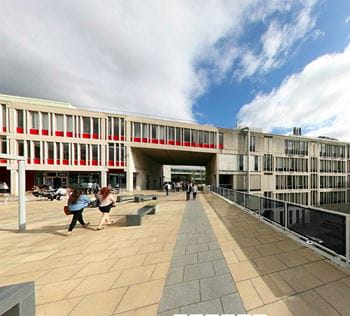
If you live too far away to come to Essex (or have a busy lifestyle), no problem. Our 360-degree virtual tour allows you to explore our University from the comfort of your home. Check out our Colchester virtual tour to see accommodation options, facilities and social spaces.
At Essex we pride ourselves on being a welcoming and inclusive student community. We offer a wide range of support to individuals and groups of student members who may have specific requirements, interests or responsibilities.
The University makes every effort to ensure that this information on its programme specification is accurate and up-to-date. Exceptionally it can be necessary to make changes, for example to courses, facilities or fees. Examples of such reasons might include, but are not limited to: strikes, other industrial action, staff illness, severe weather, fire, civil commotion, riot, invasion, terrorist attack or threat of terrorist attack (whether declared or not), natural disaster, restrictions imposed by government or public authorities, epidemic or pandemic disease, failure of public utilities or transport systems or the withdrawal/reduction of funding. Changes to courses may for example consist of variations to the content and method of delivery of programmes, courses and other services, to discontinue programmes, courses and other services and to merge or combine programmes or courses. The University will endeavour to keep such changes to a minimum, and will also keep students informed appropriately by updating our programme specifications. The University would inform and engage with you if your course was to be discontinued, and would provide you with options, where appropriate, in line with our Compensation and Refund Policy.
The full Procedures, Rules and Regulations of the University governing how it operates are set out in the Charter, Statutes and Ordinances and in the University Regulations, Policy and Procedures.


Ask us a question
Want to quiz us about your course? Got a question that just needs answering? Get in touch with us on live chat!



.jpg&lastYear=1&title=MA Intercultural Communication and Translation)