Ọmọ́máyọ̀wá Àbàtì: Q&A on Open Access Publication



Dr Ọmọ́máyọ̀wá Àbàtì, Senior Research Officer in the Department of Government, has just published with co-author Mayowa M. Adeniji (independent researcher), the chapter, Young women aspirants and gendered ageism in Nigeria's political parties, in the essay collection Gendering Party Politics: Feminist Institutionalist Perspectives, the latest addition to Oxford University Press’s Studies in Feminist Institutionalism series.
The chapter was published Open Access with the support of the University of Essex’s Open Access fund, and can be downloaded free now.
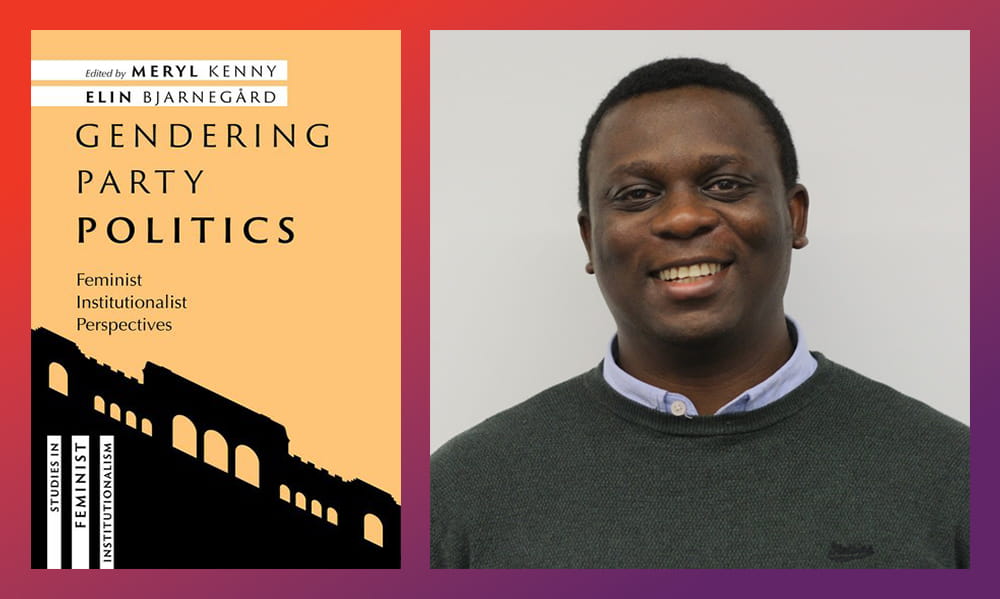
Congratulations, Dr Àbàtì! How does it feel to see your work in print and freely available online?
Thank you. It always a delight to complete a publication process but to also have it freely available for everyone to engage with is a special feeling.
How did your involvement in this volume, edited by Meryl Kenny and Elin Bjarnegård, come about?
I happened to present a paper, which I drafted from my doctoral thesis, at a panel at the 2024 Political Studies Association conference, chaired by Meryl. After my presentation, I received an email from her asking if I would be interested in contributing to a book project she was co-editing with Elin on gender and party politics. When I reviewed the book proposal, I saw it aligned with some of the arguments I was making in the conference paper. So, I took it up with my co-author who was working on similar research.
What is the central theme of your chapter?
The chapter explores the theme of gendered ageism within Nigeria’s political parties, especially as it affects young women’s political candidacy. We argued that the reason young women aspirants find it difficult to emerge as party candidates, despite gender concessions provided by parties, is the intersectional interaction of formal regulations and informal networks, in ways that help to maintain male party dominance in candidate selection, thereby making formal concession of little to no effect on gender parity.
As such, is it representative of your main research work?
Yes, but in part. My research widely explores issues of democratic inclusion and development, using intersectional lenses and mixed methodologies because of the multiphase nature of development. This sees me tinkering with themes of gender politics, youth politics, political representation, digital governance, urban governance and, more recently, I conduct conflict and peace research in Africa, as part of the Multilingualism, Conflict and Conflict Resolution in Africa (MCCRA) research project here at the University of Essex.
How did you find the Open Access publishing process? What advice would you give anyone considering the same route?
I had recently published a journal article in Open Access format which made me appreciate the opportunity to make my research publicly available. So, I simply desired the same publicity for every piece of my publication and I got the perfect guidance from the Open Access team. I believe every researcher should try to publish Open Access, especially where there is a dedicated fund for this and a committed team that can hold your hands through the entire process.
What, for you, are the benefits of publishing Open Access and how do you plan to take advantage of Open Access to share and publicise your work?
Open Access ensures that my research can reach a wide audience, practically everyone that needs it can get it. So, I plan to share it across all my personal media channels, including my social media account while tagging all relevant stakeholders. This way, I am hoping I can foster a broad engagement, especially because the arguments made in the chapter speak to variety of scholars and stakeholders, from gender and youth scholars to policy makers, political activities as well as career politicians. While scholars may go to the extent of paying to read, these other stakeholders would not bother. So, research of this kind should be accessible as much as possible.
Finally, what is next for you?
I have another chapter forthcoming in Open Access!
Young women aspirants and gendered ageism in Nigeria's political parties can be downloaded free of charge now.
The Open Access Fund
The University’s dedicated Open Access Fund remains in place to help Essex academics publish their research Open Access. If you want to know whether the fund can support your work please just ask us by completing one of our brief forms:
- Journal articles
- Monographs and book chapters (manuscripts due to be submitted from August 2026 onward only)