Professor Anthony Forster's speech at the Annual Meeting of Court
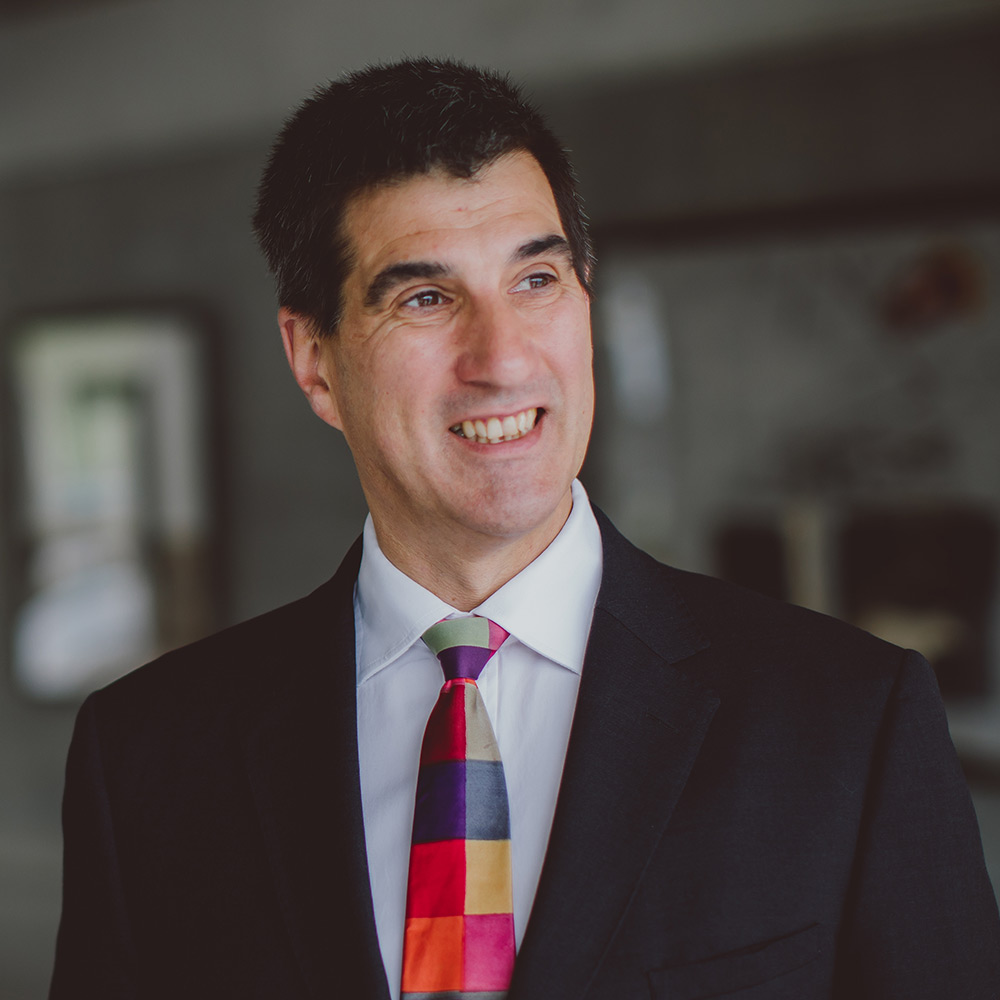
Professor Anthony Forster delivered the following speech at the Annual Meeting of Court this week.
Thank you for joining us – as has been mentioned it is 21 months since our last Annual Meeting. As with so many of the University’s activities, I am sorry that we have been robbed of the opportunity to meet in person with our friends and supporters and share our successes – and our challenges with you, but today I want to use the opportunity of our Annual Meeting of Court to do this. I very much hope that we will meet again in person in June 2022 when I think we have good reason to believe a face-to-face meeting will be able to take place.
Our strategy
In responding to the COVID-19 pandemic, we wanted to make sure that the immediate decisions taken over the last 12 months – often in the face of extreme adversity – have been anchored in our 2019-2025 strategy. We remain committed to delivering excellence in education and research, with the ambition to grow the University to become a community of 20,000 students and 1,000 researchers by 2025. We are now a University of just over 17,000 students and slightly over 700 researchers. Our commitment to our growth targets remains undiminished – growth is essential to ensuring that our subjects and disciplines have critical mass; that we are in the top 30 of universities in terms of research power; and, that we benefit from economies of scale in all areas of our work.
Secondly - we have been at pains not to underestimate either the impact or duration of the pandemic.
- To safeguard the health and well-being of our staff and students, we moved teaching and assessment online before the government required us to do so, and moved all other staff working in areas of professional services that could be off site to home working in early/mid-March 2020.
- Health and safety have been a powerful guide in all that we have done - including setting up our own testing centres at a cost of over £1 million, creating COVID secure campuses and phased returns to campus activity in order to help us to best manage the health risks.
- We also immediately undertook a full financial review – moving rapidly to stop any expenditure that was not immediately essential, including all capital spending that was not already committed. This ensured we posted a break-even budget and that we conserved cash which I am pleased to report we managed to do successfully.
- Together with Andrew Keeble and Alexa Coates, an external member of Council, I continue to meet regularly with our two major creditors – and we have been keen to ensure that we have enough ready days of cash as a financial buffer against any shocks. Andrew will say more about the financial outturn in his presentation.
- We have taken a conservative view for budget setting for academic year 2020/21. This has been key to ensuring that we don’t over-reach ourselves. Critically it has provided us with ‘head room’ to cope with three national lock downs over the last 12 months.
- From the outset of the pandemic, we have planned for the whole of this academic year through to July 2021 to be built around dual delivery: on campus if possible, but off campus and online if necessary.
- And we have worked hard to recognise the human cost of COVID on the cohesion of our communities and the stresses and strains on individuals – both staff and students, putting in place targeted advice and support.
Third, we have worked hard to ensure that we communicate regularly and engage with our community in many different ways. Above all we have been candid in our communications and open about the challenges we face. The pandemic continues to challenge the very existence of the University of Essex and the UK government remains unlikely to provide the financial support we need for our universities to continue to thrive. We have our eyes wide open about how challenging the situation is, and that this challenge will continue over the next three years, with a spending review in the autumn and a series of major policy announcements expected on fees, research funding and admissions.
Finally, we have wanted to be responsive to opportunities as and when they arise. To support this, we have been actively horizon scanning, speeding up our decision
making and taking carefully calibrated risks within a time frame that extends beyond the next 7 months. For example, we have secured £5 million in grant funding for the next phase of development of the Knowledge Gateway to support our University Enterprise Zone ambitions. We are also currently reviewing how we can bring together our health and well-being related research and patient clinics, to harness the strength of the amazing researchers and resources that we have at Essex. And we are embracing innovation –not least in a context where changes that we previously thought difficult or impossible, have been forced upon us.
Our challenges
Strategy is one thing but I do not want to underestimate the financial, and especially the human, challenges that our University community has faced over the last 12 months.
Our staff have been amazing, this time last year moving teaching online at extraordinary speed and sustaining this for what will be 18 months. This has required us to innovate in a wide variety of ways. For example, in our department of Literature, Film and Theatre Studies we set up an entirely online residency for our BA Drama students with theatre company Pecho Mama and shipped virtual reality headsets around the world so that students could collaborate internationally to create interactive, virtual reality drama entirely online. Our third-year film studies students created independent film projects showing worldwide experiences of the pandemic including one film made entirely on a student’s balcony during lockdown in Turkey. Drama students rehearsed and performed in pairs on Zoom, recording scenes from Shakespeare, and our MA Theatre Practice students transformed their MA dissertation projects in performance into films which were screened as part of the local Mercury Theatre online festival.
We also moved our assessment online and ensured we could graduate students both in July 2020 and July 2021 and I am delighted that we have had a higher proportion of students graduating with a first or a 2:1 than in 2019.
Student health and wellbeing remains a priority. In 2018 we increased expenditure on mental health and well-being by 23%, creating 30% more capacity, including 24/7, 364-day access to services for our students –allowing access from anywhere in the world wherever they might currently be based. We have also appointed two further members of staff to cope with the additional demand.
We have also more than doubled the funds available to support students in financial hardship this year, from £188,000 to £430,000. The range of needs we support has been expanded to respond to what our students are telling us they need. We now support access to technology, help with unexpected travel or accommodation costs and with child-care costs. We’ve also created extended laptop loans for students who don’t qualify for hardship support but need equipment while self-isolating and are unable to access on-campus resources. But we know hardship continues to be a very real issue for many of our students and we have therefore also focussed all our fundraising efforts on this area. We have raised £268,971 directly from our alumni, staff, students and friends of the University, matched by £200,000 from the Silberrad donation.
We have also focused even more on student retention – knowing many of the very real challenges that our students face - and I am delighted that we have improved the number of students who stay the course from 89.3% to 90.8%.
As you will know - we champion the idea that an Essex education is about more than what goes on in the lecture theatre, laboratory or seminar room. The pandemic has had a very significant impact on our students and in particular deprived them of many of the usual opportunities to participate in face-to-face sports, music, the arts and volunteering. We have worked tirelessly in partnership with our Students’ Union to engage with our students as much as we can online: coordinating one of the largest programmes of online events of any university in the UK, including organising exclusive audiences with award-winning guest speakers and entertainers, and replicating the fun, unpredictable nature of Students’ Union venues through virtual pub chats and games nights. The Students' Union has also succeeded in pioneering new forms of online democracy that have brought students together virtually. Through online platforms, thousands of students have been able to campaign, debate and vote on the issues that matter to them; individually and collectively exercising their Essex Spirit no matter where they are in the World.
And, of course, where we are able to run in person face-to-face events we have done this: our SU was one of a handful to run a physical Freshers’ Fayre, some high-performance sports teams have been able to continue competing. For example, our Womens’ Basketball team are currently third in the national professional league, with livestreamed matches attracting over 1,000 views. A ‘buddy walk’ scheme has been operating where students sign up to meet another student to walk and talk around the historic parkland, supported by a Facebook group to keep in touch with other students between walks.
Our approach has been to offer face-to-face teaching wherever we can and online if necessary. This has involved switching provision to respond to the three national lockdowns and the directives from government as to what teaching can take place face-to-face. We currently have 2,025 students in residence on our campuses and around 1,500 students receiving face-to-face in person teaching. We have said that, over the last year, students can of course continue to study at home, even if their courses are being offered face-to-face, to take into account personal circumstances such as health issues and to recognise that 30% of our students are from outside the UK and subject to their own national and travel restrictions.
We know the financial costs are a pressing issue for students and we were amongst the first universities to offer a flexible and generous approach to rent payments to our students in university owned or managed accommodation. In March last year, we allowed all students to break their accommodation agreement without penalty – and since then we have had a flexible policy agreement in place that ensures students only pay for what they use, in terms of their university accommodation. This comes at a significant financial cost to the University which amounts to £19 million less accommodation income for the University this year – but sometimes there is a price to pay for living your values and we believe that it is the right and the fair thing to do.
And we are investing over £10 million more than in a usual year to support high-quality online delivery and to ensure the quality of student learning outcomes. We have also increased the funding allocated to our Students’ Union so that they can provide extra support for students learning online and on our campuses, and so that they can ensure that our students have the best Essex student experience we can provide. During the Winter Break, the Students’ Union provided support for the increased number of students unable to return home over Christmas, including providing a free traditional Christmas Roast dinner to hundreds of students and online performances, quizzes and escape rooms. Through a Let's Connect campaign, the Students’ Union used a new app and online events to help students make new friends at Essex from wherever they are in the world. In two weeks alone, they helped students make almost 4,000 connections with each other. They have also run online campaigns and provided support in terms of mental health and wellbeing, managing money during the pandemic, exams support and a continual series of entertainment events from award-winning guest speakers to virtual pub chats.
Most of our staff have been delivering services, teaching and undertaking their research from home – and I want to pay generous testament to them, many juggling home schooling, caring and other family responsibilities. But I also want to recognise and thank staff who have been coming onto our campuses every day throughout the pandemic: staff who we are relying on to keep core campus services running such as shops, IT and computer facilities and access, library services and accommodation. Throughout the lockdowns we have had a considerable number of students to look after on our campuses and in University owned or managed accommodation and I want to thank the staff who are doing this. And, of course, our campuses have remained open, especially our award-winning Wivenhoe Park – again voted in the top 10 parks in the UK – offering fresh air and an immersion in the natural environment that has been all the more valued during the lockdowns. We have also been delighted to be able to use our physical estate to offer a COVID testing centre to support our local communities.
We usually spend considerable time on sharing our headline achievements with you and I want to be sure we don’t overlook this.
- In terms of student population, we are the largest that we have ever been (having some 17,700 students) and notwithstanding the pandemic, we had the largest intake in the history of the University for Academic Year 2020-21 assisted by 525 students starting courses that we introduced for a January start this year.
- We received nearly £30 million to support the work of our researchers including:
- £1.3 million for a prestigious UK Research and Innovation Future Fellow to undertake research in Human Rights and Artificial Intelligence,
- £700,000 from the Medical Research Council for our research into Artificial Blood, and
- the acquisition by tech giant Siemens of the Essex spin-out company UltraSoc whose technology is helping transform the development of next-generation electronic devices.
- We our particularly proud that we now have nearly £8 million for Knowledge Transfer Partnerships – funding 40 business and university link projects and ranking us third in the UK for the number of KTPs we hold.
- In the World University Rankings, we are ranked 22nd for international outlook in the THE World Rankings, 51st and 52nd for Law and Social Sciences, in the top 150 for Business and Economics, and in the top 250 for Arts and Humanities, Computer Science and Life Sciences. And in the QS World Rankings, we are ranked in the top 50 for Politics and International Studies, and for Sociology, in the top 100 for Linguistics, top 150 for Economics, and top 200 for Philosophy, and Accounting and Finance.
- We are of course disappointed to have fallen from 37th to 40th in the national league tables – especially the Times and Sunday Times Good University Guide which we use to gauge our relative performance, but we continue to focus our efforts on offering a great experience to our students and supporting them through graduation into the world of work – and if we get this right, the league table position will follow.
Concluding remarks
We are running a deficit budget this year – only the second time this has been the case in 30 years – and stretching ourselves financially, in order to do all that we can to support our students and ensure that we are effectively positioned for recovery.
I have written an open letter and several articles about the importance and fragility of the intergenerational contract – our students have experienced unprecedented hardship and will be graduating into a jobs market that is really difficult, with 2.2 million people expected to be unemployed at the end of the year, or 6.5% of all workers and the Resolution Foundation suggesting unemployment among economically active 18-to 29-year-olds could hit 17%, the same level as in 1984.
I would like to extend my thanks to members of Court who have been willing to support this generation of students, through generosity in donating to hardship funds, mentoring and offering work experience and in many other ways. If you are able to help, please let us know – we want to do all we can to ensure that this is not a forgotten generation.
It has been a very challenging 12 months, but we went into the pandemic on a sound financial footing, and this has served us well in very difficult times. With our three-year recovery plan, and a firm eye on our values and what we want to achieve over the next 5 years, we have every reason to be optimistic about the future. Our recruitment data for 2021 is encouraging: our values and the transformational impact of an Essex degree resonates now, more than ever. Students want to come to Essex – and I have no doubt that Essex students, graduates and researchers will play a central role in a post pandemic recovery – the World needs Essex more than ever - and we are well placed to meet the challenges ahead.
Thank you.