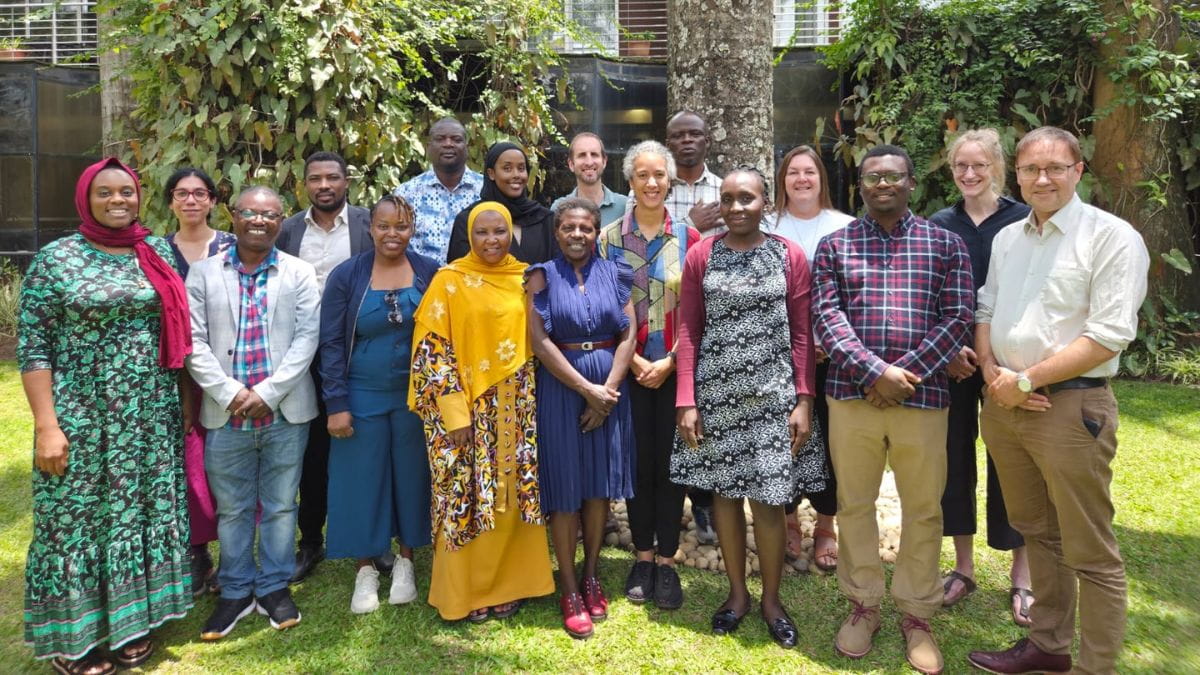
Project leader Professor Kristian Gleditsch, from our Department of Government, explained: “Our meeting in Kampala was extraordinarily helpful in bringing together different lines of work in the project so far. There are many challenges in combining comparative and country-specific work in a large team spanning countries, especially when many of the members have not previously met in person. Our discussion helped bring out insights from comparing different countries, and firm up plans for our survey, specific publications, and how to engage with stakeholders.”
Professor Hannah Gibson, from our Department of Language and Linguistics, added: “The meeting in Kampala was an invaluable opportunity to meet in person. We have regular meetings amongst the Essex team, and regular online meetings of the whole team. But is so different to meet in person, to be able to discuss the details of the work as well as to get to know each other better. This is crucial to the success of such a large project. We also talked about the next stages in the research, including engaging our impact partners and the launch of the surveys in 2026.”
The central focus of the project is Africa due to its high number of multilingual citizens and the fact is has seen extensive violent conflict in different countries. In 2021, nearly half of all the armed conflicts in the world took place on the continent.
This project, funded by the Economic and Social Research Council (ESRC), is the first comparative, large scale analysis of the practice of multilingualism in reshaping violent conflict and harnessing conflict resolution in Africa.
The project team based at Essex are:
- Professor Kristian Gleditsch (PI) – Department of Government
- Professor Hannah Gibson – Department of Language and Linguistics
- Dr Florian Kern – Department of Government
- Dr Tracey Costley – Department of Language and Linguistics
- Dr Brian Phillips – Department of Government
- Dr Angiachi Demetris – Department of Language and Linguistics
- Dr Omomayowa Abati – Department of Government
3.png?mw=300)