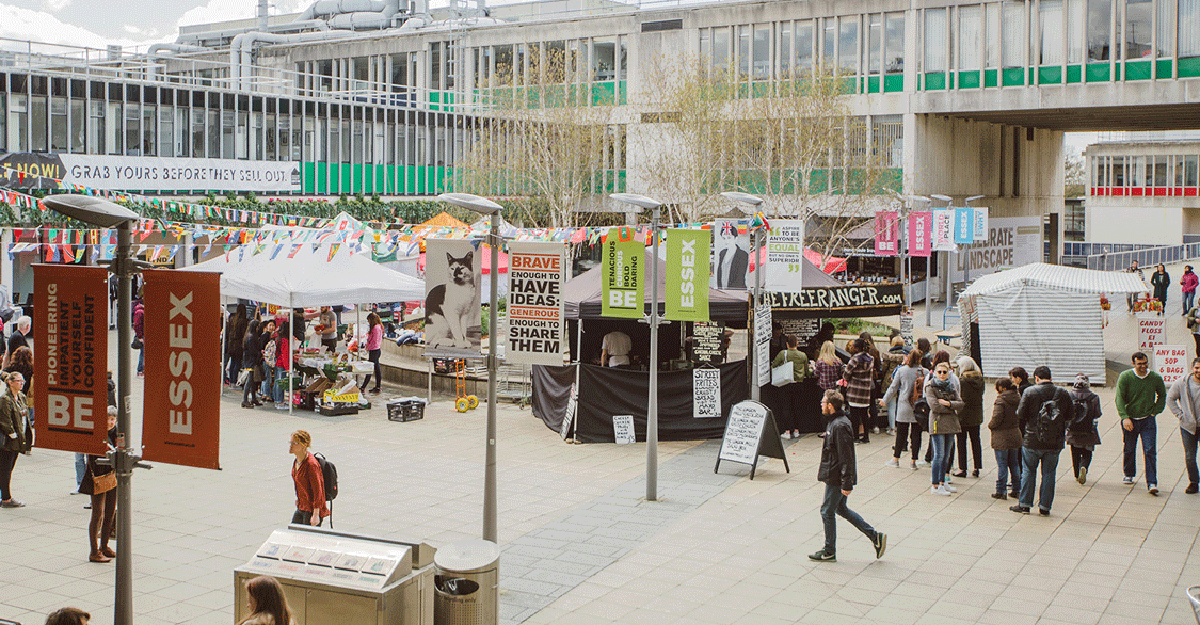
The MSc Research Methods in Psychology is a one-year degree studied at our Colchester Campus.
You’ll gain advanced training in psychological science and in how to conduct research into today’s most pressing societal challenges.
Why this course
The MSc Research Methods in Psychology gives you practical research-focused training into various research methods, advanced statistical techniques, interview analysis and overall research management. It also extends your theoretical knowledge into specialist topics of psychology or cognitive neuroscience.
You'll graduate on the path to a career as a research psychologist or to a PhD in psychology.
Who should apply
Future research psychologists
Students wanting to work in neuroscience, health or data analysis
Those aiming to further research and make an impact on our world
Analytical thinkers with a scientific approach to psychology
What you’ll learn
Research: Explore how research is managed and gain first-hand experience of research methods and reviews
Data: Master statistics, interviewing and qualitative data analysis for psychology research
Specialise: Tailor your degree with your choice of specialist modules
Your learning experience
Expert teaching: Learn from award-winning teachers and prize-winning researchers who are international experts in their areas
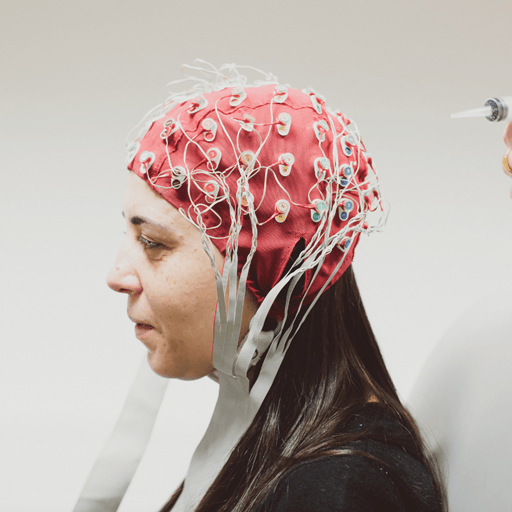
Specialist facilities: Access the world’s first videogame lab, the leading infant lab in the East of England and our multimillion-pound centre for brain science
Careers and outcomes
An MSc Research Methods in Psychology degree prepares you for diverse careers in:
Research: Psychology, cognitive neuroscience, health science
Psychology and counselling: Clinical psychology, high-intensity therapy, mental health and wellbeing practice, occupational therapy
Our research-led teaching is continually evolving to address the latest challenges and breakthroughs in the field. The following modules are based on the current course structure and may change in response to new curriculum developments and innovation.
We understand that deciding where and what to study is a very important decision for you. We'll make all reasonable efforts to provide you with the courses, services and facilities as described on our website and in line with your contract with us. However, if we need to make material changes, for example due to significant disruption, we'll let our applicants and students know as soon as possible.
Components and modules explained
Components
Components are the blocks of study that make up your course. A component may have a set module which you must study, or a number of modules from which you can choose.
Each component has a status and carries a certain number of credits towards your qualification.
Status
What this means
Core
You must take the set module for this component and you must pass. No failure can be permitted.
Core with Options
You can choose which module to study from the available options for this component but you must pass. No failure can be permitted.
Compulsory
You must take the set module for this component. There may be limited opportunities to continue on the course/be eligible for the qualification if you fail.
Compulsory with Options
You can choose which module to study from the available options for this component. There may be limited opportunities to continue on the course/be eligible for the qualification if you fail.
Optional
You can choose which module to study from the available options for this component. There may be limited opportunities to continue on the course/be eligible for the qualification if you fail.
The modules that are available for you to choose for each component will depend on several factors, including which modules you have chosen for other components, which modules you have completed in previous years of your course, and which term the module is taught in.
Modules
Modules are the individual units of study for your course. Each module has its own set of learning outcomes and assessment criteria and also carries a certain number of credits.
In most cases you will study one module per component, but in some cases you may need to study more than one module. For example, a 30-credit component may comprise of either one 30-credit module, or two 15-credit modules, depending on the options available.
Modules may be taught at different times of the year and by a different department or school to the one your course is primarily based in. You can find this information from the module code. For example, the module code HR100-4-FY means:
HR
100
4
FY
The department or school the module will be taught by.
In this example, the module would be taught by the Department of History.
In this module you complete a research dissertation with a maximum of 10,000 words, written up as a report. You have a lot of flexibility as there are a wide variety of topics that you can choose to research. You report on the results of an original psychological research study carried out under the supervision of a staff member. A good research report will look like a psychology study reported in a peer-reviewed journal (such as Cognitive Neuropsychology, or Quarterly Journal of Experimental Psychology).
This module provides you with a detailed overview of the most common statistical tests used by postgraduate and postdoctoral researchers in psychology.
Knowing how to manage your research effectively will be invaluable when producing quality work throughout your course. This module will teach you how to critically review existing literature, communicate effectively to a scientific audience and take into account ethical issues. You’ll then have the opportunity to put this into practice, preparing your own presentations and research proposal
This module is an empirical investigation into an area of Psychology, leading to the production of a written report resembling research reviews published in Psychology journals. You will gain first-hand experience of behavioural methods and/or research techniques chosen in agreement with your placement supervisor(s).
The unique aspect of this module is the focus on obtaining an in-depth understanding of a placement-specific research method (e.g., a psychological paradigm or research technique) through reading, discussion and application. There is no specific requirement for data collection beyond that which may be necessary for comprehensive understanding of the application of a paradigm or technique.
What are the different approaches to qualitative data analysis? And when should qualitative interviews be used? Learn about the qualitative research process, including design, selection of interview subjects and analysis, so that you are equipped to tackle your own qualitative research in the future.
This module provides you with a detailed overview of the most common statistical tests used by postgraduate and postdoctoral researchers in psychology. The module will build upon the module 'Statistics I' and will provide opportunities to specialise in advanced concepts and statistical techniques, including mixed effects modelling (aka multilevel modelling), factor analysis, bootstrapping and Bayesian statistics.
Your modules are taught through lectures, laboratory practicals, tutorials, seminars, fieldwork, independent reading, and research projects.
A typical timetable for postgraduate taught students in the Department of Psychology involves a two-hour lecture for each module per week. Some modules involve additional computer labs (normally 1 hour per week) or seminars (normally two or three per term).
We host a very active programme of research seminars.
Assessment
Full-year modules are most often examined using a three-hour examination, and half-year modules by a two-hour examination.
Dissertation
An original psychological study carried out under the supervision of a staff member.
Maximum of 10,000 words, written up as a research report.
Entry requirements
UK entry requirements
A 2:2 degree or international equivalent in one of the following subjects:
Cognitive Neuroscience
Cognitive Science (or a related subject)
Psychology
International & EU entry requirements
We accept a wide range of qualifications from applicants studying in the EU and other countries. Get in touch with any questions you may have about the qualifications we accept. Remember to tell us about the qualifications you have already completed or are currently taking.
Sorry, the entry requirements for the country that you have selected are not available here. Please contact our Graduate Admissions team at pgquery@essex.ac.uk to request the entry requirements for this country.
English language requirements
If English is not your first language, we require IELTS 7.0 overall with a minimum score of 5.5 in all components.
If you do not meet our IELTS requirements then you may be able to complete a pre-sessional English
pathway that enables you to start your course without retaking IELTS.
Additional Notes
The University uses academic selection criteria to determine an applicant’s ability to
successfully complete a course at the University of Essex. Where appropriate, we may ask
for specific information relating to previous modules studied or work experience.
We hold Open Days for all our applicants throughout the year. Our Colchester Campus events are a great way to find out more about studying at Essex, and give you the chance to:
tour our campus and accommodation
find out answers to your questions about our courses, student finance, graduate employability, student support and more
meet our students and staff
If the dates of our organised events aren’t suitable for you, feel free to get in touch by emailing tours@essex.ac.uk and we’ll arrange an individual campus tour for you.
We aim to respond to applications within two weeks. If we are able to offer you a place, you will be contacted via email.
For information on our deadline to apply for this course, please see our ‘how to apply' information.
Visit Colchester Campus
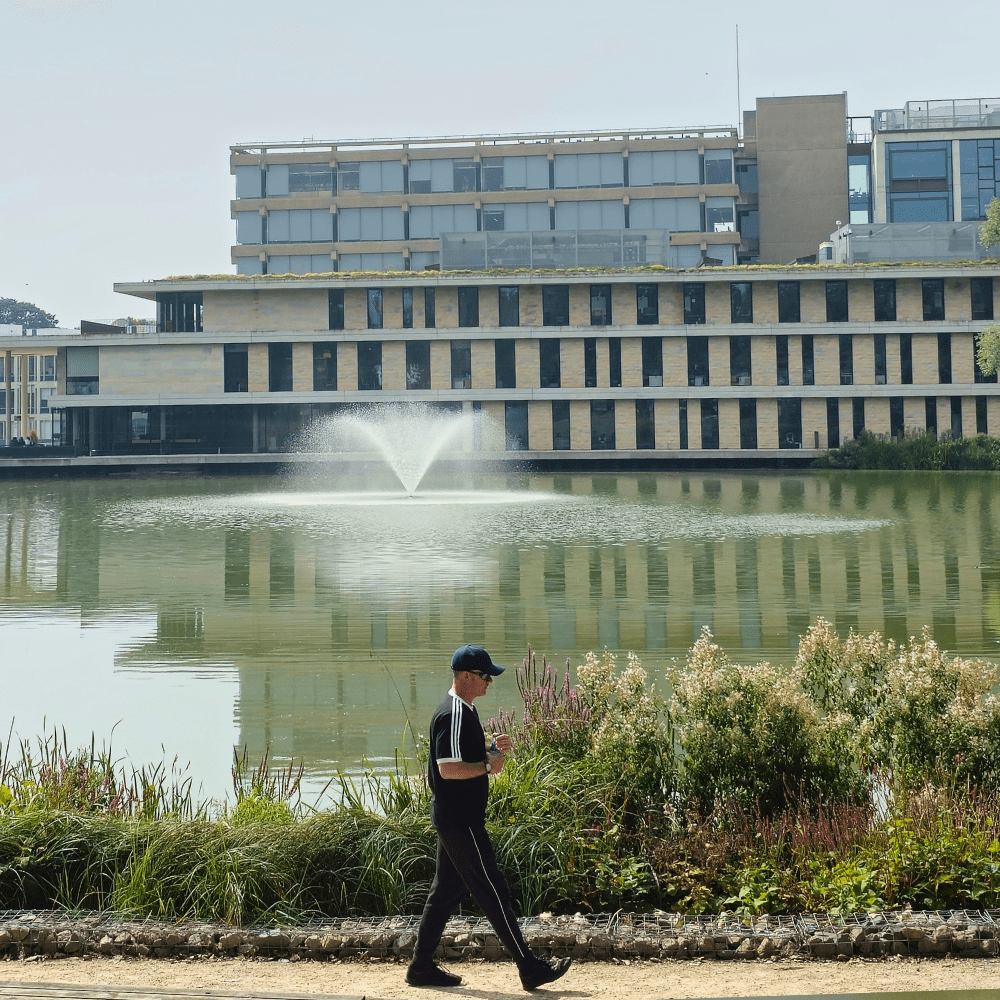
Set within 200 acres of award-winning parkland - Wivenhoe Park and located two miles from the historic city centre of Colchester – England's oldest recorded development. Our Colchester Campus is also easily reached from London and Stansted Airport in under one hour.
If you live too far away to come to Essex (or have a busy lifestyle), no problem. Our 360-degree virtual tour allows you to explore our University from the comfort of your home. Check out our Colchester virtual tour to see accommodation options, facilities and social spaces.
Chat to us
Got a question about this course? Chat with one of our academics in the Department of Psychology.
At Essex we pride ourselves on being a welcoming and inclusive student community. We offer a wide range of support to individuals and groups of student members who may have specific requirements, interests or responsibilities.
The University makes every effort to ensure that this information on its programme specification is accurate and up-to-date. Exceptionally it can be necessary to make changes, for example to courses, facilities or fees. Examples of such reasons might include, but are not limited to: strikes, other industrial action, staff illness, severe weather, fire, civil commotion, riot, invasion, terrorist attack or threat of terrorist attack (whether declared or not), natural disaster, restrictions imposed by government or public authorities, epidemic or pandemic disease, failure of public utilities or transport systems or the withdrawal/reduction of funding. Changes to courses may for example consist of variations to the content and method of delivery of programmes, courses and other services, to discontinue programmes, courses and other services and to merge or combine programmes or courses. The University will endeavour to keep such changes to a minimum, and will also keep students informed appropriately by updating our programme specifications. The University would inform and engage with you if your course was to be discontinued, and would provide you with options, where appropriate, in line with our Compensation and Refund Policy.
The full Procedures, Rules and Regulations of the University governing how it operates are set out in the Charter, Statutes and
Ordinances and in the University Regulations, Policy and Procedures.


.png?mw=300)