MA Heritage and Museum Studies with Professional Placement offers a unique opportunity for you to gain relevant work experience within an external business or organisation, giving you a competitive edge in the job market and providing you with key contacts within the industry. The placement is undertaken between the taught part of the course and the individual project. Its aim is to allow you to acquire industry experience and, especially, develop an appreciation of how the skills acquired in the taught part of the course can be applied to real world work.
You’ll be responsible for securing your own work placement, but if you change your mind and decide not to do your placement, or if you are not able to secure a placement, you can start your dissertation earlier and complete your Masters in the first year.
Our interdisciplinary MA Heritage and Museum Studies offers specialist, practically-grounded and academic training exploring these questions and more. Our intensive degree emphasises the real-world relevance of debates surrounding cultural patrimony, and the ways in which it is presented and consumed.
The MA is made up of core and optional modules, where you will develop knowledge of the field and practical skills, all while pursing your own specialist interests in the field of heritage.
You will study topics including:
Heritage and human rights
Digital heritage and advanced digital literacy skills
Sustainability and ecological heritage
Curatorial practice and practical curatorial skills
Hands-on heritage skills and experience
Public engagement
Museum experience
Why we're great.
Gain skills and knowledge of heritage policy, management, conservation, education, engagement and enterprise.
Gain experience working with galleries (e.g. Firstsite Gallery), museums (Royal Academy of Arts, V&A Museums), and heritage facilities and institutions (e.g. CNR Italy, English Heritage, ICCROM, digital heritage companies such as ThinkSee3D, Marconi Archive).
Combine your studies with hands-on work experience through your placement,
Our expert staff
We are a team of internationally recognised writers and lecturers with expertise across the arts, humanities and social sciences. You are taught by a highly qualified, enthusiastic team with wide-ranging research interests and a proven academic scholarship.
Our core staff consists of a dynamic group of world-leading heritage specialists and art historians: Dr Paola di Giuseppantonio di Franco, Dr William Carruthers, Dr Michael Tymkiw, and Dr Matt Lodder. Their research interests span a range of cultures and media, from the early modern to the present, with core specialisms including digital heritage, exhibition making, alternative and political heritages, environmental heritage, public engagement, activism, artistic, social and political history. Other staff who will be teaching are scholars engaging with heritage, public engagement and museums from multiple disciplines.
Specialist facilities
At Essex, you have the best of both worlds: on the one hand, you are part of a tight-knit, campus community with close ties to several small but excellent museums and heritage sites in the nearby towns of Colchester ('Britain's First City'), on the other hand, you can travel from campus to London in an hour, which puts the world's best museums, galleries, and heritage sites at your fingertips.
Our facilities enable you to gain curatorial experience, engage in object-based learning, and learn digital skills, a cornerstone of our approach to heritage and museums.
We have close links with many cultural sites and institutions in Colchester, which support hands-on activities and your practical learning.
Supported by our Centre for Curatorial Studies, you will benefit from our partnerships with major arts and cultural organisations to find out what it means to be work in this challenging sector.
Our Essex Collection of Art from Latin America (ESCALA) is the most comprehensive Latin American art research resource in the UK and has a state-of-the-art teaching and research space. Many of our students gain work and research experience through our collection.
Our university Special Collections include many objects and archives of contested heritage spanning hundreds of years, resources that can be the focus of MA student projects.
Your future
On completing this MA you will be well prepared to either undertake further postgraduate study in heritage, or to enter the workplace in the heritage industry, museums and related fields.
Graduates from our programmes are ideally prepared for roles in museums and galleries, in education (in schools, universities, and cultural institutions), as conservators and specialist art lawyers (with additional training and qualifications), as auctioneers, dealers and antiques specialists, the digital and creative media industries, in charities, in publishing, as PR agents, in fashion, or to run their own galleries.
Our recent graduates have gone on to work for a wide range of high-profile companies, including:
National Portrait Gallery
Victoria and Albert Museum
Sotheby's New York
Momart Ltd
John Lewis
We also offer research supervision for PhD and MPhil for those who want to continue with research.
We also work with the University's Careers Service to help you find out about further work experience, internships, placements, and voluntary opportunities.
Course content
Course structure
We offer a flexible course structure with a mixture of core/compulsory modules, and optional modules chosen from lists.
Our research-led teaching is continually evolving to address the latest challenges and breakthroughs in the field. The course content is therefore reviewed on an annual basis to ensure our courses remain up-to-date so modules listed are subject to change.
Components and modules explained
Components
Components are the blocks of study that make up your course. A component may have a set module which you must study, or a number of modules from which you can choose.
Each component has a status and carries a certain number of credits towards your qualification.
Status
What this means
Core
You must take the set module for this component and you must pass. No failure can be permitted.
Core with Options
You can choose which module to study from the available options for this component but you must pass. No failure can be permitted.
Compulsory
You must take the set module for this component. There may be limited opportunities to continue on the course/be eligible for the qualification if you fail.
Compulsory with Options
You can choose which module to study from the available options for this component. There may be limited opportunities to continue on the course/be eligible for the qualification if you fail.
Optional
You can choose which module to study from the available options for this component. There may be limited opportunities to continue on the course/be eligible for the qualification if you fail.
The modules that are available for you to choose for each component will depend on several factors, including which modules you have chosen for other components, which modules you have completed in previous years of your course, and which term the module is taught in.
Modules
Modules are the individual units of study for your course. Each module has its own set of learning outcomes and assessment criteria and also carries a certain number of credits.
In most cases you will study one module per component, but in some cases you may need to study more than one module. For example, a 30-credit component may comprise of either one 30-credit module, or two 15-credit modules, depending on the options available.
Modules may be taught at different times of the year and by a different department or school to the one your course is primarily based in. You can find this information from the module code. For example, the module code HR100-4-FY means:
HR
100
4
FY
The department or school the module will be taught by.
In this example, the module would be taught by the Department of History.
Who controls the raw materials of History? Historians depend on archives: for manuscripts, printed and digitised documents, photographs and images, textiles, oral histories, film and many other types of source.
It's only relatively recently, however, that we've started to look 'behind the catalogues' to examine critically the systems and structures of actual archives as specific sites of practice and to question the power relationships they preserve and/or hide. This module asks questions about what's been collected and how it's been organised, what's got 'lost', destroyed or withheld, and how and why records have been used, neglected and 'discovered'. It's also about whose voices and stories get included and excluded and why.
This module flips our perspective as historians. We'll start from the other side of the enquiry desk, working towards a critical understanding of what archivists do, how archives are made and operate and how power is built into their structures. Records are always political and their use and abuse can have serious, sometimes catastrophic, human consequences (as we've seen in the recent Windrush scandal) – but they can also empower people, aid the pursuit of justice and foster a sense of community. So we'll also look at case studies, including one chosen by the class, to give us new insights into archives as sites of power.
This co-curricular module comprises a series of fortnightly lectures by academics and some museum professionals to present current research. Lectures will cut across different geographies and chronological limits, encouraging students to think broadly about key formal, conceptual, and political issues that have informed the history of art and curation.
Postgraduate students in the School of Philosophical, Historical and Interdisciplinary Studies usually attend a one-hour lecture and one-hour seminar for each module each week or workshops.
Entry requirements
UK entry requirements
A 2:2 degree in any discipline with a minimum of 3 modules relating to visual culture:
Visual Culture modules include, but are not limited to:
Advertising
Aesthetics
Archaeology
Architecture
Art History
Curatorial/Museum Studies
Digital Imaging
English Literature
Fashion
Film Studies
Film and Literature
Fine Art
Graphic Design
History
Landscape Design
Media Studies
Photography
If you do not hold a degree which includes relevant modules, then we can still consider you. You should be able to show that you have relevant professional experience in one of the following fields:
Archaeological site
Fashion
Gallery
Museums
Publishing
Theatre
Other cultural institution
If you do not have a relevant degree or relevant experience, then we may ask you to provide a sample of written work which demonstrates your interest in this field.
International & EU entry requirements
We accept a wide range of qualifications from applicants studying in the EU and other countries. Get in touch with any questions you may have about the qualifications we accept. Remember to tell us about the qualifications you have already completed or are currently taking.
Sorry, the entry requirements for the country that you have selected are not available here. Please contact our Graduate Admissions team at pgquery@essex.ac.uk to request the entry requirements for this country.
English language requirements
If English is not your first language, we require IELTS 6.5 overall with a minimum
component score of 6.0 in writing and 5.5 in all other components.
If you do not meet our IELTS requirements then you may be able to complete a pre-sessional English
pathway that enables you to start your course without retaking IELTS.
Additional Notes
The University uses academic selection criteria to determine an applicant’s ability to
successfully complete a course at the University of Essex. Where appropriate, we may ask
for specific information relating to previous modules studied or work experience.
Fees and funding
Home/UK fee
£11,600 per year
International fee
£25,075 per year
Fees will increase for each academic year of study.
We hold Open Days for all our applicants throughout the year. Our Colchester Campus events are a great way to find out more about studying at Essex, and give you the chance to:
tour our campus and accommodation
find out answers to your questions about our courses, student finance, graduate employability, student support and more
meet our students and staff
If the dates of our organised events aren’t suitable for you, feel free to get in touch by emailing tours@essex.ac.uk and we’ll arrange an individual campus tour for you.
We aim to respond to applications within two weeks. If we are able to offer you a place, you will be contacted via email.
For information on our deadline to apply for this course, please see our ‘how to apply' information.
Visit Colchester Campus
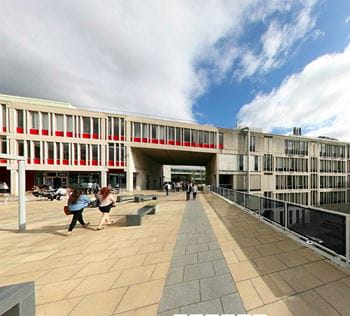
Set within 200 acres of award-winning parkland - Wivenhoe Park and located two miles from the historic city centre of Colchester – England's oldest recorded development. Our Colchester Campus is also easily reached from London and Stansted Airport in under one hour.
If you live too far away to come to Essex (or have a busy lifestyle), no problem. Our 360-degree virtual tour allows you to explore our University from the comfort of your home. Check out our Colchester virtual tour to see accommodation options, facilities and social spaces.
At Essex we pride ourselves on being a welcoming and inclusive student community. We offer a wide range of support to individuals and groups of student members who may have specific requirements, interests or responsibilities.
The University makes every effort to ensure that this information on its programme specification is accurate and up-to-date. Exceptionally it can be necessary to make changes, for example to courses, facilities or fees. Examples of such reasons might include, but are not limited to: strikes, other industrial action, staff illness, severe weather, fire, civil commotion, riot, invasion, terrorist attack or threat of terrorist attack (whether declared or not), natural disaster, restrictions imposed by government or public authorities, epidemic or pandemic disease, failure of public utilities or transport systems or the withdrawal/reduction of funding. Changes to courses may for example consist of variations to the content and method of delivery of programmes, courses and other services, to discontinue programmes, courses and other services and to merge or combine programmes or courses. The University will endeavour to keep such changes to a minimum, and will also keep students informed appropriately by updating our programme specifications. The University would inform and engage with you if your course was to be discontinued, and would provide you with options, where appropriate, in line with our Compensation and Refund Policy.
The full Procedures, Rules and Regulations of the University governing how it operates are set out in the Charter, Statutes and
Ordinances and in the University Regulations, Policy and Procedures.
3.png?mw=300)