


Year 1, Component 07
Managers increasingly find themselves working across borders calling for a thorough understanding of issues that relate to cross cultural management. In this course you enhance your understanding of the way in which globalisation and international business activities affect management and management practices across cultures.
Business is international in scope as managers take advantage of the comparative advantages countries around the world offer through complex and geographic dispersed value chains, not only to sell products but also to access intermediate goods, capital, knowledge and skills. This module, built around a live, practical project addresses several questions. 'How can a domestic firm internationalise its operations?' 'How are its resources and capabilities challenged and transformed by internationalisation?' 'What factors determine the success of an international business operation?' While many practical examples are provided, focus is given to developing an analytical approach to addressing these questions, drawing on two perspectives. These are the Resource-based view, which focuses on the resources and capabilities of the firm, and the Institution-based view which requires studying the differences in the business environment around the globe, to which successful companies need to adapt. The module considers political, economic and cultural difference and the strategies companies adopt when conducting business across national boundaries. Through the group project, students analyse the internationalisation of a real life organisation, identifying the purpose of internationalisation, selecting the most appropriate target market and considering the various means available to the firm to internationalise its operations. Topical issues in international business are also discussed towards the end of the module, such as the impact of Brexit on the trading relationship of the UK, the re-emergence of emerging market MNEs, 'born global' firms and the fourth industrial revolution.
This module is designed to encourage you to experience, think about and reflect upon the nature of creativity and innovation within organisations. The module invites you to consider a wide range of aspects related to the interconnected areas of collective creativity and collaborative innovation, and offers an advanced understanding of organisational change in contexts where creativity and innovation emerge as a key challenge or a strategic necessity. Specific attention is given to the role of leadership in shaping and sustaining such creative and innovative efforts. Throughout the module, you will explore major theoretical approaches and practices related to creativity, collective creativity, creative leadership and collaborative innovation. Key theories are examined and used as interpretative lenses to deepen your understanding of business cases of leading and enhancing creativity and innovation. This theoretical background also supports the development of activities and exercises that together form a toolkit for leading creativity and innovation, particularly in relation to plural and collective forms.
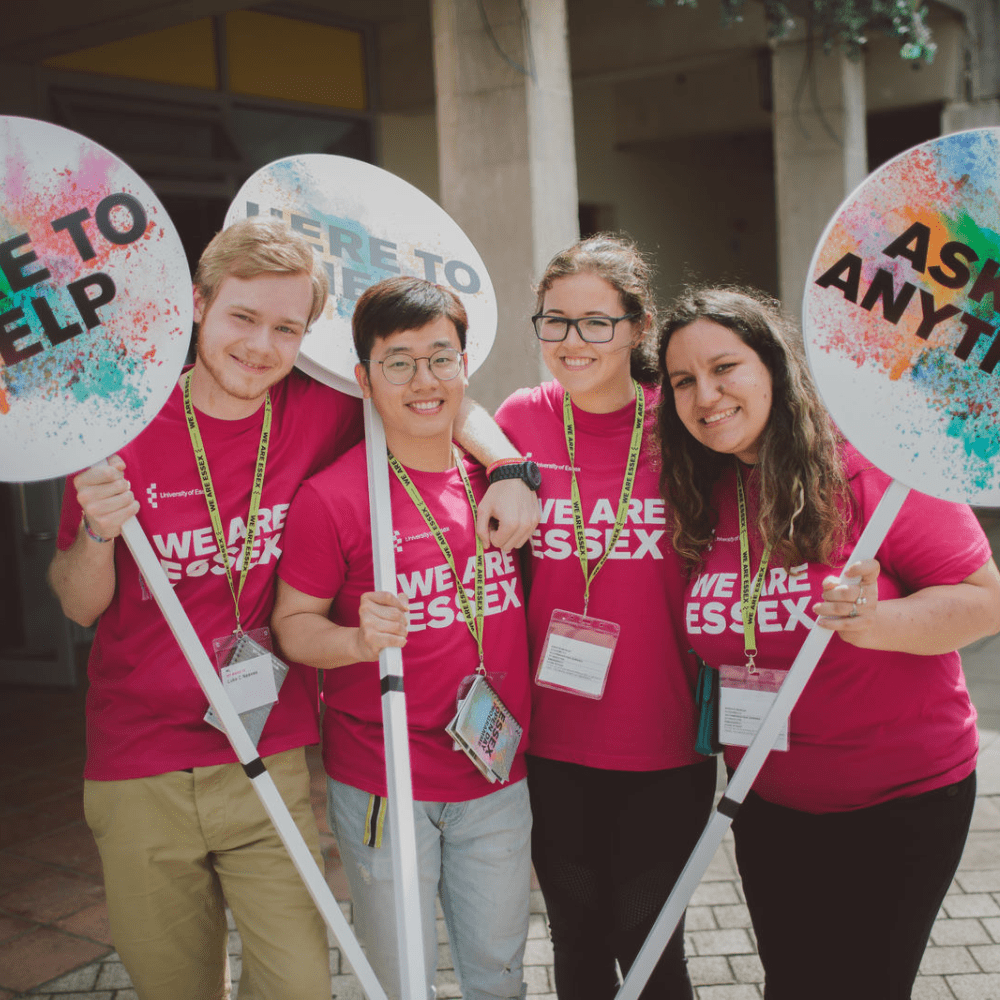
At Essex we pride ourselves on being a welcoming and inclusive student community. We offer a wide range of support to individuals and groups of student members who may have specific requirements, interests or responsibilities.
The University makes every effort to ensure that this information on its programme specification is accurate and up-to-date. Exceptionally it can be necessary to make changes, for example to courses, facilities or fees. Examples of such reasons might include, but are not limited to: strikes, other industrial action, staff illness, severe weather, fire, civil commotion, riot, invasion, terrorist attack or threat of terrorist attack (whether declared or not), natural disaster, restrictions imposed by government or public authorities, epidemic or pandemic disease, failure of public utilities or transport systems or the withdrawal/reduction of funding. Changes to courses may for example consist of variations to the content and method of delivery of programmes, courses and other services, to discontinue programmes, courses and other services and to merge or combine programmes or courses. The University will endeavour to keep such changes to a minimum, and will also keep students informed appropriately by updating our programme specifications. The University would inform and engage with you if your course was to be discontinued, and would provide you with options, where appropriate, in line with our Compensation and Refund Policy.
The full Procedures, Rules and Regulations of the University governing how it operates are set out in the Charter, Statutes and Ordinances and in the University Regulations, Policy and Procedures.