Challenging perspectives and shaping the future of public service accounting and accountability
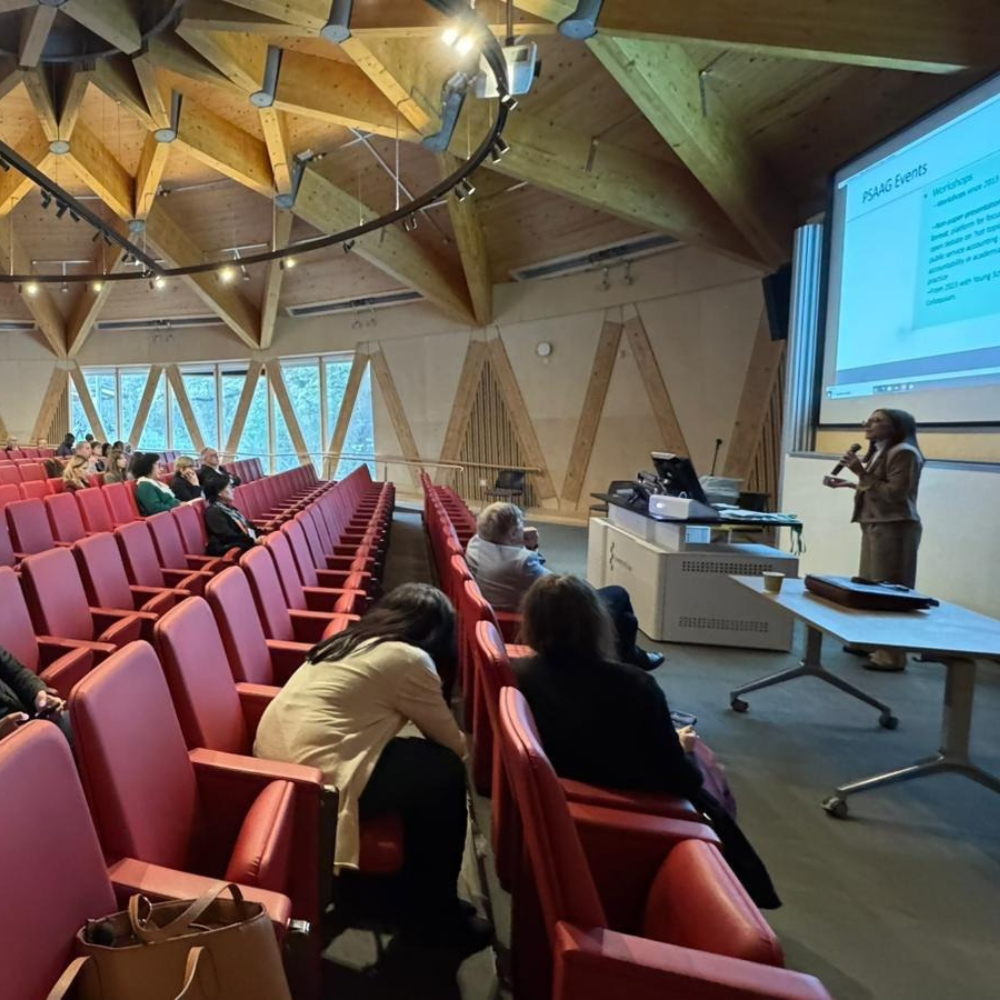
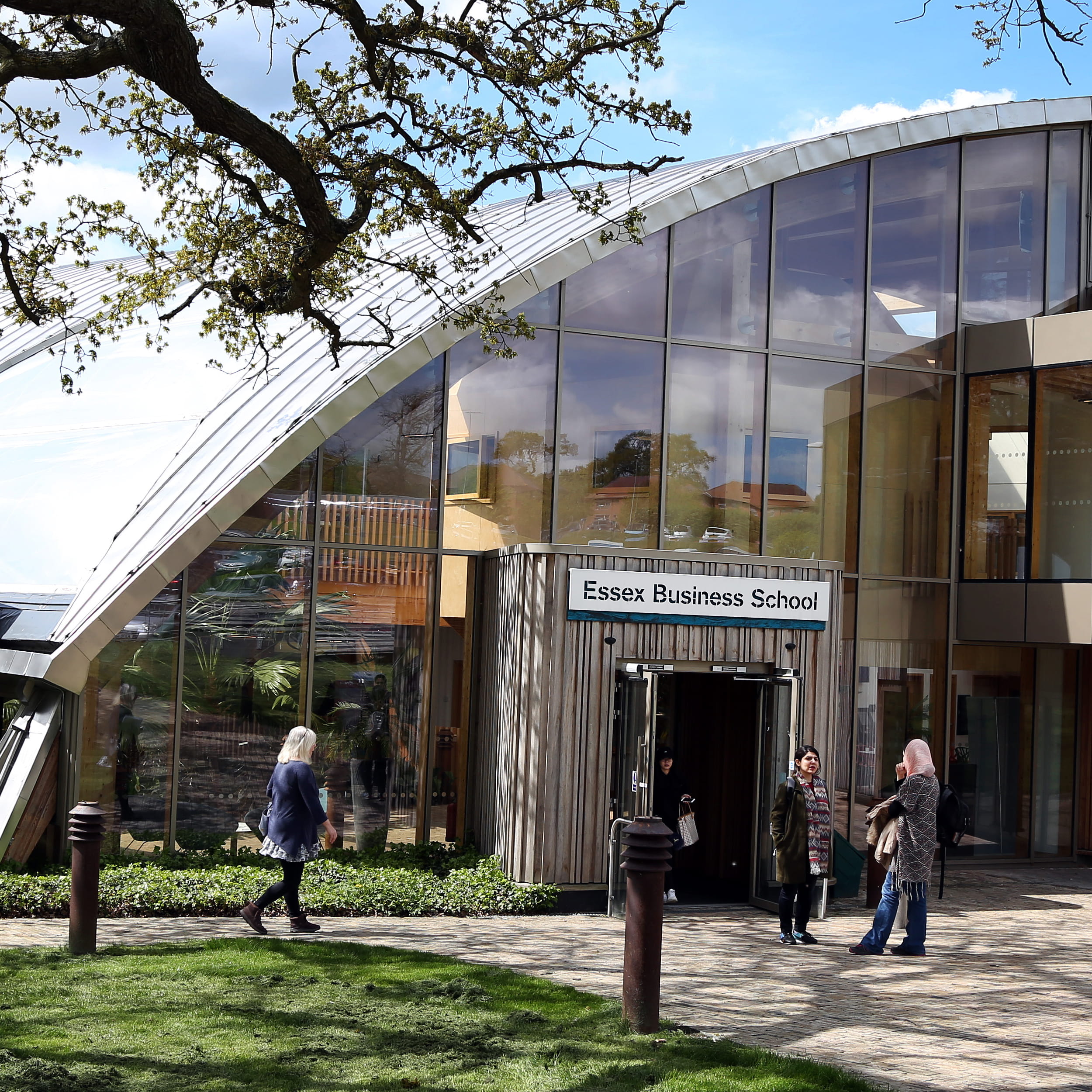
The Public Service Accounting and Accountability Group (PSAAG) Workshop was hosted by Essex Business School, University of Essex, on 5 and 6 November 2025. More than 80 scholars, practitioners, and early-career researchers were involved in two days of collaborative discussion, critical reflection and open dialogue across the theme; Accounting for what matters: Rethinking public sector accounting and accountability for social sustainability and equity.
This year’s workshop created a platform to explore new directions, strengthen community relationships, and build bridges between academic research and public service practice through an energetic Early Career Colloquium, interactive plenaries and thematic breakout sessions.
Supporting the Next Generation of Scholars
The workshop started with a highly engaged Early Career Colloquium, where 14 Early Career Researches presented their projects, received thoughtful feedback by an assigned discussant and interacted with the audience building new networks and promoting their ideas spanning a wide range of research themes. The strong participation from young researchers, alongside mentoring from senior academics, highlighted a vibrant and growing future for public service accounting and accountability research. The conversations that followed set a collaborative tone for the remainder of the workshop.
Plenary Reflections: Hope and Resilience in Challenging Times
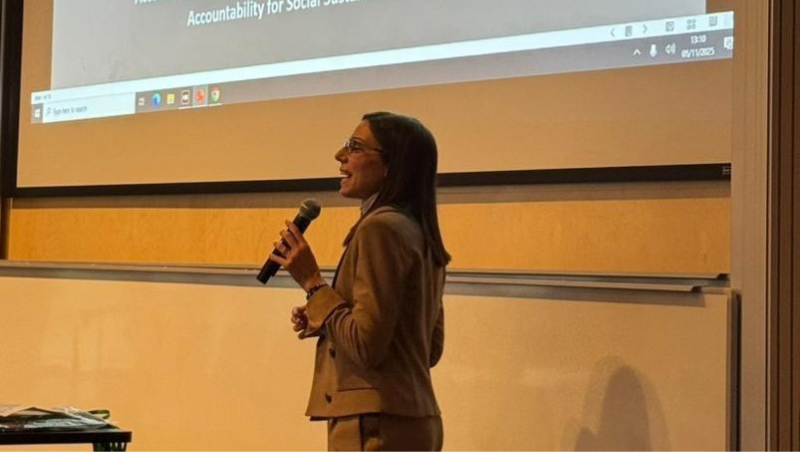
The first plenary session by Professor Noel Hyndman (Queen’s University Belfast & Durham University), who offered a compelling and timely talk: The Great University Challenges: Sustaining Hope Through Adversity? The presentation explored the pressures facing higher education institutions and examined how resilience and sustainability can (hopefully) be cultivated despite increasing environmental uncertainty.
The second plenary with Dr Sean McCandless, whose speech on Operationalizing administrative fairness: Six comparative lessons, reviewed global approaches to promoting fairness in public administration. It provoked significant discussion around how discourses shapes values in public administration, what are the strategies organisations resort to define equity in practical terms, and the role of equity champions – including public service education – in advancing equity adoption.
Engaging and reflective breakout sessions
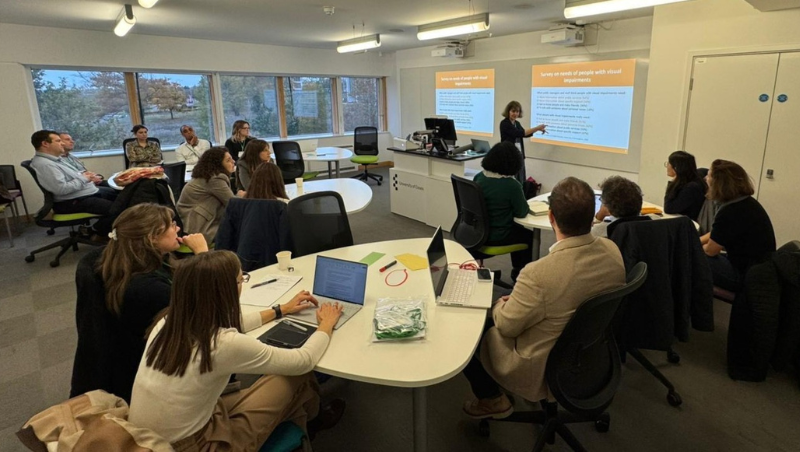
Advancing themes collaboratively Throughout the workshop, parallel interactive sessions invited participants to share practical reflections, experiences, and questions within two thematic areas:
- Building organisational capabilities for collaborative sustainable outcomes, facilitated by Dr Elke Loeffler and later by Dr Carmela Barbera and Professor Ting Xu, examined how co-production, equity, and inclusion can strengthen system-wide resilience. In both sessions, in-depth reflections led to the potential creation of a networking group to continue the debate, collaborate and promote research on the topic.
- Strengthening democratic accountability and operationalising social sustainability, facilitated by Professor Matt Ryan and Professor Rebecca Warren, encouraged discussion on democratic innovation, citizen engagement, and transformative accountability. Potential opportunities for further collaboration were identified in the sessions, including interdisciplinary collaborations and future call for papers.
Celebrating Excellence
This year also included a special moment of community celebration: the 2025 Irvine Lapsley Public Service Accounting and Accountability Group Lifetime Achievement Award, presented during the evening dinner, and handled by Professor Ileana Steccolini to Professor Noel Hyndman for his outstanding career. The dinner provided an opportunity not only to honour his contribution to the field, but also to strengthen friendships and build new collaborations in an informal and warm setting.
Extending the Workshop Dialogue: FAM Special Issue
Building directly on the workshop’s central theme, the PSAAG Workshop was associated with a forthcoming Financial Accountability & Management (FAM) Special Issue, Accounting for What Matters: Rethinking Public Sector Accounting and Accountability for Social Sustainability and Equity.
The Special Issue invites contributions that critically examine how accounting and accountability frameworks shape - and can be reshaped to support - equity, inclusion, resilience, and long-term public value in the face of austerity, crises, and systemic inequalities. Reflecting many of the debates that animated the plenaries and breakout sessions, the call encourages conceptual, empirical, and interdisciplinary work, including collaborative papers between academics and practitioners, using a range of methods.
With submissions open until 30 June 2026, the Special Issue offers a timely opportunity to translate the rich discussions of the PSAAG Workshop into impactful scholarship that pushes the boundaries of public service accounting and accountability research.
The PSAAG workshop in brief
- Bridging academic fields and academy-practice, strengthening real-world impact
- Supporting early career researchers through strong participation and mentoring
- Growing a collaborative international community devoted to public service accountability
- Interactive roundtables and dynamic, engaged, debate
- Shared celebration, friendship, and networking
- Stimulating discussions about future plans, including the creation and maintenance of epistemic communities, innovative call for papers (e.g., messiness of research) and supporting contributions to the upcoming FAM special issue.
We look forward to continuing these discussions following from the amazing experience e at the University of Essex.
The PSAAG 2025 Scientific Committee was formed by Dr André Lino, Professor Ileana Steccolini, Dr Bernard Dom, Dr Deborah Agostino, Professor Iris Saliterer, Professor Enrico Bracci, Professor Mariafrancesca Sicilia and Professor Florian Gebreiter. The Organising Committee included members of the Scientific Committee with the support of Essex Business School colleagues: Professor Pawan Adhikari, Dr Chaminda Wijethilake, Dr John Azure, Dr Anne Steinhoff.