Sean Seeger: Q&A on Open Access Publication
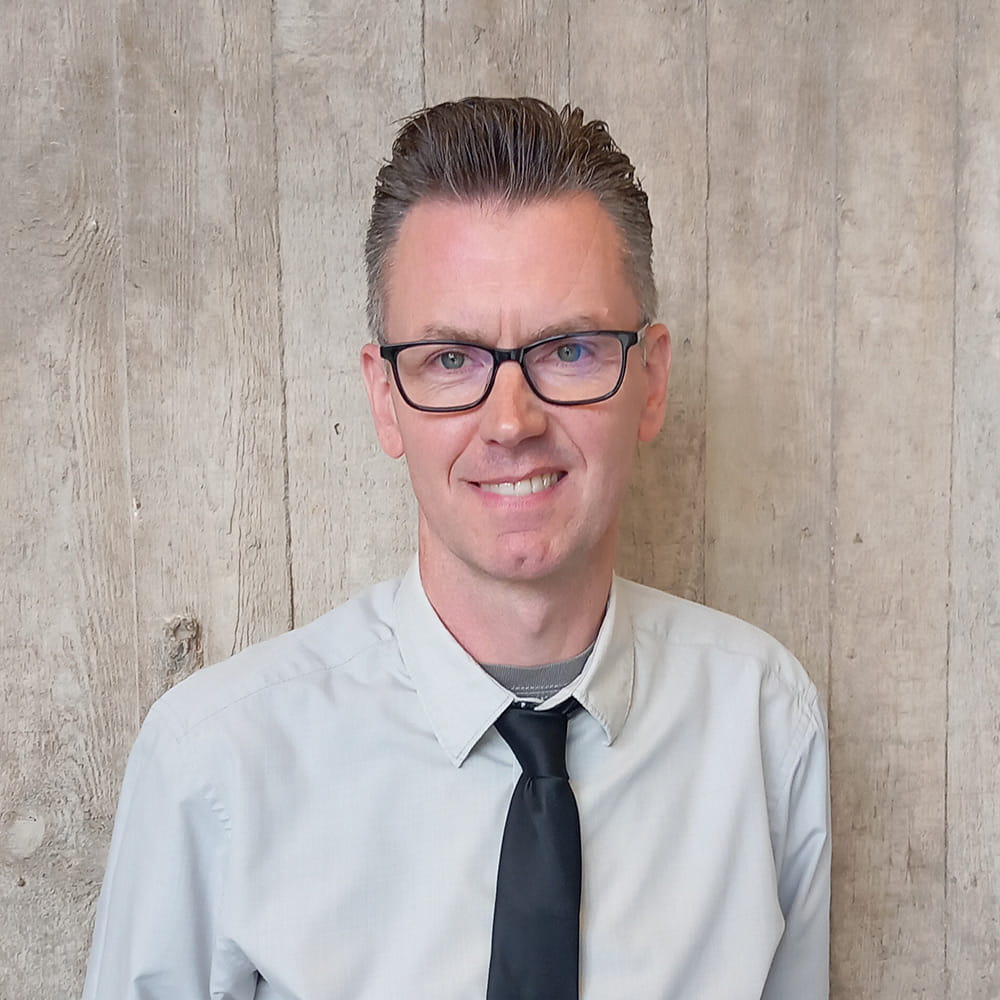
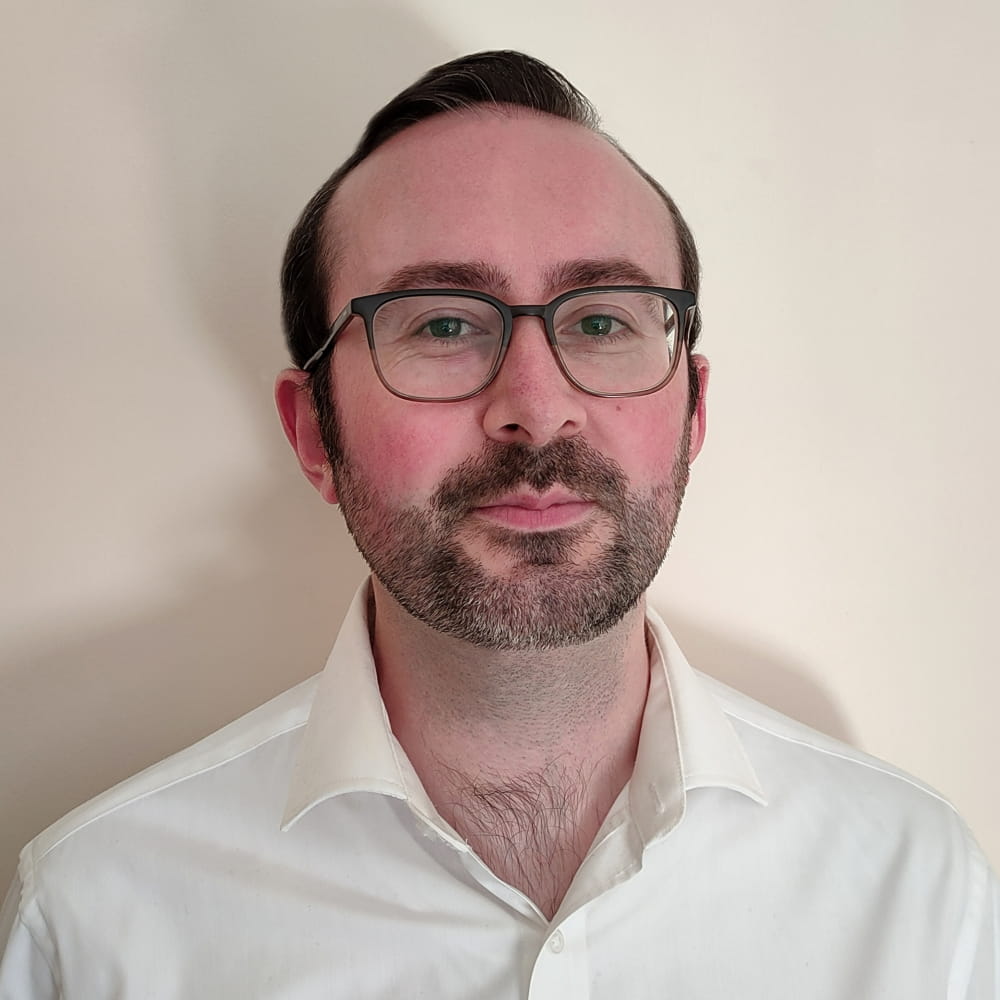
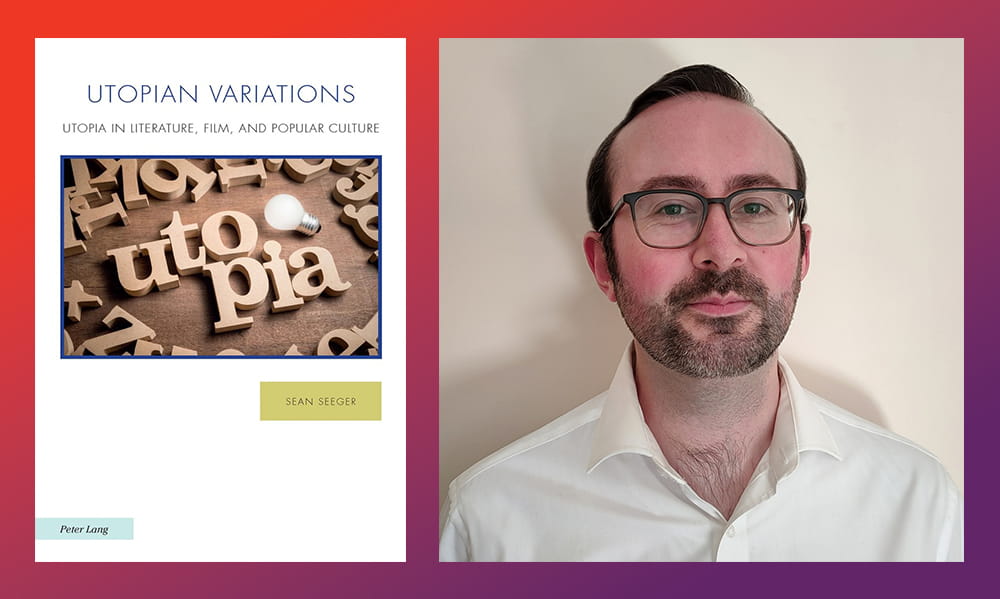
Dr Sean Seeger, Senior Lecturer in Modern and Contemporary Literature in the Department of Literature, Film, and Theatre Studies, recently published his monograph Utopian Variations: Utopia in Literature, Film, and Popular Culture, with the Open Access edition supported by the University of Essex Open Access Fund.
A comparative critical study of a variety of kinds of utopia and utopian discourse, it is available to download free of charge now.
Congratulations on your monograph! How does it feel to see it available online and in print?
Thank you very much! I am thrilled to see my book in print and available for others to read at last. The book is the product of many years of work, and I am delighted with the finished result.
When did you begin work on it and was it always intended to be a monograph?
I began researching utopias and dystopias almost twelve years ago now, and I always knew that I wanted to write a book-length study of the topic. I have published numerous journal articles and book chapters in the field of utopian studies, some of which provided a useful space in which to test out ideas that are developed in much more detail in Utopian Variations. I officially began writing the book some time in 2022 but quickly realised that the ideas and material I had amassed were going to result in a book that would be too long (around 200,000 words) and rather unwieldly. That’s when I had the idea of publishing two separate but linked volumes: one focusing (almost) exclusively on utopia, and a second focusing (almost) exclusively on dystopia. I therefore already have a sizeable amount of the second instalment on my computer in note form – now all I need is the time to properly write it up! So, to come back to your question, the project was intended to be a monograph but has morphed into two monographs along the way.
What inspired you to take such a unique approach to ideas of utopia?
The academic subfield of utopian studies came into being in the 1970s, partly in response to some of the radical countercultural tendencies that were in circulation at that time. Since then, scholars in the area have approached utopia from all manner of perspectives and identified a considerable range of types of utopian text, including the so-called classical utopia (which generally centres on a blueprint for an ideal society), the anti-utopia (an ostensibly utopian society that on closer inspection reveals itself to be somehow oppressive), the critical utopia (a utopia which moves away from utopian blueprints and incorporates an awareness of its own limitations), and many others. These are all fascinating topics, to be sure, but they have been covered quite exhaustively within utopian studies. Through my immersion in the field, I gradually identified a number of kinds of utopia and forms of utopian discourse that had either been relatively neglected by scholars or which had received no meaningful engagement at all. Once I had identified a range of these and could start to see how I might articulate their significance, this suggested both a starting point for the book as well as a suitable title: Utopian Variations.
Can you tell us about some of the topics you cover?
Certainly. A first strand of the book is concerned with the relationship between utopia and literary modernism, which was a highly experimental and innovative kind of literature produced during the late nineteenth- and early twentieth-century. My focus there is on the ways in which the radical promise of modernist culture was translated into utopian fiction of a highly original and ambitious kind by the British writer Olaf Stapledon. In my chapter on Stapledon, I make what I believe is a strong case for viewing him as part of the modernist movement, mainly on account of the formal experimentalism of his work, his experiences during the First World War, and his complex relationship with the work of other, more familiar modernist writers, such as T. S. Eliot and Virginia Woolf.
The following chapter offers a reappraisal of the career of Aldous Huxley in terms of a recent scholarly debate about what has come to be called postsecularism, which is a way of thinking about the persistence of religious belief and practice within largely secular societies. Huxley’s is a particularly interesting case study in this regard: not only was he writing decades before most of the writers generally associated with postsecularism, he also draws extensively on Eastern spiritual traditions, which gives his utopianism a very specific inflection.
Meanwhile, most of the rest of the book is focused on twenty-first-century developments. In the case of transhumanism, I am interested (not to mention alarmed) by the way in which members of the subculture of Silicon Valley are increasingly invested in attaining immortality and transcending physical embodiment. While the proponents of this outlook understand it as anticipating a utopian future, in my chapter I place this trend in a wider ecological context and look at how contemporary writers and theorists are exploring its potential consequences for life on our planet. Later chapters consider how the Covid-19 pandemic, recent speculation about postcapitalism, and what I see as a resurgence of utopian discourse since the 2007–8 financial crisis have all impacted how we imagine utopia today.
Can you share some examples of film, literature, and popular culture that you’ve drawn on?
The examples that I analyse are drawn from a quite wide range of sources and mediums. This is because I am interested in utopia not only as a series of works of literary fiction, but as a set of tendencies that can be found throughout modern and contemporary culture. For example, I find noteworthy articulations of utopian hope in a science fiction novel from the 1930s, a spiritual self-help book from the 1940s, several works of queer theory from the 1980s and 90s, a fictionalised thought experiment by former Greek Minister of Finance Yanis Varoufakis, a number of popular films, the technofeminist political pamphlet The Xenofeminist Manifesto, and a series of blog posts by the cultural theorist Mark Fisher. While the book very much reflects my background in literary studies, I would like to think that the range of other kinds of text it addresses helps to illustrate how varied and widely diffused utopianism has become in today’s world.
Do you have a favourite among the utopias discussed in your book?
That’s a very good question! Inevitably, when you spend a lot of time around a collection of texts, you notice things in each of them that complicate your relationship to them, sometimes in ways that make it hard to arrive at a definitive verdict on them. Whatever its limitations, though, a text I still have great affection for is Olaf Stapledon’s Last and First Men, a truly epic and unclassifiable novel which bills itself as a ‘future history’ and reads like a historian’s account of the next two billion years of human history as if written from the point of view of the distant future. Even after subjecting the book to considerable critical scrutiny, I find I am still in awe of the imaginative power that Stapledon displays throughout.
With it being such a wide-ranging survey, your book does seem ideal for Open Access. Is that why you chose that route?
That is certainly one way in which the book lends itself to Open Access publication, yes. Another reason is that I have become convinced that Open Access in one form or another represents the future of academic publishing. I realise that there are still issues to be resolved and that there are various barriers to universal Open Access at present, but from everything I am reading it seems that this is the route all scholars will be using for their publications before too long – at least, I very much hope so!
How did you find the Open Access process? What advice would you give anyone considering it?
The Open Access process was incredibly straightforward and painless – I can’t emphasise this point enough. After my initial email to the Library and Cultural Services team, I received prompt, informative, crystal clear guidance from Open Access Fund Co-ordinator Sean Andersson. The next step was informing the publisher, who duly liaised with the Library and Cultural Services team directly. Once they had come to an agreement about how the open access fee would be paid for by the university, I simply had to reconfirm with the publisher that that was what I wanted to do, and that was it.
The one piece of advice I would give others applying for Open Access is that they ought to approach the Library and Cultural Services team as early in their project as possible. This will give the team time to work out the financial details and determine at what point in the academic calendar Essex will be able to pay the publisher’s fee.
Do you use any Open Access or Open Educational Resources in your own teaching?
I have only made minimal use of Open Access publications on my modules to date because relatively few of the books, chapters, and articles in my field are available via Open Access. That said, in the last year I have noticed that more and more publications by scholars whose work I regularly draw on are now starting to appear via Open Access, so there are definitely signs that things are changing in this regard.
How do you plan to take advantage of Open Access to share and publicise your book?
I will be sharing it with peers over email, linking to it in my email signature, publicising it on Bluesky, helping the Library and Cultural Services team to share it on LinkedIn and other platforms, approaching potential reviewers, asking for it to be included in the newsletters of relevant organisations, printing a copy of the cover to stick on my office door on campus, and anything else I can think of.
Utopian Variations is available to download free of charge now.
The Open Access Fund
The University’s dedicated fund remains in place to help Essex academics publish their research Open Access. If you want to know whether the fund can support your work please just ask us by completing one of our brief forms:
- Journal articles
- Monographs and book chapters (manuscripts due to be submitted from August 2026 onward only)