Postgraduate Course

MFA Acting for Digital Media

MFA Acting for Digital Media

Overview

The details
Acting for Digital Media
October 2026
Full-time
2 years
Colchester Campus

East 15 Acting School's MA/MFA Acting for Digital Media is a full-time, professional and intensive training program designed specifically for performers who wish to expand their skill base to be able to seek and thrive in the technological advances in the performance industry.

With the advancement of digital technology, new pathways are opening up in performing arts and the course emphasises three keys areas of training: performance capture, voice skills for digital recordings and acting for camera.

The use of Motion / Performance capture in the industry is on the rise and there is a demand for performers with specific skill sets and experience in order to excel in the area. While the standard movement and voice skills provided at UG level form a base for most all performance work, this MA/MFA focuses on understanding, working with, and making the most of new technology. This degree recognises that a performer has multiple pathways for employability and professional development, particularly looking at the role of the performer in the gaming industry.

In addition to performing for motion capture, due to advances in technology and the relatively inexpensive option of creating a home voice studio, opportunities in voice acting has also seen an increase – and also require further expertise. Along with further training in Acting for Camera, the course will provide the training needed to succeed and shape the future of performance alongside new developments. MA Acting for Digital Media runs for 12 months on a full-time basis and the MFA for 20 months.

Why we're great.
  • East 15 is a fully accredited Drama UK school.
  • Teaching is carried out by experienced faculty as well as visiting artists and industry professionals
  • Use of state-of-the-art resources, including our new VICON motion capture volume and dedicated voice booth, and our extensive studio and performance spaces.

Our expert staff

Our training is by professionals and for professionals, allowing our graduates to work successfully across the globe.

Our international, outstanding teaching faculty is made up of professionals from all areas of live and recorded performance. The in-house faculty is supported by industry professionals with specific expertise in the areas being taught, ensuring the best teaching possible that is up to date with current developments in the field.

Learn more about our staff here.

Specialist facilities

Colchester Campus

From Autumn 2026, all East 15 Acting School courses currently delivered at the Southend Campus will move to the Colchester Campus.

This campus is set within 300 acres of parkland and located just two miles from the historic city centre of Colchester – England's oldest recorded development. The campus is easily reached from London and Stansted Airport in under one hour.

The Colchester Campus is home to some great facilities, including the 200-seat Lakeside Theatre and the landmark Albert Sloman Library. Other facilities include the Silberrad Student Centre, a selection of cafes, restaurants and street food outlets, the SU Bar, social spaces, the sports centre and gym, and a food market on Thursdays.

There is also a range of accommodation options which are within walking distance of campus facilities.

We’re undertaking work to create bespoke East 15 studio spaces and other specialist facilities at Colchester. In the meantime, you can take a virtual tour of the campus and accommodation facilities.

Your future

The MA/MFA in Acting for Digital Media is unique in that it addresses training that allows actors to thrive by understanding and tailoring performances for the form of digital capture, recognising that understanding technology and developing methodologies of rehearsal and performance in order to achieve high quality work is different from simply adapting existing technique to fit a series of parameters.

Entry requirements

UK entry requirements

Our applicants need to undertake a successful audition or video audition, plus have a first degree with an overall 2.2, or equivalent or suitable life and/or professional expertise.

International & EU entry requirements

We accept a wide range of qualifications from applicants studying in the EU and other countries. Get in touch with any questions you may have about the qualifications we accept. Remember to tell us about the qualifications you have already completed or are currently taking.

Sorry, the entry requirements for the country that you have selected are not available here. Please contact our Graduate Admissions team at pgquery@essex.ac.uk to request the entry requirements for this country.

English language requirements


If English is not your first language, we require IELTS 6.0 overall with a minimum component score of 5.5

If you do not meet our IELTS requirements then you may be able to complete a pre-sessional English pathway that enables you to start your course without retaking IELTS.

Additional Notes

The University uses academic selection criteria to determine an applicant’s ability to successfully complete a course at the University of Essex. Where appropriate, we may ask for specific information relating to previous modules studied or work experience.

Structure

Course structure

East 15 offers dynamic and unique courses for actors, directors and students of theatre practice. Training at East 15 draws upon 50 years of tradition combined with a keen sense of today's performance industry.

This course will bring together the training needed in a coherent programme that not only allows a graduate to attain the skills necessary for this specialist work, but also to see it in a holistic context that will enable them to grow as an artist and offer a rounded contribution to the developing industry. When combined in a single programme, voice acting, acting for performance capture and acting for screen enable students to see the multiple possibilities of gearing performance for a digital format; it combines an understanding of technology, body and voice so that performances are not merely captured digitally, but specifically tailored to excel because they are created for that media.

Teaching and learning disclaimer

Following the impact of the pandemic, we made changes to our teaching and assessment to ensure our current students could continue with their studies uninterrupted and safely. These changes included courses being taught through blended delivery, normally including some face-to-face teaching, online provision, or a combination of both across the year.

The teaching and assessment methods listed show what is currently approved for 2022 entry; changes may be necessary if, by the beginning of this course, we need to adapt the way we're delivering them due to the external environment, and to allow you to continue to receive the best education possible safely and seamlessly.

Components and modules explained

Components

Components are the blocks of study that make up your course. A component may have a set module which you must study, or a number of modules from which you can choose.

Each component has a status and carries a certain number of credits towards your qualification.

Status What this means
Core
You must take the set module for this component and you must pass. No failure can be permitted.
Core with Options
You can choose which module to study from the available options for this component but you must pass. No failure can be permitted.
Compulsory
You must take the set module for this component. There may be limited opportunities to continue on the course/be eligible for the qualification if you fail.
Compulsory with Options
You can choose which module to study from the available options for this component. There may be limited opportunities to continue on the course/be eligible for the qualification if you fail.
Optional
You can choose which module to study from the available options for this component. There may be limited opportunities to continue on the course/be eligible for the qualification if you fail.

The modules that are available for you to choose for each component will depend on several factors, including which modules you have chosen for other components, which modules you have completed in previous years of your course, and which term the module is taught in.

Modules

Modules are the individual units of study for your course. Each module has its own set of learning outcomes and assessment criteria and also carries a certain number of credits.

In most cases you will study one module per component, but in some cases you may need to study more than one module. For example, a 30-credit component may comprise of either one 30-credit module, or two 15-credit modules, depending on the options available.

Modules may be taught at different times of the year and by a different department or school to the one your course is primarily based in. You can find this information from the module code. For example, the module code HR100-4-FY means:

HR 100  4  FY

The department or school the module will be taught by.

In this example, the module would be taught by the Department of History.

The module number. 

The UK academic level of the module.

A standard undergraduate course will comprise of level 4, 5 and 6 modules - increasing as you progress through the course.

A standard postgraduate taught course will comprise of level 7 modules.

A postgraduate research degree is a level 8 qualification.

The term the module will be taught in.

  • AU: Autumn term
  • SP: Spring term
  • SU: Summer term
  • FY: Full year 
  • AP: Autumn and Spring terms
  • PS: Spring and Summer terms
  • AS: Autumn and Summer terms

COMPONENT 01: CORE WITH OPTIONS

EA601-7-SU or EA401-7-AP
(30 CREDITS)

COMPONENT 02: CORE WITH OPTIONS

EA603-7-SP or EA403-7-SU
(30 CREDITS)

COMPONENT 03: CORE WITH OPTIONS

EA602-7-AU or (EA402-7-PS and EA410-7-FY)
(30 CREDITS)

COMPONENT 04: CORE WITH OPTIONS

EA604-7-SP or (EA406-7-FY and EA407-7-FY)
(30 CREDITS)

COMPONENT 01: CORE

Performance Capture Project
(30 CREDITS)

Building on the skill base that was developed in Year One, in the second year, you will draw on your learning as you work through projects, from concept to research to rehearsal to the final data capture. This module gives you the opportunity to experience and consolidate your own process where you will be working to a brief, as you would in a professional environment, to bring to life a character or a series of characters. This may involve aspects such as working with extensions, exploring non-human characters, further action-based work and additional understanding of the technology used to capture performance.

View Performance Capture Project on our Module Directory

COMPONENT 02: CORE

Screen Project
(30 CREDITS)

This module will extend and enhance your understanding of the filmmaking process and the language of film and filmmaking, and will further develop your practical skills and techniques for performing on camera. You will work on two projects in this module.

View Screen Project on our Module Directory

COMPONENT 03: CORE

Recorded Voice II
(30 CREDITS)

Your voice work will continue by looking at further areas for voiceover, developing additional skills and experience with related forms of voiceover that are used in the industry. Topics covered will include: a review of previously experienced voice-over styles and requirements, dubbing, ADR (Automated Dialogue Replacement), commercial and corporate work, audio books and podcasts. You will be asked to apply a range of accents to your work. You will develop enhanced skills in audio recording and editing, and will learn how to create and operate a basic home recording studio.

View Recorded Voice II on our Module Directory

COMPONENT 04: CORE

Industry Preparation II
(30 CREDITS)

This module will present further workshops in a range of skills that will support your growth and employability across a range of subjects. These workshop sessions will be led by both the faculty team and by visiting professionals in areas related to the core modules of training. There will be a wide range of material covered, frequently updated to accord with developments in the performance industry. Supporting your development as a motion capture artist, you will explore further in-game techniques for both film and videogames (which may include elements of puppetry and military styles).

View Industry Preparation II on our Module Directory

Teaching

MA and MFA students take the same modules in their first year. In their second year, MFA students work in more detail on projects that allow them to develop additional skills and put these skills into practice.

Year 1 (MA & MFA STUDENTS)

This combined year of study is taught through 6 bespoke modules, developing the skills and understanding needed to move your career forward in the digital world. The modules that make up the year are:

Movement

Movement is a core part of any actor's work and this programme draws on East 15's strong tradition in training actors through various styles of movement training. Training takes place is our studios and helps to develop the actor's craft in ensuring a full-body embodiment of character that is applicable to all forms of performance. Subjects that may fall within this training include: improvisation, animal work, puppetry, and some specific movement training around military and weapons work.

Movement in the Volume

This module looks at the fundamentals and specific techniques for working in a virtual environment and knowledge of the technology that captures your performance and eventually transforms your work in the volume into a digital character. You will begin by learning the basics involved in a motion capture shoot, including process, vocabulary and rules for the space. As your training progressed will explore how to prepare for a role, approach repetition in a natural and truthful way, character creation, working with objects, collaborating with a performance director, working from a script.

Recorded Voice
Acting for Screen

Exploring techniques and knowledge of working on film across the wide spectre of performance captured by a camera – such as feature films, television (drama, comedy, soap operas), commercial adverts and corporate videos to name a few. Rehearsal and performance techniques will be part of the training, to enhance creativity and prepare an actor for delivering a role that is intended to be captured on camera.

Industry Preparation

Students will receive tuition that will aid them make the transition from training into working for themselves as an independent artist. This will entail, technical training in sound recording as well as video and sound editing. They will be guided in how to use footage captured during the course to create a showreel and a voice reel, strategies in marketing and presentation (both in person and in writing), audition technique for film, motion capture and voiceover work. As part of the programme they will also have master classes and information sessions with working artists who will be able to supplement their core learning with additional skills as well as shedding a light on industry practices and the realities of working in related fields.

Portfolio (Reflection & Presentation)

Chance to reflect on your training, both as individual subjects but also to think about how the learning from your various subjects inform each other. Using skills from your industry preparation module, you portfolio will be a digital record of your learning that can be used after graduation to showcase your skills, assisting with employability.

Accountancy / Invoices / taxes

Year 2 (MFA Students only)
Performance Capture Project

Building on the skill base that was developed in Year One, in the second year you will draw on your learning as you work through projects, from concept to research to rehearsal to the final data capture. This module gives you the opportunity to experience a consolidated your own process where you will be working to a brief, as you would in a professional environment to bring to life a character or a series of characters.

Screen Project

Similar to the above, the screen project will involve the development, the rehearsal and the shooting a film-based project. You will be guided in developing a script in a small group, through both research and practical exploration; a director will come aboard in the final stages to shoot.

Recorded VOICE II
Industry Preparation II

Further workshops in a range of skills that will support your growth and employability across a range of subjects. These workshop sessions will be led by both the faculty team and by visiting professional in areas related to the core modules of training.

Further In-game techniques for Film and Videogames / military styles / setting up a home studio

Sessions in Intimacy and Consent for screen

Fees and funding

Home/UK fee

£20,150 per year

International fee

£22,350 per year

Fees will increase for each academic year of study.

Scholarships and financial support

There may be scholarships, bursaries or discounts available to help with the cost of this course.

Fees and funding guide

Masters fees and funding information

Research (e.g. PhD) fees and funding information

What's next

Open Days

We hold Open Days for all our applicants throughout the year. Our Colchester Campus events are a great way to find out more about studying at Essex, and give you the chance to:

  • tour our campus and accommodation
  • find out answers to your questions about our courses, student finance, graduate employability, student support and more
  • meet our students and staff

If the dates of our organised events aren’t suitable for you, feel free to get in touch by emailing tours@essex.ac.uk and we’ll arrange an individual campus tour for you.

Applying

Applying

You can apply for our postgraduate courses using the University of Essex Application Form. On this application, please let us know the course you are most interested in and include a link for your video audition. We will assess your application on your experience (both academic and practical), as well as your potential for success.

For full details on how to apply, please visit the Applying for Postgraduate Study page on the East 15 website.


Apply now

Auditioning

Applicants to this course must submit a Round 1 video audition as part of your application form. If successful at this stage, you'll be invited to a Round 2 audition, which may take place on our campus, online, or at an international audition.

Please note that we charge a £15 audition fee for Round 1 auditions.

Our staff regularly travel to conduct auditions worldwide. So if you're not based in the UK, it's likely that we may hold auditions near you. You can find the locations and dates of these auditions on our International Auditions page.

Offers for this course are made only after successful auditions.

For details of what to prepare for our auditions, please visit our Preparing for Auditions page.

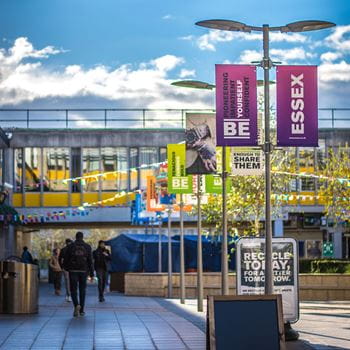
A sunny day with banners flying on Colchester Campus Square 4.

Visit Colchester Campus

Set within 200 acres of award-winning parkland - Wivenhoe Park and located two miles from the historic city centre of Colchester – England's oldest recorded development. Our Colchester Campus is also easily reached from London and Stansted Airport in under one hour.


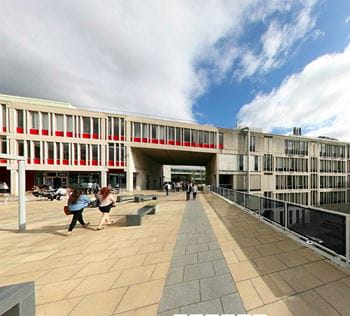
View from Square 2 outside the Rab Butler Building looking towards Square 3

Virtual tours

If you live too far away to come to Essex (or have a busy lifestyle), no problem. Our 360-degree virtual tour allows you to explore our University from the comfort of your home. Check out our Colchester virtual tour to see accommodation options, facilities and social spaces.

At Essex we pride ourselves on being a welcoming and inclusive student community. We offer a wide range of support to individuals and groups of student members who may have specific requirements, interests or responsibilities.

The University makes every effort to ensure that this information on its programme specification is accurate and up-to-date. Exceptionally it can be necessary to make changes, for example to courses, facilities or fees. Examples of such reasons might include, but are not limited to: strikes, other industrial action, staff illness, severe weather, fire, civil commotion, riot, invasion, terrorist attack or threat of terrorist attack (whether declared or not), natural disaster, restrictions imposed by government or public authorities, epidemic or pandemic disease, failure of public utilities or transport systems or the withdrawal/reduction of funding. Changes to courses may for example consist of variations to the content and method of delivery of programmes, courses and other services, to discontinue programmes, courses and other services and to merge or combine programmes or courses. The University will endeavour to keep such changes to a minimum, and will also keep students informed appropriately by updating our programme specifications. The University would inform and engage with you if your course was to be discontinued, and would provide you with options, where appropriate, in line with our Compensation and Refund Policy.

The full Procedures, Rules and Regulations of the University governing how it operates are set out in the Charter, Statutes and Ordinances and in the University Regulations, Policy and Procedures.

Related courses

Ask us a question
Ask us a question

Want to quiz us about your course? Got a question that just needs answering? Get in touch with us on live chat!