What is the MSc Data Science and its Applications?
The MSc Data Science and its Applications is a one- or two-year conversion course studied at our Colchester Campus, started in October.
Designed for those with some experience of university-level mathematics and statistics, you will learn the techniques needed to model and manipulate data in order to guide the political, financial and social decisions that shape our modern society, economy growth and business success.
If you have significant experience of university-level mathematics and statistics, we recommend our MSc Data Science. If you have a non-STEM background, we recommend our MSc Applied Data Science.
Why this course
The MSc Data Science and its Applications is an industry-focused degree aimed at meeting demand for graduates skilled in data science and analytics for the both private and public sectors, from government to health and from business to finance.
You’ll study a curriculum shaped by our industry partners and public sector organisations, including:
BT
Profusion
Essex County Council
Essex Police
Suffolk County Council
You will study a balance of solid theory and practical application to real-world problems at the core of data science, with a focus on exploiting Big Data.
You will be introduced to programming with the R language, and develop your skills with relational databases and SQL.
In your Final Year, you will also have the opportunity to complete your dissertation on a professional placement.
You will graduate with the programming and statistical techniques needed for a career in data analysis, as well as the confidence and creativity to apply them across sectors such as the humanities, life sciences, linguistics, marketing and social sciences.
Who should apply
Future data scientists and analysts
Graduates with some experience in a mathematical or computational discipline
Those eager for a career within the fast-growing digital economy
Practical, analytic thinkers
What you’ll learn
Data: Learn how to visualise, process and analyse data with R
Databases: Explore the use of relational databases and SQL for information management and commercial applications
Professional practice: Gain the research and business skills needed for professional or research career
Specialise: Tailor your degree through your choice of optional modules, including machine learning and AI
Your learning experience
Expert teaching: Learn from active researchers in data science and analytics, and award-winning lecturers qualified and accredited in mathematics education
Specialist facilities: Consult our Maths Support Centre one-to-one or in a group, and study in a dedicated social and study spaces for maths students in the STEM Centre
Research centres: Collaborate with the campus-based Essex Institute of Data Analytics and Data Science (IADS), the ESRC Business and Local Government (BLoG) Research Centre, the UK Data Archive and the Institute for Social and Economics Research (ISER)
Careers and outcomes
An MSc Data Science and its Applications prepares you for a future-proofed career as a data scientist or data analyst in a range of sectors, and in specialties such as:
Financial services
Scientific computation
Decision-making support
Risk assessment
Statistics
Education
Graduates also continue into postgraduate research through a PhD or MPhil.
Why we're great.
Learn under international leaders in data science for the digital economy
Access specialist research facilities on campus, including the UK Data Archive and Institute for Social and Economic Research (ISER)
Study an industry-led course in an industry-partnered department
Our research-led teaching is continually evolving to address the latest challenges and breakthroughs in the field. The following modules are based on the current course structure and may change in response to new curriculum developments and innovation.
The structure below is representative of this course if taken full-time. If you choose to study part-time, the modules will be split across two years.
Please note that if you are studying full-time (either starting in October or January) there is no second year; you will develop your dissertation throughout the course of your single year.
We understand that deciding where and what to study is a very important decision for you. We'll make all reasonable efforts to provide you with the courses, services and facilities as described on our website and in line with your contract with us. However, if we need to make material changes, for example due to significant disruption, we'll let our applicants and students know as soon as possible.
Components and modules explained
Components
Components are the blocks of study that make up your course. A component may have a set module which you must study, or a number of modules from which you can choose.
Each component has a status and carries a certain number of credits towards your qualification.
Status
What this means
Core
You must take the set module for this component and you must pass. No failure can be permitted.
Core with Options
You can choose which module to study from the available options for this component but you must pass. No failure can be permitted.
Compulsory
You must take the set module for this component. There may be limited opportunities to continue on the course/be eligible for the qualification if you fail.
Compulsory with Options
You can choose which module to study from the available options for this component. There may be limited opportunities to continue on the course/be eligible for the qualification if you fail.
Optional
You can choose which module to study from the available options for this component. There may be limited opportunities to continue on the course/be eligible for the qualification if you fail.
The modules that are available for you to choose for each component will depend on several factors, including which modules you have chosen for other components, which modules you have completed in previous years of your course, and which term the module is taught in.
Modules
Modules are the individual units of study for your course. Each module has its own set of learning outcomes and assessment criteria and also carries a certain number of credits.
In most cases you will study one module per component, but in some cases you may need to study more than one module. For example, a 30-credit component may comprise of either one 30-credit module, or two 15-credit modules, depending on the options available.
Modules may be taught at different times of the year and by a different department or school to the one your course is primarily based in. You can find this information from the module code. For example, the module code HR100-4-FY means:
HR
100
4
FY
The department or school the module will be taught by.
In this example, the module would be taught by the Department of History.
In a world increasingly driven by data, the need for analysis and visualisation is more important than ever. In this module you will look at data through the eyes of a numerical detective. You will work on the lost art of exploratory data analysis, reviewing appropriate methods for data summaries with the aim to summarise, understand, extract hidden patterns and identify relationships. You will then work on graphical data analysis, using simple graphs to understand the data, but also advanced complex methods to scrutinise data and interactive plots to communicate data information to a wider audience.
For data analysis and visualisations you will use R-studio, and a combination of R-shiny applications and google visualisations for interactive plotting.
The module will introduce you to concepts from data analysis and statistics and show how they can be applied effectively via the R language. It will cover a wide introduction to statistics and provide practical experience of real-world examples of how statistics is used to gain insights.
Throughout these examples, and many more, we will teach programming techniques that will enable you to apply statistical approaches to real-world applications.
This module assumes no previous exposure to statistics.
Relational databases and SQL are fundamental tools for applications in many different disciplines including humanities, life sciences, linguistics, marketing and social science. They are essential in almost all modern organisations for efficient information management in IT systems and commercial applications. The purpose of this module is to provide you with an introduction to the underlying principles of and practical experience in designing and implementing relational databases. It will cover data modelling and SQL, database analysis, design and management, and advanced topics including big data, security and privacy issues of modern databases.
This module covers the principles of linear modelling for analysing experimental and observational data. You will first study the assumptions of the general linear model, including collinearity, influential data, assessing fitted models and model selection techniques. You will then encounter statistical methods for efficient analysis of experiments with normally distributed data, such as one-way ANOVA, and extend the methodology to logistic regression and analysis of contingency tables with categorical variables of interest. Finally, you will study multivariate methods for the analysis of large, high-dimensional data sets.
What skills do you need to succeed during your studies? What about after university? How will you harness your knowledge and soft skills to realise your career goals? This module helps you take an active role in developing transferrable skills and capitalising on your unique background. As well as broad reflection on your professional development, this module will help you explore different career directions and prepare you for the application process, supported by an advisor from within the department.
Postgraduate taught students in the School of Mathematics, Statistics and Actuarial Science typically attend two hours of lectures and one class or lab every week, but this will vary by module.
Core components can be combined with optional modules to gain either in-depth specialisation or a broad understanding.
Learn to use LATEX to produce a document as close as possible to those produced by professional mathematicians in terms of organisation, layout, and type-setting.
Our postgraduates are encouraged to attend conferences and seminars.
Assessment
On this course you are assessed mostly by coursework and projects, but this does vary from module to module.
Some modules may also incorporate written examinations.
Dissertation
You will be provided with a list of dissertation titles or topics proposed by staff, though it may be possible to propose a project of your own.
Most dissertations are between 10,000 and 30,000 words in length. However, these are guidelines rather than mandatory word counts.
Study with close supervision by our academic staff.
Entry requirements
UK entry requirements
A 2.2 degree or international equivalent in one of the following subjects:
Biology
Biostatistics
Chemistry
Economic Statistics
Economics
Finance
Marketing
Physics
OR
Any other degree 2:2 or above which includes three modules from the below list:
Advanced Maths (I/II/III)
Calculus (I/II/III) - AKA Mathematical Analysis
Engineering Maths (I/II/III)
Maths (I/II/III)
Probability
Statistics/ Probability
Applicants with a degree below 2:2 or equivalent will be considered dependent on any relevant professional or voluntary experience and previous modules studied.
International & EU entry requirements
We accept a wide range of qualifications from applicants studying in the EU and other countries. Get in touch with any questions you may have about the qualifications we accept. Remember to tell us about the qualifications you have already completed or are currently taking.
Sorry, the entry requirements for the country that you have selected are not available here. Please contact our Graduate Admissions team at pgquery@essex.ac.uk to request the entry requirements for this country.
English language requirements
If English is not your first language, we require IELTS 6.0 overall with a minimum
component score of 5.5 in all components.
If you do not meet our IELTS requirements then you may be able to complete a pre-sessional English
pathway that enables you to start your course without retaking IELTS.
Additional Notes
The University uses academic selection criteria to determine an applicant’s ability to successfully complete a course at the University of Essex. Where appropriate, we may ask for specific information relating to previous modules studied or work experience.
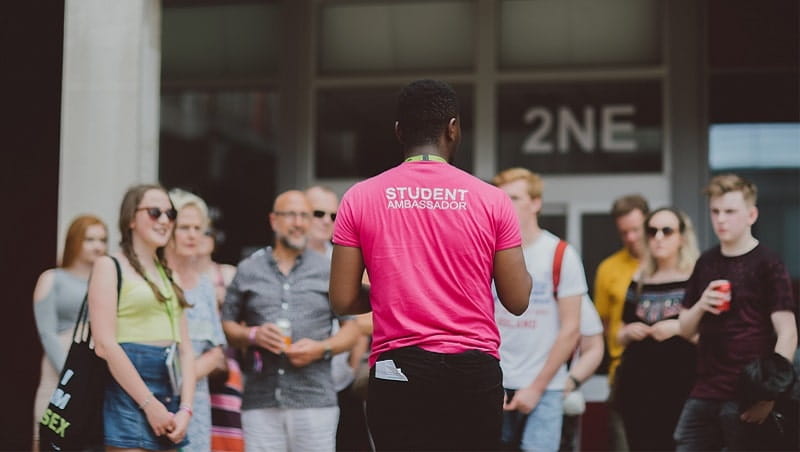
We hold Open Days for all our applicants throughout the year. Our Colchester Campus events are a great way to find out more about studying at Essex, and give you the chance to:
tour our campus and accommodation
find out answers to your questions about our courses, student finance, graduate employability, student support and more
meet our students and staff
If the dates of our organised events aren’t suitable for you, feel free to get in touch by emailing tours@essex.ac.uk and we’ll arrange an individual campus tour for you.
We aim to respond to applications within two weeks. If we are able to offer you a place, you will be contacted via email.
For information on our deadline to apply for this course, please see our ‘how to apply' information.
Applicants with an undergraduate degree from our School of Mathematics, Statistics and Actuarial Science, or who are working towards one, should first contact our admissions staff: maths@essex.ac.uk.
Visit Colchester Campus
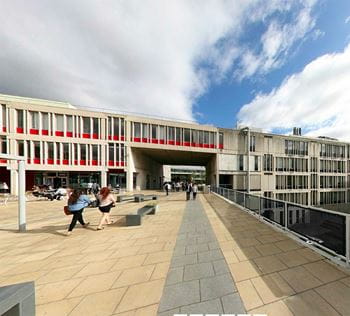
Set within 200 acres of award-winning parkland - Wivenhoe Park and located two miles from the historic city centre of Colchester – England's oldest recorded development. Our Colchester Campus is also easily reached from London and Stansted Airport in under one hour.
If you live too far away to come to Essex (or have a busy lifestyle), no problem. Our 360-degree virtual tour allows you to explore our University from the comfort of your home. Check out our Colchester virtual tour to see accommodation options, facilities and social spaces.
Visit the home of data analytics at Essex
Meet the lecturers, discover our alumni’s achievements, and learn about Masters study in the School of Mathematics, Statistics and Actuarial Science.
At Essex we pride ourselves on being a welcoming and inclusive student community. We offer a wide range of support to individuals and groups of student members who may have specific requirements, interests or responsibilities.
The University makes every effort to ensure that this information on its programme specification is accurate and up-to-date. Exceptionally it can be necessary to make changes, for example to courses, facilities or fees. Examples of such reasons might include, but are not limited to: strikes, other industrial action, staff illness, severe weather, fire, civil commotion, riot, invasion, terrorist attack or threat of terrorist attack (whether declared or not), natural disaster, restrictions imposed by government or public authorities, epidemic or pandemic disease, failure of public utilities or transport systems or the withdrawal/reduction of funding. Changes to courses may for example consist of variations to the content and method of delivery of programmes, courses and other services, to discontinue programmes, courses and other services and to merge or combine programmes or courses. The University will endeavour to keep such changes to a minimum, and will also keep students informed appropriately by updating our programme specifications. The University would inform and engage with you if your course was to be discontinued, and would provide you with options, where appropriate, in line with our Compensation and Refund Policy.
The full Procedures, Rules and Regulations of the University governing how it operates are set out in the Charter, Statutes and
Ordinances and in the University Regulations, Policy and Procedures.
3.png?mw=300)













--autorenamed.jpg&lastYear=1&title=MSc Data Science and its Applications)
--autorenamed.jpg&lastYear=1&title=MSc Data Science and its Applications)
--autorenamed.jpg&lastYear=1&title=MSc Data Science and its Applications)
--autorenamed.jpg&lastYear=1&title=MSc Data Science and its Applications)